
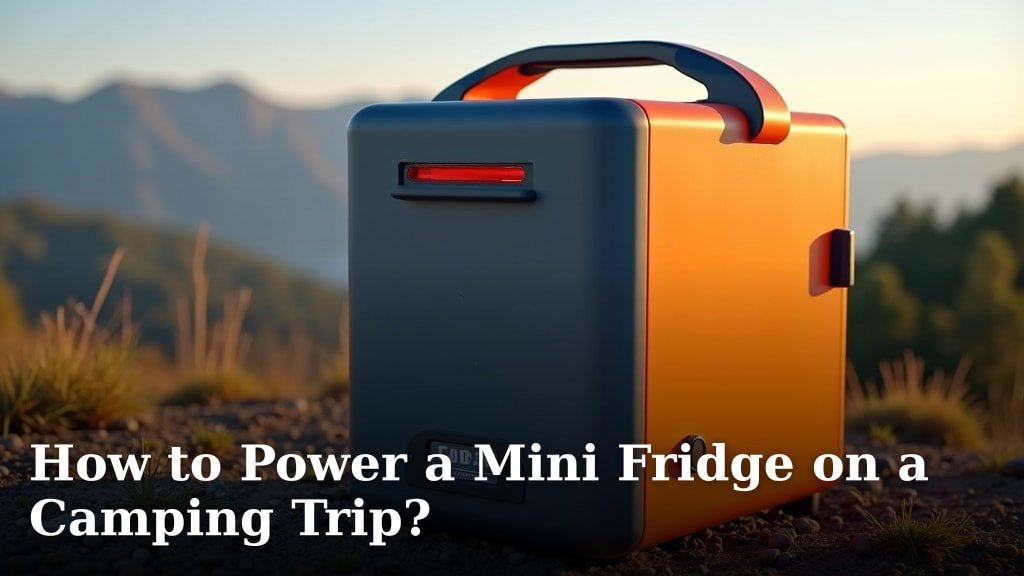
Yes, you absolutely can power a mini fridge on a camping trip! The best ways involve using a portable power station or a deep-cycle battery system. These solutions provide the steady electricity your mini fridge needs to keep your food and drinks cold, even when you’re miles from an outlet. Many campers find these methods a game-changer for enjoying home comforts outdoors.
Keeping perishable items cold is often a big concern for campers. While coolers with ice work, a mini fridge offers a more reliable and long-lasting cooling solution. We found that understanding the power requirements of your specific mini fridge is key. This ensures you choose a power source that can handle its energy demands throughout your trip, preventing any unwelcome warm beverages.
TL;DR:
- Use a portable power station for easy, rechargeable power.
- A deep-cycle battery is great for longer trips.
- Know your mini fridge’s wattage before you go.
- Consider a solar panel to recharge batteries on the go.
Now, let’s dive into the specifics of how you can bring that cool convenience to your campsite. We’ll break down the most effective ways to power your mini fridge so you can focus on enjoying the great outdoors.
Powering Your Mini Fridge Outdoors: Your Guide
Bringing a mini fridge camping is a fantastic way to enjoy chilled drinks and fresh food. You might be wondering how to provide consistent electricity for it when you’re far from a wall outlet. We’ve researched the best methods to keep your fridge humming.
Understanding Your Mini Fridge’s Power Needs
Before you even think about power sources, you need to know how much energy your mini fridge uses. This is the most critical first step. Without this information, you risk buying a power solution that’s too small and won’t keep your items cold.
Finding the Wattage
Look for a data plate or sticker on the back of your mini fridge. It will usually list the wattage (W) or amperage (A) and voltage (V). If it lists amperage and voltage, you can calculate the wattage. Multiply the amperage by the voltage (A x V = W).
For example, a mini fridge that draws 1.5 amps at 120 volts uses 180 watts (1.5A x 120V = 180W). Mini fridges typically run between 50 and 150 watts, but it’s good to check.
Understanding Continuous vs. Peak Power
Your mini fridge will have a continuous wattage requirement when the compressor is running. It also has a peak or starting wattage. This is the surge of power needed to get the compressor going. This peak can be 2-3 times the continuous wattage.
Your power source needs to handle both. Most mini fridges don’t have a huge starting surge, but it’s something to be aware of, especially with older or larger models. We found that a power station with a surge capacity rating is ideal.
Method 1: The Portable Power Station
Portable power stations are like giant rechargeable batteries with multiple outlets. They are becoming incredibly popular for camping and off-grid use. They offer a clean, quiet, and often solar-rechargeable way to power your mini fridge.
How They Work
A power station contains a large lithium-ion battery. It converts the DC power from the battery into AC power, just like your wall outlet. Many have standard AC outlets, USB ports, and DC outlets.
You simply plug your mini fridge directly into the AC outlet on the power station. You’ll want to ensure the power station’s AC output wattage is higher than your fridge’s continuous wattage, and preferably higher than its peak wattage too.
Choosing the Right Power Station
The key specs to look for are:
- Wattage Output: This is the power the station can deliver at any given moment. Match this to your mini fridge’s needs. A unit with at least 300-500 continuous watts is a safe bet for most mini fridges.
- Wattage Surge: This is the maximum power it can output for a short burst. Aim for a surge capacity that’s double your fridge’s running wattage.
- Watt-Hour (Wh) Capacity: This tells you how much energy the battery stores. A higher Wh rating means it can power your fridge for longer.
We found that for a typical weekend camping trip, a power station with 500Wh or more is usually sufficient. For longer trips, you’ll need a larger capacity or a way to recharge it.
Recharging Your Power Station
Most power stations can be recharged at home before your trip. While camping, you can often recharge them using:
- Solar Panels: This is the most sustainable option for longer trips. You’ll need compatible solar panels and sufficient sunlight. We found that panels rated at 100W or more can significantly extend your power station’s life.
- Car Charger: You can charge the power station from your car’s 12V outlet while driving. This is convenient but can drain your car battery if not used carefully.
- AC Wall Outlet: If you have access to shore power at a developed campsite, you can plug it in.
Keep in mind that recharging via solar or car can be slow. You’ll want to plan your usage accordingly.
Method 2: Deep-Cycle Battery Systems
For those who are more technically inclined or plan very long trips, a deep-cycle battery system is a robust solution. This is similar to what RVs and boats use.
What is a Deep-Cycle Battery?
Unlike a car battery (which is designed for short, powerful bursts of energy), a deep-cycle battery is built to provide a steady amount of power for extended periods. They can be discharged much deeper without damage.
Common types include lead-acid (AGM, Gel) and lithium-ion deep-cycle batteries. Lithium batteries are lighter, last longer, and can be discharged more deeply, but they come at a higher upfront cost. Lead-acid batteries are more affordable but heavier and have a shorter lifespan.
Setting Up the System
You’ll need a few components:
- The Deep-Cycle Battery: Choose a capacity (measured in Amp-hours or Ah) that matches your needs. A 100Ah battery is a common choice for many applications.
- Power Inverter: Since your mini fridge runs on AC power, you need an inverter to convert the battery’s DC power to AC power. Match the inverter’s wattage to your fridge’s requirements, just like with a power station.
- Battery Monitor: This is highly recommended to track your battery’s charge level. Running a deep-cycle battery too low can shorten its lifespan.
- Optional: Solar Charge Controller: If you plan to use solar panels, a charge controller regulates the power from the panels to safely charge the battery.
You’ll connect the battery to the inverter, and then plug your mini fridge into the inverter. If using solar, the panels connect to the charge controller, which then connects to the battery.
Capacity Planning for Battery Systems
Estimating how long a battery will last involves a few calculations. A 100Ah battery at 12V stores 1200 Watt-hours (100Ah x 12V). If your mini fridge draws 100 watts continuously, it would theoretically run for 12 hours (1200Wh / 100W).
However, you don’t want to discharge a lead-acid battery below 50% to preserve its life. This halves your usable capacity. Lithium batteries can often be discharged to 80-90% or more. We found that it’s wise to oversize your battery capacity to ensure reliability.
Other Considerations for Mini Fridge Power
There are a few other things to think about to make your mini fridge setup a success.
Cooler vs. Mini Fridge Power Consumption
It’s easy to think a mini fridge will use a lot of power, but many are surprisingly efficient. We compared the energy needs to the ice needed for a cooler. For a weekend trip, a high-quality cooler packed well might use less “energy” in terms of upfront cost and effort. But for longer trips, or if you want consistent cold without constantly buying ice, a mini fridge powered effectively becomes a winner.
Insulation and Fridge Location
No matter your power source, proper insulation helps. Keep your mini fridge in the shade as much as possible. Avoid opening it unnecessarily. The less it has to work to stay cool, the less power it will consume.
We found that placing a blanket or tarp over the fridge can add extra insulation, especially on hot days. This simple trick can make a noticeable difference in how often the compressor runs.
Generator Use (With Caveats)
While a portable generator can power a mini fridge, it’s often not the best solution for camping. Generators can be noisy, smelly, and require fuel. They can disturb the peace of the campsite. Many campgrounds have rules against them during certain hours.
If you do use a generator, ensure it’s a “quiet” or “inverter” generator. These are much less disruptive. Also, make sure its wattage output is sufficient for your fridge, including surge power. You’ll also need to manage the exhaust safely.
Quick Checklist for Powering Your Mini Fridge
To ensure you’re ready to go, here’s a quick checklist:
- Determine your mini fridge’s wattage (continuous and surge).
- Calculate your estimated run time based on your power source capacity.
- Choose your power solution: portable power station or deep-cycle battery system.
- Ensure your power source’s wattage output exceeds your fridge’s needs.
- Plan for recharging (solar, car, shore power) if needed.
- Pack all necessary cables and adapters.
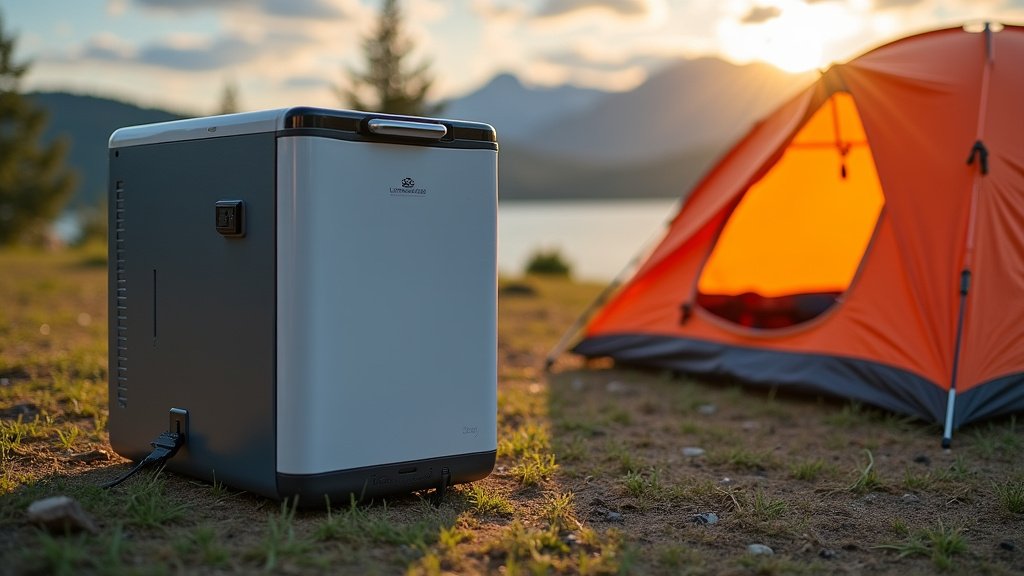
Conclusion
You’ve now got the roadmap to keeping your mini fridge running smoothly on your next camping adventure. Remember, the key is understanding your fridge’s power needs and choosing a reliable source like a portable power station or a deep-cycle battery system. Planning ahead, checking those wattage numbers, and considering how you’ll recharge your power source will make all the difference. So, go ahead and enjoy those perfectly chilled drinks – your campsite just got a whole lot more comfortable!
Frequently Asked Questions
How long will a typical portable power station run a mini fridge?
The run time depends heavily on the power station’s Watt-hour (Wh) capacity and your mini fridge’s power draw. A 500Wh power station might run a 50W mini fridge for about 8-10 hours, but this varies. Always check the specs and do a test run if possible.
Can I use my car’s battery to power a mini fridge?
Using your car’s standard starting battery is not recommended for long periods. It’s designed for short, high-power bursts and can be quickly drained by a mini fridge, leaving you unable to start your car. A deep-cycle battery is the safer choice for this type of sustained power draw.
Is a portable power station better than a deep-cycle battery for camping?
For most campers, a portable power station offers more convenience due to its all-in-one design and portability. Deep-cycle battery systems are more suited for seasoned campers or those needing extended, heavy power usage where they can manage the setup and charging components.
Do I need a special inverter for my mini fridge?
You need an inverter that can supply enough continuous and surge wattage for your mini fridge. Most modern mini fridges don’t have extreme surge needs, but it’s vital to match the inverter’s rating to your fridge’s specifications to avoid damage or poor performance.
How can I maximize the battery life powering my mini fridge?
Keep your mini fridge in the shade and avoid opening it frequently to reduce its workload. Ensure the fridge is well-insulated, perhaps with a cover or tarp. These steps help the compressor run less often, conserving precious battery power.
