
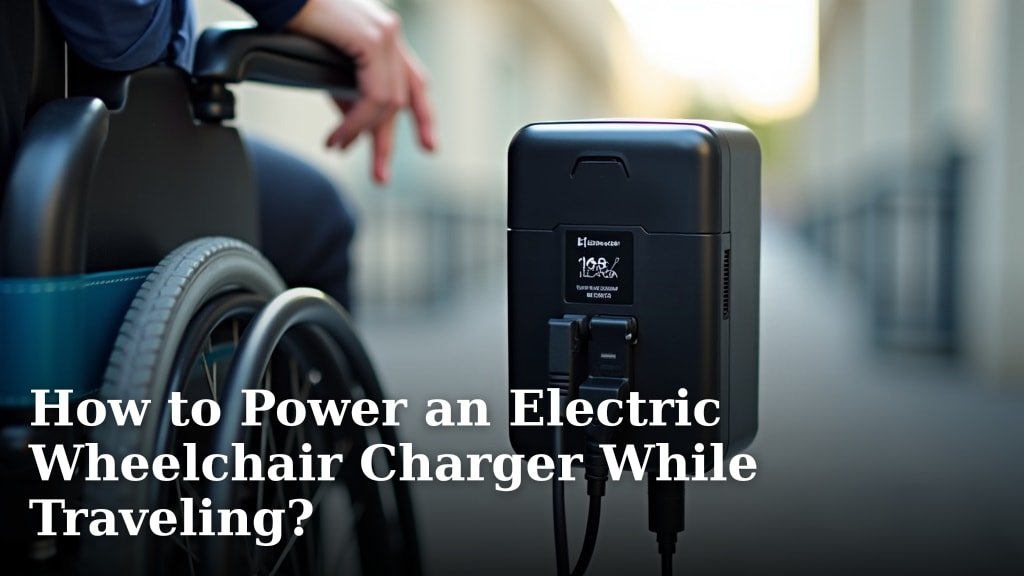
You can power your electric wheelchair charger while traveling by using a portable power station or a high-capacity power bank. These devices store electricity and can charge your wheelchair when traditional outlets aren’t available. Always check the wattage requirements of your charger to ensure your portable solution can meet the demand.
Planning ahead is key to keeping your mobility device charged on the go. Traveling with an electric wheelchair means considering charging solutions for various scenarios, from long road trips to flights. We’ve found that understanding your power needs and available options makes a big difference.
- Bring a portable power station or power bank.
- Check your charger’s power needs.
- Consider airline regulations for batteries.
- Research charging options at your destination.
Let’s walk through the best ways to keep your electric wheelchair powered up, no matter where your travels take you.
Keeping Your Electric Wheelchair Charged While on the Move
Traveling with an electric wheelchair doesn’t have to mean constant worry about finding an outlet. You have several smart options to keep your chair powered up, no matter where your adventures take you. The key is to understand your needs and plan ahead.
Assessing Your Power Requirements
Before you pack, let’s figure out how much power your electric wheelchair charger actually uses. This is a critical first step. You wouldn’t want to bring a tiny power bank for a massive need, right? This guide helps you understand how to choose the right size portable power station for your needs.
Understanding Wattage and Your Charger
Your electric wheelchair charger has a wattage rating. This tells you how much power it draws from an outlet. You can usually find this information on a sticker on the charger itself or in your wheelchair’s manual. Look for numbers like “100W,” “200W,” or even higher. This number is your baseline for choosing a portable power solution.
Why is this important? Because a portable power source needs to be able to supply at least that much wattage. Trying to power a high-wattage charger with a low-wattage device is like trying to fill a bathtub with a teaspoon – it’s just not going to work efficiently, or at all.
Calculating Your Charging Needs Per Day
Think about how long you’ll need to charge each day and how long your wheelchair’s battery typically lasts. This helps estimate your total daily power consumption. If your charger is, say, 150 watts, and you need to charge for 4 hours a day, that’s 600 watt-hours (Wh) you need to replenish. This daily total is vital for selecting the right portable power station or bank.
Consider your travel itinerary. Will you be out all day with no access to charging? Do you plan to stay in hotels with reliable power, or are you camping? Your trip’s structure will heavily influence your power strategy.
Portable Power Stations: Your Mobile Outlet
These devices are becoming incredibly popular for good reason. Think of a portable power station as a big, rechargeable battery with multiple outlets. They are designed to be carried and used away from traditional power sources.
How They Work and What to Look For
Portable power stations store a significant amount of electricity. They typically have AC outlets (like the ones in your home), DC ports, and USB ports. You simply plug your wheelchair charger into the AC outlet on the power station. It’s that easy!
When choosing one, pay attention to two main specifications: the wattage output and the capacity in watt-hours (Wh). The wattage output must meet or exceed your charger’s requirement. The capacity in Wh tells you how long it can supply that power. A 1000Wh power station can theoretically power a 100W device for 10 hours (1000Wh / 100W = 10h).
Types and Features to Consider
Power stations come in various sizes, from small, suitcase-sized units to larger ones that might require a bit more effort to transport. For electric wheelchairs, you’ll likely need a mid-to-large size unit.
Some units offer “fast charging” capabilities for the power station itself, which is great if you have a brief window to recharge it. Others have built-in solar panel inputs, allowing you to recharge off-grid if you’re on an extended trip. Many also feature advanced battery management systems for safety and longevity.
Using a Power Station on the Go
When you’re on the road, you can charge your power station while driving (many have car chargers) or when you stop for breaks. At your destination, it acts as your personal charging hub. Imagine being able to charge your wheelchair at a picnic in the park or while enjoying a scenic overlook!
High-Capacity Power Banks: A Lighter Alternative
If a full-blown power station seems like overkill, a high-capacity power bank might be a better fit. These are essentially larger versions of the phone chargers you might already be familiar with.
Power Banks vs. Power Stations
The main difference is size and capacity. Power banks are generally smaller, lighter, and less expensive than power stations. However, they typically have lower wattage output and total capacity. You need to be very careful here.
A standard power bank might only be suitable for charging smaller electronic devices. For an electric wheelchair charger, you need a “high-capacity” or “heavy-duty” power bank. These are specifically designed to output higher wattages, often through AC outlets, just like a small power station.
What to Look for in a Power Bank for Wheelchairs
Just like with power stations, check the wattage output and the watt-hour (Wh) capacity. Ensure the AC outlet can handle your charger’s wattage. Also, consider the number of charging cycles the battery can endure, as this speaks to its durability and lifespan.
Some power banks have integrated cables, while others require you to use your own. Think about portability. Will it fit comfortably in your wheelchair bag or luggage?
When a Power Bank is Sufficient
A power bank is a good option if you only need to top up your wheelchair’s battery occasionally, or if your wheelchair has a smaller battery pack. It’s also great for shorter trips where you anticipate having access to some form of charging intermittently. If you’re just looking for a backup charge, a power bank can be a lifesaver.
| Feature | Portable Power Station | High-Capacity Power Bank |
|---|---|---|
| Capacity | Generally higher (500Wh – 3000Wh+) | Moderate to high (100Wh – 500Wh+) |
| Wattage Output | Typically higher, sufficient for most chargers | Varies widely; ensure it meets your charger’s needs |
| Portability | Can be bulky, but many are designed for transport | Generally lighter and more compact |
| Price | Higher investment | More budget-friendly |
| Best For | Extended trips, higher power needs, primary charging source | Occasional top-ups, shorter trips, backup power |

Navigating Travel Restrictions: Airlines and Batteries
If your travel plans include flying, you need to be aware of airline regulations regarding batteries. This is a really important area to research well in advance. If your travel plans include flying, learn about airline rules for a portable power station.
Battery Types and Airline Rules
Electric wheelchairs typically use lithium-ion batteries. Airlines have strict rules about these batteries, especially concerning their placement and capacity. Many airlines require spare lithium-ion batteries (and power banks/stations) to be carried in your carry-on luggage, not checked baggage.
There are usually limits on the watt-hour (Wh) capacity. For example, many airlines allow batteries up to 100Wh. Batteries between 101Wh and 160Wh may be allowed with airline approval, and anything above 160Wh is generally prohibited (Federal Aviation Administration).
Checking with Your Airline
Always, always check the specific regulations of the airline you are flying with. These rules can vary. Contact the airline’s disability assistance desk well before your flight to discuss your needs. They can advise you on the best way to travel with your wheelchair and its charging equipment.
Be prepared to show documentation about your wheelchair and its batteries if requested. Knowing these rules beforehand can save you a lot of stress at the airport. Your preparation is key here.
On-Site Charging Strategies at Your Destination
Once you arrive, your portable power solution is a great backup, but it’s wise to know your options for traditional charging too.
Researching Accommodation Power Access
If you’re staying in a hotel, contact them in advance. Ask about the availability and location of electrical outlets in your room, common areas, and any accessible spaces. Some hotels are very accommodating and can even ensure an outlet is conveniently placed near your bed.
For other types of accommodations, like vacation rentals or staying with friends, a quick conversation can help you plan your charging routine. You might arrange to charge your portable power station in the kitchen while you prepare breakfast, for instance.
Public Charging Locations
Some public places are starting to offer charging facilities. Think about airports, large shopping malls, and some community centers. While you might not find dedicated electric wheelchair charging stations everywhere, you can often find standard outlets in waiting areas or lounges. Always have your portable solution ready as a backup plan, as these public outlets can be unreliable or already in use.
Checklist for Powering Up While Traveling
Here’s a quick rundown to make sure you’re prepared:
- Calculate your daily power needs in watt-hours (Wh).
- Determine the wattage of your electric wheelchair charger.
- Choose a portable power station or high-capacity power bank that meets these requirements.
- Check airline regulations for battery capacity and carry-on rules if flying.
- Confirm charging outlet availability at your accommodation.
- Pack all necessary cables and adapters for your charger and portable power solution.
Conclusion
Keeping your electric wheelchair charged while traveling is totally achievable with the right preparation. By understanding your charger’s wattage and your daily power needs, you can confidently choose between a portable power station or a high-capacity power bank. Remember to always double-check airline battery rules if you’re flying and confirm charging access at your destination.
With these portable solutions, your mobility won’t be limited by the nearest outlet. Start planning your power strategy today for stress-free adventures!
Frequently Asked Questions
Can I use any power bank to charge my electric wheelchair?
No, you can’t use just any power bank. Electric wheelchairs require a significant amount of power, so you need a high-capacity power bank with a suitable wattage output, usually through an AC outlet. Check your charger’s wattage needs carefully.
How do I know if a portable power station is powerful enough?
You need to match the wattage output of the power station to your electric wheelchair charger’s wattage requirement. Also, consider the watt-hour (Wh) capacity to determine how long it can supply power. Your charger’s manual or a sticker on the device will have this information.
What are the airline rules for bringing power banks on a plane?
Airlines have strict rules for lithium-ion batteries. Most require portable power banks and stations to be in your carry-on luggage, not checked bags. There are usually limits on watt-hour capacity, often around 100Wh for approval without special permission.
Can I recharge my portable power station in my car?
Yes, many portable power stations come with car chargers, allowing you to recharge them while driving. This is a great way to keep your power station topped up on long road trips, ensuring you have power available when you stop.
What if my accommodation doesn’t have enough outlets?
This is where your portable power station or power bank becomes essential. You can use it to charge your wheelchair even if there are no available outlets nearby. Contacting your accommodation in advance to inquire about outlet availability is also recommended.
