How to Run a Space Heater Safely on a Power Station?
On this page (7 sections)
Yes, you can run a space heater safely on a power station, but it requires careful planning. The key is to ensure your power station’s wattage matches your heater’s needs and to monitor usage to prevent overloading. Always check the The key is to ensure your power station’s wattage matches your heater’s needs. Our guide helps you choose the right size.continuous output wattage of your power station against your space heater’s power draw.
Using a power station for heating can be a great backup during outages or for off-grid living. We found that understanding both your heater’s energy consumption and your power station’s capabilities is essential for safe operation. It’s not just about plugging it in; it’s about smart power management to avoid damage to your equipment and ensure safety.
- Match power station output to heater wattage.
- Never exceed the continuous output.
- Monitor usage to avoid overloading.
- Use heaters with lower wattage if possible.
- Ensure good ventilation.
Let’s walk through exactly how to do this safely, ensuring you stay warm without any surprises.
Powering Your Space Heater with a Portable Power Station
Yes, you can absolutely use a portable power station to run your space heater. It’s a fantastic solution for staying warm during power outages or for areas without standard electrical outlets. The key to success lies in understanding the power demands of your heater and the capabilities of your power station. We found that most people think it’s as simple as plugging one into the other, but there are important steps to take.
Think of it like this: your power station is a temporary battery for your home. Your space heater is like a hungry appliance that needs a good amount of energy. You need to make sure the battery can feed the appliance long enough and strong enough without getting drained too quickly or, worse, damaging itself.
We’ve researched how this works and found that the main challenge is matching the We’ve researched how this works and found that the main challenge is matching the heater’s needs to the power station. Learn more here.wattage. It’s not just about whether it will “work,” but whether it will work safely and effectively. Let’s break down what you need to know before you plug in.
Understanding Your Space Heater’s Power Needs
Before you even think about connecting your power station, you must know exactly how much power your space heater consumes. This is usually measured in watts (W). You’ll find this information on a label on the heater itself, often on the back or bottom, or in its user manual.
Space heaters vary greatly. Some small ceramic heaters might draw 700 watts on a low setting and 1500 watts on high. Larger oil-filled radiators can pull even more. It’s vital to know the maximum wattage your heater can use. This is often listed as “High Heat” or a specific wattage number.
Where to Find Your Heater’s Wattage
Look for a sticker or plate on the appliance. It typically says something like “AC 120V, 60Hz, 1500W.” This 1500W is the number you need to focus on. If the label lists a voltage (like 120V) and an amperage (like 12.5A), you can calculate the wattage by multiplying them: 120V * 12.5A = 1500W. Many heaters have multiple settings, so check for the highest draw.
We found that sometimes the manual is the best place for detailed information about different heat settings and their corresponding power draws. Always assume you’re working with the highest possible wattage for safety calculations.
Why Wattage Matters So Much
Your space heater is essentially an electrical resistor. When electricity flows through it, it generates heat. The more electricity it draws (higher wattage), the hotter it gets and the more power it consumes. If you try to draw more power than your power station can provide, bad things can happen.
Imagine trying to squeeze a gallon of water through a straw. It’s slow and can damage the straw. Similarly, a power station trying to deliver more watts than it’s designed for can overheat, shut down, or even be permanently damaged. It’s all about matching the supply to the demand.
Assessing Your Power Station’s Capabilities
Now, let’s look at the other side of the equation: your power station. These devices have two key specifications you need to understand: continuous output wattage and surge wattage.
The continuous output wattage is the maximum power your power station can consistently supply over an extended period. This is the most important number for running a space heater, as heaters draw a steady amount of power. Think of this as the power station’s reliable “workhorse” limit.
Continuous Output vs. Surge Wattage
Surge wattage is the maximum power a device can briefly output when it first starts up. Many appliances, especially those with motors (like refrigerators or fans), have a higher surge requirement for a few seconds. Space heaters generally do not have a significant surge requirement because they don’t have motors. They just need consistent power.
So, when you’re looking at your power station’s specs, ignore the surge wattage for this application. Focus solely on the continuous output wattage. This is the number that needs to be equal to or greater than your space heater’s wattage.
How Much Runtime Can You Expect?
This is where battery capacity comes in, measured in watt-hours (Wh). A power station might have a 1000Wh capacity. If your heater draws 1000W, theoretically, you could run it for about one hour (1000Wh / 1000W = 1 hour). However, this is an oversimplification.
We found that actual runtime is less due to several factors. Power stations aren’t 100% efficient; some energy is lost as heat during the conversion process. Also, running a battery completely dry can degrade its lifespan. Many experts recommend not discharging below 20%.
A realistic calculation might be: (Battery Wh * Efficiency Factor) / Heater Wattage = Estimated Runtime. A common efficiency factor might be 0.85 (85%). So, for a 1000Wh battery running a 750W heater: (1000Wh * 0.85) / 750W = 1.13 hours, or about 68 minutes. It’s always better to underestimate runtime to avoid disappointment.
Matching Your Heater to Your Power Station
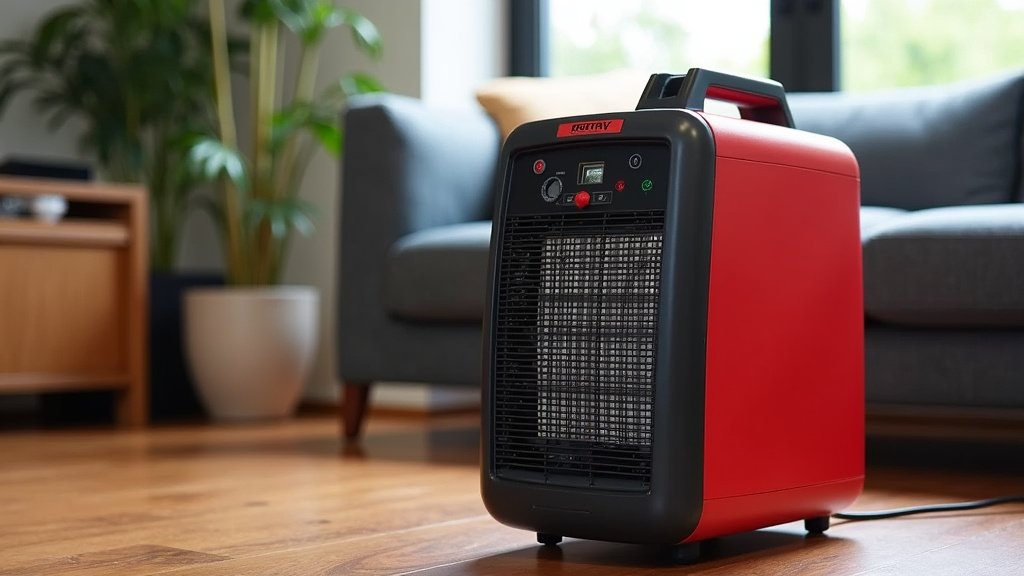
This is the make-or-break step. You need to compare your heater’s maximum wattage to your power station’s continuous output wattage.
Rule of Thumb: Your power station’s continuous output wattage must be equal to or greater than your space heater’s wattage. If your heater is 1500W, your power station needs to have a continuous output of at least 1500W.
What If Your Heater’s Wattage is Too High?
If you discover your space heater requires more power than your power station can provide continuously, you have a few options:
- Use a Lower Setting: Many heaters have a low-heat option. If your 1500W heater can run at 750W on low, and your power station can handle 750W continuously, you might be able to use it on the lower setting.
- Get a Lower-Wattage Heater: Consider purchasing a smaller, more energy-efficient space heater. Many compact models are designed to run on 500W or 750W, which is much more manageable for most power stations.
- Upgrade Your Power Station: If you need the full power of your current heater, you might need a larger power station with a higher continuous output.
We found that trying to push a power station beyond its limits is the quickest way to cause problems. It’s always better to play it safe and ensure a proper match.
A Quick Comparison Table
Here’s a simplified look at common scenarios. Remember to always check your specific device labels!
| Space Heater Wattage (Max) | Power Station Continuous Output Needed | Runtime Expectation (Approx. 1000Wh Battery) |
|---|---|---|
| 750W | 750W+ | ~1 hour |
| 1000W | 1000W+ | ~45 minutes |
| 1500W | 1500W+ | ~30 minutes |
Note: Runtime is an estimate and will vary based on battery health, temperature, and power station efficiency.
Safety First: Essential Precautions
Beyond matching the wattage, safety is paramount when using a space heater with any power source, especially a portable one. These devices generate heat, and unattended operation can be risky. Many safety guidelines from organizations like the National Fire Protection Association (NFPA) apply here.
Ventilation is Non-Negotiable
Space heaters, even electric ones, need airflow. They work by heating the air around them. If the air intake is blocked, the heater can overheat. Blocked airflow also means less effective heating for your space.
Ensure the heater is placed where air can freely circulate around it. Keep it away from curtains, bedding, furniture, and anything else that could obstruct the vents or catch fire. Good ventilation also helps dissipate any odors or moisture.
Placement Matters: Avoiding Hazards
Never place a space heater on soft surfaces like beds, sofas, or carpets that could block the bottom vents or pose a fire risk. A hard, level surface is best. The NFPA strongly advises against placing heaters too close to flammable materials.
We found that keeping a clear zone of at least three feet around the heater is a good practice. This reduces the risk of accidental contact with flammable items or clothing.
Never Leave It Unattended
This is a critical safety rule for all space heaters. Even though your power station might be safe, the heater itself is a heating element. We recommend never running a space heater while you are sleeping or when you leave the room. Always turn it off when it’s not actively being supervised.
This rule helps prevent accidental fires caused by tipping over, overheating, or materials getting too close. Your power station can help you stay warm, but active supervision is key to staying safe.
Check Your Heater’s Condition
Before you plug in your space heater, give it a quick inspection. Look for any frayed cords, loose connections, or damage to the casing or heating elements. If you see any signs of wear or damage, do not use the heater. A damaged appliance is a fire hazard.
We found that many older heaters may not have the same safety features as newer models. If your heater seems worn out, it might be time for an upgrade. The cost of a new heater is far less than the potential damage from a fire.
Your Space Heater & Power Station Safety Checklist:
- Verify heater’s maximum wattage.
- Confirm power station’s continuous output.
- Ensure power station output meets or exceeds heater needs.
- Place heater on a hard, level surface away from flammables.
- Ensure heater has clear space for ventilation.
- Never leave the heater unattended or use while sleeping.
Conclusion
You’ve learned that running a space heater on a power station is totally doable with the right approach. The key takeaway is always matching your heater’s wattage needs to your power station’s continuous output. We’ve seen how crucial it is to check those labels and understand the limits of both devices. Don’t forget about safety – good ventilation and smart placement are non-negotiable.
Your next step? Take a moment to check the labels on your space heater and power station. Once you have those numbers, you’ll know exactly if and how you can safely use them together to stay warm.
Frequently Asked Questions
Will a standard portable power station run my high-wattage space heater?
Probably not at full power. Most common portable power stations have a continuous output under 1500 watts, which is what many space heaters draw on high. You’ll likely need a lower setting or a more powerful, larger station for high-wattage models.
How can I make my power station last longer when running a heater?
Use the lowest heat setting your heater offers that still keeps you comfortable. Also, consider running the heater for shorter, intermittent periods rather than continuously, and ensure your power station is fully charged before you start.
Is it safe to run a space heater from a power station overnight?
We strongly advise against leaving any space heater unattended, including overnight. While the power station itself is safe, the heater is a heating appliance. Always turn it off when you’re not in the room or when you’re sleeping to prevent fire hazards.
Can I use an extension cord with my power station and space heater?
It’s best to avoid extension cords if possible. If you must use one, ensure it’s a heavy-duty cord rated for the wattage your heater draws and that it’s fully unspooled. Plugging directly into the power station is the safest option.
What happens if I overload my power station with a space heater?
If your heater draws more power than the power station can supply continuously, the station will likely shut itself off to prevent damage. This can be jarring and might shorten the lifespan of your power station if it happens frequently.