How to Use a Portable Gas Generator
Use a portable gas generator outdoors, away from doors and windows, then check the oil and fuel before starting it. Add loads one at a time, refuel only after shutdown and cooling, and turn off connected equipment before stopping the generator.
On this page (8 sections)
- Where should you set up a portable gas generator?
- What should you check before starting?
- How do you start a portable gas generator?
- How do you connect appliances to a generator?
- Can a generator run sensitive electronics?
- How do you refuel a portable gas generator?
- How do you shut down a portable gas generator?
- What is the safest order for using a portable gas generator?
Use a portable gas generator outdoors on a stable, dry surface, check its oil and fuel, start it with loads disconnected, and connect essential equipment one device at a time. Turn equipment off before shutting down, and never refuel a hot or running engine.
A generator produces exhaust and heat, so location and order matter as much as the wattage. Read the generator manual before the first use, including its fuel type, oil grade, grounding instructions, outlet limits, and transfer-switch requirements.
Where should you set up a portable gas generator?
Set up a portable gas generator outdoors in a dry, open area where exhaust cannot enter a home, RV, tent, shed, or vehicle. Keep it away from doors, windows, vents, and other openings, and protect it from rain without enclosing the engine.
Place the generator on a firm, level surface. Keep children, pets, and bystanders away from the hot muffler and moving parts, and route cords where people will not trip over them.
Never connect a generator to a wall outlet to power a home. A transfer switch installed by a qualified electrician is the correct route for selected household circuits.
For a broader overview of fuel choices and generator types, see this gas generator buying guide. If you need a quieter unit for camping or backup use, compare these best portable gas generators.
What should you check before starting?
Before starting a portable gas generator, check the oil level, fuel level, fuel cap, air openings, cords, and visible controls. Confirm that the generator is stable and that every appliance or extension cord is disconnected.
Use only the fuel and oil specified in the manual. Do not mix fuels unless the generator or a correctly matched conversion system supports that fuel.
Inspect cords for cuts, damaged plugs, or loose connections. Use outdoor-rated cords with a suitable current rating, and keep plugs and connections dry.
A generator used for truck travel may need a different size and layout than one used at home. Our guide to gas generators for trucks can help you compare that use case.
What does the Westinghouse 5000 Peak Watt Super Quiet Portable suit?
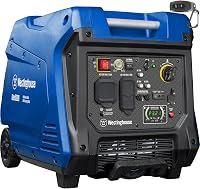
The Westinghouse 5000 Peak Watt Super Quiet Portable suits readers who need a gasoline inverter generator with 5000 peak watts and 3900 rated watts. It has a 120V household outlet, a 30 Amp RV-ready outlet, 2 USB outlets, electric and recoil starts, and a remote start with an included key fob.
Its 3.4-gallon tank can run for up to 18 hours according to the product information, while Economy Mode adjusts engine speed for fuel use. The digital display shows fuel level, power output, remaining runtime, voltage output, and lifetime hours.
The unit measures 24.5 x 17.5 x 20 in and weighs 104.7 lb. Its wheel and handle kit may help with movement, but measure your route and storage space before carrying or positioning it.
How do you start a portable gas generator?
Start a portable gas generator with loads disconnected and the fuel control set as directed by the manual. Open the fuel valve if required, set the choke for a cold engine, and use the recoil, electric, or remote start method supported by your model.
Let the engine run until it reaches a steady sound and output. If it does not start, stop and check the manual rather than repeatedly pulling the cord or changing several controls at once.
The Westinghouse unit has electric, recoil, and remote starting, plus an automatic choke. A manual-start model may require a choke lever for a cold start, so learn the control positions before an outage or trip.
How do you connect appliances to a generator?
Connect appliances only after the engine runs steadily, beginning with the most important load. Add devices one at a time and keep the combined starting and running demand below the generator's rated output.
Motors, pumps, refrigerators, and power tools can draw more power when they start. If the generator strains, trips a breaker, or changes speed sharply, disconnect the newest load and check the manual.
Use the correct outlet for each device. The Westinghouse 30 Amp TT-30R outlet is intended for compatible RV connections, while its 120V household outlet and USB outlets suit other supported loads.
Never use a damaged cord or connect a generator directly to household wiring. For welding equipment, output and starting demand need careful matching.
See these best gas generators for welding before choosing a generator for that work.
Can a generator run sensitive electronics?
An inverter generator may suit sensitive electronics when its output specifications match the equipment. The Westinghouse model has less than 3% total harmonic distortion, and its product information describes it for devices such as laptops, tablets, mobile devices, and televisions.
That specification does not remove the need to check each device's power adapter and the generator's manual. Keep electronics away from rain, fuel, heat, and damp ground.
A portable power station may fit quiet indoor-adjacent charging needs better because it has no fuel exhaust while operating. Compare a portable power station with a gas generator for camping before a trip.
How do you refuel a portable gas generator?
Refuel a portable gas generator only after switching it off and letting the engine and muffler cool. Move fuel containers away from flames, cigarettes, sparks, and hot surfaces, and follow the manual's fuel and storage instructions.
Place the generator on level ground before opening the fuel cap. Pour slowly, avoid overfilling, and wipe up any spill before starting the engine.
Never refuel while the engine is running. Keep fuel in an approved container and store it where the generator manual and local rules allow.
Can a generator use propane or natural gas?
A generator can use propane or natural gas only when it was designed or correctly converted for that fuel. A conversion kit must match the engine, carburetor style, displacement, available space, and installation instructions.
The HIPA 389cc 420cc Tri Dual Generator Carburetor is a conversion kit for gasoline, propane, and natural gas use. It is described for Honda GX340, GX390, GX420, and GX460 engines and compatible clones, with a 3-position rotary switch and manual choke lever.
Check your generator's engine displacement, original carburetor style, and physical clearance before choosing this type of kit. Compatibility with one engine family does not mean it fits every portable generator.
For Generac-focused options, see the guide to best Generac gas generators. Do not install a conversion kit without following its instructions or confirming that your generator matches the required design.
Who is the Hutch Mountain Generator Dual-Fuel Conversion Kit for Honda for?
The Hutch Mountain Generator Dual-Fuel Conversion Kit for Honda suits owners of compatible Honda EU2000i, EU2200i, and EU3000i generators who want gasoline and propane options. Its product information describes basic-tool installation, a photo-based manual, fuel adapters, and metal components.
Verify the exact inverter model before installation. The kit's product information also refers to natural gas compatibility, so follow the instructions for the specific configuration rather than assuming every fuel connection is interchangeable.
A conversion changes the fuel system, so inspect fittings and connections before starting. If anything does not match the instructions or the generator, stop and get qualified help.
How do you shut down a portable gas generator?
Shut down a portable gas generator by turning off connected appliances first, removing loads, and then using the generator's stop control. Let the engine finish its normal shutdown process before covering or storing the unit.
Do not stop the engine by pulling a cord or blocking airflow. After shutdown, check for fuel spills, damaged cords, unusual heat, or loose connections.
If you will store the generator, follow the manual for fuel treatment, tank draining, oil care, and battery care. Store it in a dry, ventilated location away from living areas and ignition sources.
What is the safest order for using a portable gas generator?
The safest order is position, inspect, start, stabilize, connect, monitor, disconnect, cool, and store. This keeps fuel, exhaust, electrical loads, and hot parts under control.
Choose a generator based on the loads you actually need. Pick a gasoline inverter generator when clean output, RV power, and multiple start methods matter.
Pick a compatible conversion kit when an existing generator and its engine match the required specifications.
For fuel flexibility, choose the HIPA kit for compatible 340cc to 460cc Honda GX-style engines or the Hutch Mountain kit for compatible Honda EU2000i, EU2200i, and EU3000i models. For a ready-to-run gasoline unit, consider the Westinghouse model's 5000 peak watts and 3900 rated watts.
The key rule for learning how to use a portable gas generator is simple: keep it outdoors, connect only essential loads, refuel after cooling, and follow the manual for every fuel and electrical connection.
Frequently asked questions
How do you use a portable gas generator safely?
Set the portable gas generator outdoors in a dry, open area away from doors, windows, vents, and enclosed spaces. Check the manual, oil, fuel, cords, and load limits before starting.
Connect appliances after the engine runs steadily, and stop the generator before refueling.
Can you run a portable gas generator in a garage?
No. A portable gas generator should not run inside a garage, shed, tent, vehicle, or other enclosed area, even with the door open.
Exhaust can collect in spaces that seem ventilated.
Place it outdoors on a stable, dry surface and keep people away from hot parts.
When should you refuel a portable gas generator?
Refuel only after turning off the portable gas generator and allowing the engine and muffler to cool. Keep fuel away from sparks, flames, and hot surfaces.
Use the fuel type and storage method required by the generator manual, and wipe up spills before restarting.
What should you connect first to a portable gas generator?
Start the portable gas generator with no loads connected unless its manual says otherwise. Let it reach steady operation, then connect the largest essential load first and add other devices one at a time.
Keep the combined starting and running demand within the generator's limits.