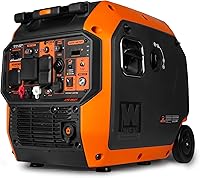
What Is an Electric Start Generator?
An electric start generator uses a battery-powered starter motor to turn the engine on with a button or remote. Many models also include recoil starting as a backup if the battery is low.
On this page (8 sections)
- How does an electric start generator work?
- Is push-button starting better than a pull cord?
- What is remote start on a generator?
- Which generator features matter besides electric start?
- What is recoil starting, and why keep it?
- How should you use an electric start generator safely?
- Can an electric start generator power sensitive electronics?
- What should you check before buying?
An electric start generator uses a starter battery and electric motor to turn the engine when you press a button. Some models also accept a remote key fob and include a recoil starter, giving you a convenient first choice and a manual backup.
The term describes how the engine starts, not the generator's fuel type or total output. Electric start is available on gasoline, propane, dual-fuel, conventional, and inverter generators.
How does an electric start generator work?
Pressing the start button sends battery power to a starter motor, which turns the engine until combustion begins. Once the engine runs, the generator produces electricity for its outlets and may recharge the starter battery through its charging system.
The process is similar to starting a car, but a portable generator usually has a control panel with a start switch, fuel controls, breakers, and display information. Follow the model's starting sequence, especially when using propane or when the engine is cold.
Electric starting saves effort when the generator is placed outside during an outage. It can also help when the generator is heavy or positioned where repeatedly pulling a recoil cord would be awkward.
What does the starter battery do?
The starter battery supplies the short burst of power needed by the electric starter motor. It doesn't power your home appliances through the generator's outlets.
A battery can lose charge during storage, so inspect it before an expected outage. Use the supplied charger or the charging method approved for your generator, and keep electrical connections dry.
Electric start doesn't remove the need for ordinary care. Fuel, oil, air flow, spark, and safety systems still affect whether the engine runs.
Is push-button starting better than a pull cord?
Push-button starting is easier when you want quick operation with less physical effort. A pull cord remains valuable because it can start a compatible engine when the battery is weak or the electric system is unavailable.
A recoil starter requires a firm pull and the correct starting position. It may be useful during long storage, after a battery problem, or when you want to confirm that the engine has a second starting method.
The best choice depends on where you will use the generator. For occasional emergency use, electric start adds convenience, while recoil backup adds confidence.
For regular travel, a button or remote can make repeated starts simpler.
What is remote start on a generator?
Remote start lets you start a compatible generator from a short distance with a key fob. It is useful when the generator is already positioned outdoors and you want to avoid standing beside the machine during every start.
Remote starting still depends on the generator's battery and control system. Keep the key fob with the generator supplies, and learn the correct shutdown process rather than using remote start as a substitute for safe operation.
A remote-start model may also have a button on its control panel and a recoil cord. Compare the available starting methods in our guide to the best electric start generators.
Which generator features matter besides electric start?
Choose based on running watts, starting watts, fuel, outlets, noise, safety controls, and portability after confirming the starting system. Electric start improves convenience, but it doesn't tell you whether the generator can run your intended appliances.
Running watts describe the power the generator can supply continuously. Peak watts describe the short-term surge available when some motor-driven appliances start.
Fuel choice also changes how you plan for an outage. Gasoline may suit normal portable use, while dual-fuel models let you choose between gasoline and propane when both are supported.
For a broader look at gasoline models, read the fuel generators complete buying guide.
What does a compact electric start generator suit?
A compact model can suit camping, travel trailers, and lighter home backup needs when its rated output and outlets match your equipment. The Westinghouse 5000 Peak Watt Super Quiet Portable has 5000 peak watts and 3900 rated watts, plus electric, recoil, and remote start with an included key fob.
It has a 5–20R 120V duplex outlet, an RV-ready TT-30R 30 amp outlet, and 2 USB outlets. The inverter generator also has a rotating digital display for fuel level, power output, remaining run time, voltage output, and lifetime hours.
Its title and data fit readers who value quieter operation and portable handling. It has a telescoping handle, wheel and handle kit, and a claimed noise output as low as 52 dBA.
The gasoline tank is 3.4 gallons, with a stated run time of up to 18 hours.
The trade-off is lower output than the larger dual-fuel options below. Choose it when 3900 rated watts and its 120V and RV outlets cover your planned loads.
When does a larger dual-fuel generator make sense?
A larger dual-fuel generator suits home backup buyers who want more output and a choice of gasoline or propane. The Westinghouse 12500 Watt Dual Fuel Home Backup Portable produces 12500 peak watts and 9500 running watts on gasoline, or 11200 peak watts and 8500 running watts on propane.
It has remote, push-button electric, and recoil starting. The control panel includes 2 GFCI 120V 5–20R household receptacles, a transfer-switch-ready 120V L14-30R 30A outlet, and an RV-ready 120/240V 14-50R 50A outlet.
The 6.6 gallon gasoline tank has a stated run time of up to 12 hours. A fuel gauge, automatic low-oil shutdown, digital hour meter, and VFT display help you monitor operation.
This open-frame generator is the biggest option by physical dimensions among these 3 products, at 27.2 x 26.1 x 26.5 inches. Plan its storage and moving route before an outage, and use a qualified electrician for any transfer-switch connection.
Who should consider an inverter generator with electric start?
An inverter generator with electric start can suit buyers who want high output, low stated THD, and dual-fuel flexibility. The Westinghouse 12000 Peak Watt Dual Fuel Portable Inverter Generator provides 12000 peak watts and 9000 running watts on gasoline, or 11000 peak watts and 8100 running watts on propane.
It has remote electric start, a 50A outlet, a 30A twist-lock outlet, a GFCI 120V 5–20R duplex outlet, and parallel capability. Its data center shows fuel level, power output, remaining run time, voltage, and lifetime hours.
The title and data identify operation at no more than 3% THD, a CO sensor, Eco Mode, and a stated noise output as low as 64 dBA. Its 7.9 gallon gasoline tank has a stated run time of up to 19 hours at 25% load.
At 187.4 lb and 30.2 x 25.2 x 26.6 inches, it needs more planning to move than the smaller inverter model. Its output and 120/240V connections make it a stronger match for larger backup loads.
What is recoil starting, and why keep it?
Recoil starting is the manual pull-cord method that turns the engine without using the electric starter. It serves as a backup when the starter battery is low, the battery connection needs attention, or you want another way to start the generator.
Recoil starting doesn't mean the generator lacks electric start. The 3 products here include electric starting and recoil starting, while the larger inverter model's data identifies its ignition system as electronic and its description includes push-button and remote starting.
If you are adding electric start to an older generator, compare the engine and control-panel requirements before buying a generator electric start kit. A kit must match the generator rather than simply fit the frame.
How should you use an electric start generator safely?
Run a fuel generator outdoors, far from doors, windows, and vents, and keep carbon monoxide away from occupied spaces. Never use one in a home, garage, basement, or enclosed porch, even when doors or windows are open.
The U.S. Consumer Product Safety Commission advises using portable generators outside and away from openings.
Its portable generator safety guidance also covers carbon monoxide risks and safe placement.
Before starting, place the generator on a stable outdoor surface, check the fuel and oil procedure in its manual, and connect loads only after the engine is running as directed. Keep cords rated for the load and protect connections from wet conditions.
For a model with a CO sensor, treat the sensor as an added safety feature, not permission to operate indoors. Stop operation and move away if a carbon monoxide alarm sounds.
Can an electric start generator power sensitive electronics?
Some inverter generators are designed to produce cleaner, steadier power for sensitive electronics, but you still need to follow the generator's load and connection instructions. Electric start itself doesn't determine power quality.
The Westinghouse 5000 Peak Watt Super Quiet Portable and Westinghouse 12000 Peak Watt Dual Fuel Portable Inverter Generator both identify less than or no more than 3% THD in their data. The 12500 Watt Dual Fuel Home Backup Portable is an open-frame generator rather than an inverter model.
Match the generator's rated output to the equipment you want to run. For extra planning around battery-based power, compare how a solar generator works and whether a solar generator can run an electric kettle.
What should you check before buying?
Check the starting methods, rated watts, fuel options, outlet types, battery care needs, and safe placement plan before choosing an electric start generator. Then compare the convenience of remote or push-button starting with the size and output you actually need.
Choose the Westinghouse 5000 Peak Watt Super Quiet Portable for a smaller gasoline inverter generator with RV-ready power, remote start, and a recoil backup. Choose the Westinghouse 12500 Watt Dual Fuel Home Backup Portable for higher gasoline or propane output and transfer-switch-ready connections.
Choose the Westinghouse 12000 Peak Watt Dual Fuel Portable Inverter Generator when inverter operation, low stated THD, dual fuel, a CO sensor, and higher output matter more than compact size. In every case, keep the starter battery charged and learn the recoil procedure before an emergency.
For the closest next comparison, see the best dual fuel generator with remote start and best inverter generator with electric start guides.
Frequently asked questions
What is an electric start generator?
An electric start generator has a starter motor powered by a battery. Pressing a button sends power to the starter, which turns the engine until it runs.
Many models also include recoil starting, so you have a manual backup if the battery is low or the electric start system needs attention.
Does an electric start generator need a battery?
Yes, the electric starting system needs a charged starter battery. The generator may recharge that battery while running, but storage, cold conditions, and long periods without use can reduce charge.
Keep the battery and charging instructions in your regular generator care routine.
Can you start an electric start generator without the battery?
You can start it without the battery only if the generator also has a recoil starter and the engine is otherwise ready to run. A model with electric start alone cannot use its button when the starter battery is disconnected or empty, so check the starting options before buying.
Is remote start the same as electric start?
Remote start uses the same basic electric starting idea, but the command comes from a key fob instead of a button on the control panel. A generator can have push-button electric start, remote start, and recoil start together, giving you several ways to begin operation.