Is a Deep-Cycle Battery Always Lead-Acid?
No. A deep-cycle battery isn't always lead-acid. Deep-cycle describes how a battery is built to handle repeated discharging and recharging; lead-acid describes its chemistry.
On this page (6 sections)
No. A deep-cycle battery isn't always lead-acid.
Deep-cycle describes how a battery is built to handle repeated discharging and recharging; lead-acid describes its chemistry.
That distinction matters when you're replacing a battery or choosing power for a boat, RV, mobility device, or backup setup. For boat applications, compare marine deep-cycle batteries.
A battery can be both deep-cycle and lead-acid, but those terms answer different questions.
What does “deep-cycle” mean?
Deep-cycle means a battery is designed for repeated discharging and recharging. It describes the battery's intended duty, not the chemicals inside it.
Battery Council International defines deep discharge as removing a relatively large part of a battery's capacity and says deep-cycle batteries are designed to handle repeated deep discharges. The exact cycle life depends on the battery and how it's used.
A starting battery has a different job: delivering a strong burst of power to start an engine. For help choosing between the two, read the deep-cycle vs starting battery guide.
A dual-purpose battery may serve starting and cycling needs, but its capabilities depend on its design.
Don't treat “rechargeable” as a synonym for “deep-cycle”; many rechargeable batteries are made for other uses.
If you're new to the terminology, our guide to what a deep-cycle battery is explains the basic ratings and common applications.
Does “lead-acid” describe the same thing?
No. Lead-acid names a battery chemistry, while deep-cycle names a design purpose.
A lead-acid battery may be built for starting, standby power, or deep-cycle use.
Lead-acid deep-cycle batteries come in different constructions. Flooded batteries contain liquid electrolyte, while sealed types include AGM.
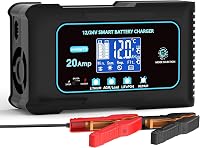
The construction affects handling and care, so follow the battery maker's instructions for installation, charging, and ventilation. For routine care of a vehicle battery, see battery maintainers for cars.
AGM stands for absorbed glass mat. It is a sealed lead-acid construction in which a glass mat holds the electrolyte.
Some AGM batteries are designed for deep-cycle applications; the AGM label alone doesn't tell you the intended duty. For more detail, see whether an AGM battery is deep-cycle.
Is an AGM battery always deep-cycle?
No. AGM tells you how a lead-acid battery is constructed, not whether it's made for deep cycling.
Check its stated application and the requirements of your equipment.
For example, the Interstate Batteries 12V 35Ah SLA AGM Deep is described as a deep-cycle mobility battery for devices such as electric wheelchairs and scooters. It's a 12 V, 35 Ah AGM battery with insert terminals.
Confirm the terminal type, dimensions, voltage, and compatibility with your device before choosing a replacement. Interstate says this model isn't a replacement for golf cart batteries.
Can lithium batteries also be deep-cycle?
Yes. Lithium is a chemistry family, and some lithium batteries are designed for deep-cycle use.
The label “lithium” alone doesn't confirm that a battery suits your application.
Compare the battery's voltage and capacity with your equipment's requirements. Also check its charging method, discharge limits, battery-management requirements, and physical fit.
A charger made for lead-acid may not be compatible with a lithium battery.
The practical tradeoffs can differ by battery model and system. Our deep-cycle lead-acid vs lithium comparison covers the main choice points.
How do deep-cycle and cycle-life labels differ?
Deep-cycle describes intended use; cycle life is an estimate of how many cycles a battery can complete under stated conditions. A cycle generally means one discharge followed by one recharge, but tests can use different discharge depths and conditions.
That makes cycle-life figures hard to compare without the test details. Read the manufacturer's conditions and limits, then consider how your own equipment will use and recharge the battery.
A power station's cycle-life rating also doesn't mean every battery inside it is lead-acid. If you're comparing power stations for outdoor use, consider how capacity and cycle life match your needs, as discussed in whether a bigger power station is always better for camping and portable power station cycle life.
How can you tell what kind of battery you need?
Start with the equipment manual and the battery's full specifications. Confirm the chemistry, intended use, voltage, capacity, terminal type, dimensions, and charger compatibility before buying.
A matching voltage by itself isn't enough. The battery must also fit the compartment and support the equipment's charging and discharge requirements.
If you're replacing a battery, use the existing model number and terminal layout as reference points, then verify the new battery against the equipment maker's instructions.
A few examples show how chemistry and intended use fit together:
- The VMAXTANKS VMAX MR127 is a 12 V, 100 Ah AGM marine deep-cycle battery. Its stated applications include compatible trolling motors and onboard electronics.
- The Mighty Max Battery ML35-12 is a 12 V, 35 Ah sealed lead-acid AGM rechargeable battery. Its listed uses include solar and other applications, but confirm compatibility with your setup.
- The Interstate Batteries model above is a 12 V, 35 Ah sealed lead-acid AGM battery intended for mobility applications.
These examples are lead-acid AGM batteries, but they don't mean all deep-cycle batteries use that chemistry. For an AGM shortlist, see best AGM deep-cycle batteries.
What should you check before replacing a battery?
Match the battery to the device, not just to the words “deep-cycle.” Verify the exact chemistry and specifications before connecting it.
Use this quick check:
- Chemistry: Is the replacement lead-acid, lithium, or another type approved for the equipment?
- Voltage: Does it match the device's required voltage?
- Capacity: Is the battery's capacity suitable for the expected use?
- Charging: Is your charger designed for that chemistry and model?
- Fit and connections: Do the dimensions, terminal type, polarity, and cable connections match?
- Application: Does the battery maker identify the model for your intended use?
If you aren't sure whether a battery or charger is compatible, ask the equipment or battery manufacturer before connecting them. Incorrect charging or wiring can damage equipment and create a safety hazard.
So, is a deep-cycle battery lead-acid?
Sometimes, but not always. Deep-cycle describes how a battery handles repeated discharge and recharge; lead-acid describes its chemistry.
Some deep-cycle batteries are lead-acid, including AGM models, and some are lithium.
Choose lead-acid or AGM when the equipment specifies a compatible model. Consider lithium only when the device, charger, and battery specifications support it.
For more on AGM's place among deep-cycle batteries, read whether AGM is a deep-cycle battery.
What is the difference between a deep-cycle battery and a lead-acid battery?
A deep-cycle battery is defined by its intended cycling duty; a lead-acid battery is defined by its chemistry. The labels can describe the same battery, but neither label guarantees the other.
Check the battery's intended application and the compatibility requirements for your device.
Frequently asked questions
Is a deep-cycle battery always lead-acid?
No. Deep-cycle describes a battery's ability to handle repeated discharge and recharge, while lead-acid describes its chemistry.
Lead-acid deep-cycle batteries include flooded and sealed types such as AGM.
Lithium batteries can also be designed for deep-cycle use, so check both the chemistry and the manufacturer's intended use.
Is every lead-acid battery deep-cycle?
No. Lead-acid batteries are made for different jobs, including engine starting, standby power, and repeated cycling.
A starting battery is designed to deliver a brief burst of current, while a deep-cycle model is intended for repeated discharging and recharging.
Match the battery to your equipment and its manual.
Is AGM a type of lead-acid battery?
Yes. AGM stands for absorbed glass mat, a construction used in sealed lead-acid batteries.
The mat holds the electrolyte.
AGM describes how the battery is made, while deep-cycle describes its intended cycling duty, so an AGM battery can be deep-cycle when designed for that use.
Can a lithium battery be deep-cycle?
Yes. Lithium batteries can be designed for repeated cycling and used as deep-cycle batteries.
Check the battery's voltage, capacity, discharge limits, charging requirements, and compatibility with your equipment.
Don't assume a lithium battery can replace a lead-acid model without checking the device and charger instructions.