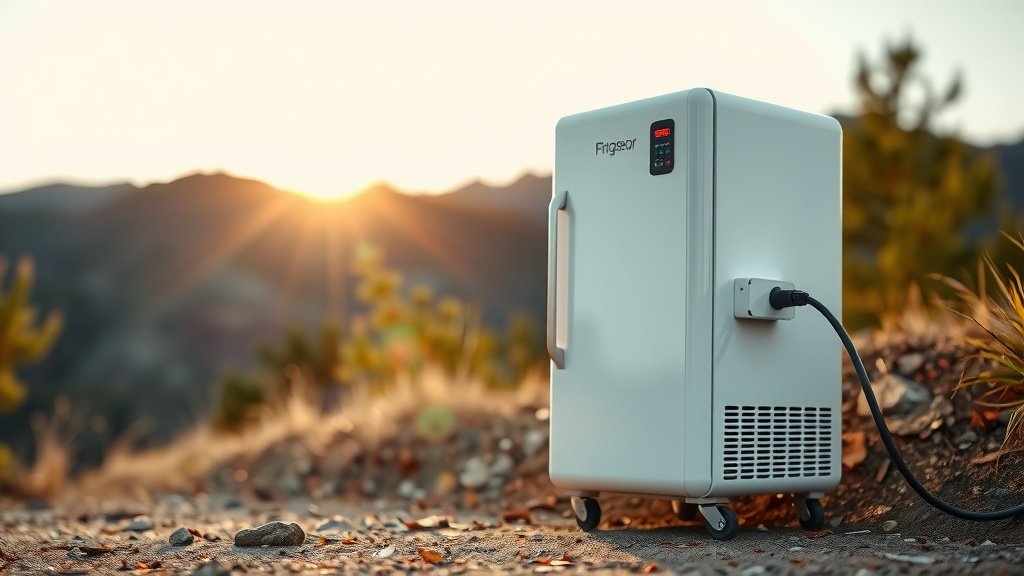
Yes, a portable power station can run a refrigerator, but the size of both the power station and refrigerator determines how long it will work.
Most portable power stations with 1000-3000 watt-hours can power a standard home refrigerator for 4-20 hours, depending on the fridge’s energy consumption and ambient temperature.
What Size Power Station Do You Need?
Your refrigerator’s power needs depend on its size and age. I found that newer models use much less energy than older ones.
Here’s what you’re looking at for daily energy use:
- Mini fridge: 200-400 watt-hours per day
- Standard refrigerator: 1000-2000 watt-hours per day
- Large or old refrigerator: 2000-4000 watt-hours per day
The tricky part? Your fridge doesn’t run constantly. It cycles on and off to maintain temperature.
Understanding Your Fridge’s Power Draw
When your refrigerator starts up, it needs extra power for about 3-5 seconds. This startup surge can be 3-7 times higher than normal running power.
A typical fridge might use 150 watts while running but need 800-1000 watts during startup. Your power station must handle both.
How Long Will It Actually Run?
Let me break this down with real numbers. Say you have a 1500 watt-hour power station and a refrigerator that uses 1200 watt-hours daily.
You might think: “Great, I get 30 hours!” But that’s not quite right.
Power stations lose about 10-15% efficiency during conversion. So your 1500 watt-hours becomes about 1300 usable watt-hours.
Calculating Runtime for Your Setup
Here’s a simple formula I use: Divide your power station’s capacity by your fridge’s daily consumption, then multiply by 0.85 for efficiency loss.
Example: 1500 ÷ 1200 × 0.85 = about 1.06 days or roughly 25 hours.
Real-World Factors That Change Everything
Your actual runtime depends on several things you might not think about.
Hot weather makes your fridge work harder. Opening the door frequently does too. An empty fridge cycles more than a full one.
Temperature Matters More Than You Think
I found research showing that refrigerator energy use can increase 20-30% when room temperature rises from 70°F to 90°F.
If you’re camping in summer heat, your power station won’t last as long as the calculations suggest.
Age and Efficiency Ratings
Older refrigerators can use twice as much energy as new Energy Star models. Check that yellow EnergyGuide sticker for the real numbers.
A 20-year-old fridge might use 2000 watt-hours daily while a new efficient model uses just 1000.
Best Power Station Sizes for Different Fridges
| Refrigerator Type | Daily Energy Use | Recommended Power Station | Expected Runtime |
|---|---|---|---|
| Mini fridge | 200-400 Wh | 500-1000 Wh | 1-3 days |
| Standard fridge | 1000-1500 Wh | 1500-3000 Wh | 1-2 days |
| Large fridge | 2000-3000 Wh | 3000-5000 Wh | 1-2 days |
Startup Power Requirements
Don’t forget about surge power. Your power station needs enough continuous output to handle the startup spike.
Most refrigerators need 800-1200 watts of surge power. Make sure your power station can deliver at least that much continuous power.
Tips to Maximize Your Runtime
Want to squeeze every hour out of your power station? Here are tricks that actually work.
Pre-Cool Everything
Before switching to battery power, run your fridge on AC power to get everything super cold. The colder you start, the longer it lasts.
Set your fridge to its coldest safe setting (around 35°F) before the power goes out.
Keep It Full But Not Packed
A full fridge holds cold better than an empty one. The mass of food and drinks acts like thermal storage.
But don’t pack it tight. Air needs to circulate for efficient cooling.
Strategic Food Placement
Put frozen water bottles or ice packs on the top shelf. Cold air sinks and helps keep everything cool with less compressor work.
Minimize Door Opening
Every time you open the door, cold air escapes and warm air enters. Plan what you need before opening.
I read that each door opening can cost 5-10 minutes of runtime on battery power.
Solar Panels: The Game Changer
Want to run your refrigerator indefinitely? Solar panels change everything.
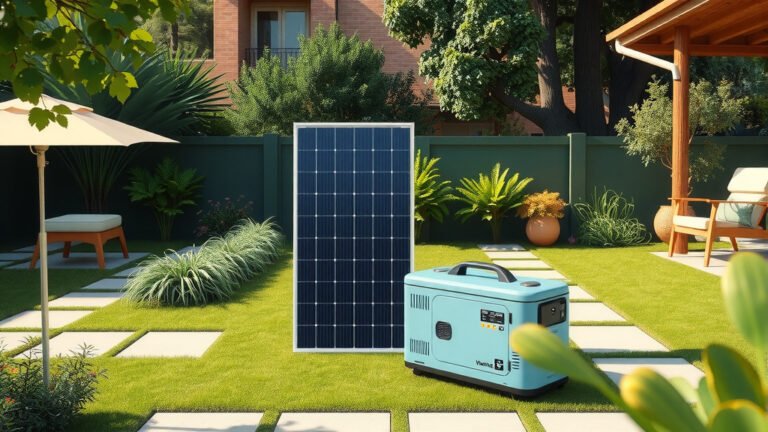
A 400-watt solar panel setup can generate 1600-2400 watt-hours on a sunny day. That’s enough to keep most fridges running.
Solar Panel Sizing
For a standard refrigerator using 1200 watt-hours daily, you need about 300-400 watts of solar panels in good sun conditions.
Add 25-50% extra capacity for cloudy days and charging inefficiencies.
Cloudy Day Planning
Solar panels produce much less power on cloudy days. You might get only 20-40% of rated output.
This is where your power station’s battery capacity becomes important for overnight and low-sun periods.
Choosing the Right Power Station
Not all power stations work well with refrigerators. You need specific features.
Pure Sine Wave Output
Your refrigerator’s compressor needs clean power. Make sure your power station has pure sine wave output, not modified sine wave.
Modified sine wave can damage refrigerator motors over time and makes them run less efficiently.
Sufficient Continuous Output
Look at continuous watts, not peak watts. Your power station needs to deliver 800-1200 watts continuously for refrigerator startup.
Cooling and Ventilation
Power stations get hot when running high loads. Make sure yours has good cooling fans and ventilation.
Overheating can reduce capacity and damage the battery over time.
Safety Considerations
Running a refrigerator on battery power is generally safe, but there are things to watch.
Ventilation Requirements
Never run your power station in an enclosed space. They need airflow to prevent overheating.
Keep at least 12 inches of clearance on all sides during operation.
Battery Health Monitoring
Don’t drain your power station below 20% capacity regularly. Deep discharges shorten battery life significantly.
Most quality units have built-in protection, but it’s good practice to monitor levels.
Temperature Limits
Extreme temperatures affect both your power station and refrigerator efficiency. Very hot or cold conditions reduce performance.
Cost Analysis
Is running a fridge on battery power cost-effective? It depends on your situation.
Upfront Investment
A power station big enough for refrigerator use costs $1000-$3000. Add solar panels for another $500-$1500.
Compare this to a backup generator or the cost of replacing spoiled food during outages.
Long-term Savings
Power stations require minimal maintenance compared to generators. No fuel costs, no oil changes, no carburetor cleaning.
Solar charging means free power after your initial investment.
Alternatives to Consider
Portable power stations aren’t your only option for keeping food cold during outages.
DC Refrigerators
Purpose-built 12V refrigerators use 30-50% less power than standard AC units. They’re designed for RV and marine use.
These connect directly to your power station without needing an inverter, saving energy.
High-Quality Coolers
Premium coolers can keep ice for 5-10 days. For short outages, this might be more practical than a power station.
Pair with frozen water bottles or dry ice for extended cooling.
Conclusion
Running a refrigerator with a portable power station is absolutely possible and practical for many situations. The key is matching your power station capacity to your refrigerator’s energy needs while accounting for efficiency losses and environmental factors.
Most standard refrigerators need 1000-2000 watt-hours daily, so a 1500-3000 watt-hour power station gives you 1-2 days of runtime. Adding solar panels extends this indefinitely in sunny conditions. Focus on getting a pure sine wave unit with sufficient continuous output and consider pre-cooling strategies to maximize your runtime.
Can I damage my refrigerator by using a portable power station?
No, as long as you use a pure sine wave power station with adequate continuous output rating. Avoid modified sine wave units which can harm compressor motors over time. Make sure your power station can handle the startup surge power your refrigerator needs.
How do I find out exactly how much power my refrigerator uses?
Check the yellow EnergyGuide label on your fridge for annual energy consumption, then divide by 365 for daily use. You can also use a kill-a-watt meter plugged between your fridge and wall outlet to measure actual consumption over 24 hours for more accurate numbers.
Will running my refrigerator drain the power station faster in summer?
Yes, hot ambient temperatures make refrigerators work 20-30% harder to maintain cold temperatures. Your power station will drain faster during heat waves or when the unit is in a warm room or garage without air conditioning.
Can I run other appliances while powering my refrigerator?
This depends on your power station’s capacity and continuous output rating. Small devices like LED lights, phones, or fans usually work fine alongside a refrigerator. Avoid high-draw appliances like microwaves, hair dryers, or electric heaters which will quickly drain your battery.
What happens if my power station runs out of power while connected to my refrigerator?
Your refrigerator will simply stop running, just like during a regular power outage. Modern refrigerators can safely restart once power returns. Keep the door closed to maintain cold temperatures, and your food should stay safe for several hours depending on how full the fridge is.