Portable Power Station vs Inverter: Which Do You Need? (November 2026)
Choose a portable power station for stored power you can use away from a vehicle, or an inverter when you have a compatible battery or vehicle source. A station combines a battery, inverter and outlets; a standalone inverter converts DC power to AC but needs a power source.
On this page (9 sections)
- Portable power station vs inverter: what is the difference?
- Which one works away from your vehicle?
- When does a vehicle inverter make more sense?
- How much power and runtime do you need?
- Which setup is easier to carry and connect?
- What about solar charging and backup use?
- Which option costs less over time?
- Which should you choose?
- Is a portable power station vs inverter setup right for you?
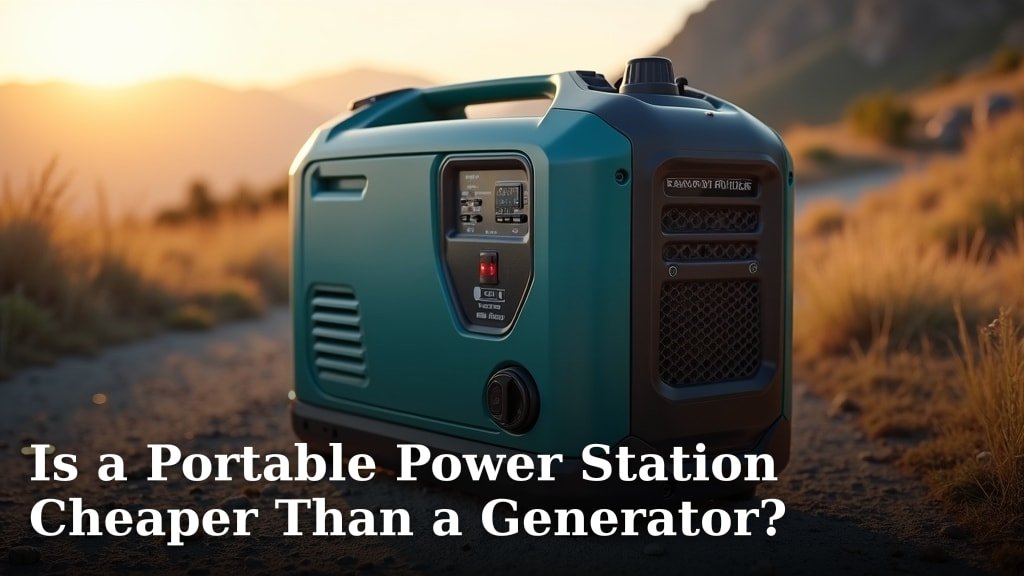
Choose a portable power station for stored power you can use away from a vehicle, or an inverter when you have a compatible battery or vehicle source. In a portable power station vs inverter comparison, the key difference is that a station includes a battery while a standalone inverter needs power from somewhere else.
A station puts a battery, inverter and output ports in one unit. An inverter changes DC power into AC power, but you must supply the DC source and plan how long it can run.
That difference affects camping, road trips and emergency use. Decide where the power will come from, which devices you need to run and whether you need to move the setup.
 Best for light portable power
Jackery Explorer 300 Portable Power Station
 Best for higher output
Jackery Explorer 1000 v2 Portable Power Station
Portable power station vs inverter: what is the difference?
A portable power station stores energy; a standalone inverter converts energy supplied by a separate source. Both can provide AC power, but only the station in this comparison includes its own battery.
A power station can usually recharge from a wall outlet, vehicle outlet or compatible solar panels, depending on the model. Its battery capacity gives you a starting point for estimating how much energy is available.
An inverter draws DC power from a source such as a vehicle or separate battery, then supplies AC power within its output limit. The inverter itself doesn't tell you how much stored energy is available.
A vehicle inverter may provide outlets for small electronics while the vehicle is parked. Follow the vehicle and inverter instructions, and don't assume the car socket can support the inverter's full rated output.
Which one works away from your vehicle?
A portable power station is the straightforward choice when you need power at a campsite, work area or room without a vehicle nearby. Its built-in battery travels with the outlets.
A compact station can sit beside a laptop, camera or other small device. The Jackery Explorer 300 has a 292Wh capacity, 300W rated output and weighs 7.5 lb.
A larger station can support devices with greater power needs, provided their wattage fits the station's output limits. The Jackery Explorer 1000 v2 combines 1,070Wh of capacity with 1,500W AC output.
A standalone inverter does not provide that independence on its own. To use one away from a vehicle, pair it with a compatible battery and plan the wiring and available energy for the entire setup.
If you are deciding whether a station suits your needs at all, what a portable power station is explains how its battery and outlets work together. Our guide to using a portable power station covers practical setup and operation.
When does a vehicle inverter make more sense?
Choose a vehicle inverter when you mainly need AC or USB power from a compatible vehicle source. It can be a compact way to charge devices during travel without carrying a separate battery station.
The BESTEK inverter accepts 11–17V DC input and provides 300W continuous output through 2 AC outlets and 2 USB ports. The PiSFAU car inverter is designed for a 12V vehicle socket and provides 200W output, 2 AC outlets and 4 USB ports.
These inverters don't include batteries, so their usable runtime depends on the vehicle power source and how you use it. The PiSFAU model is for DC 12V cars only, and its instructions caution against high-power devices such as heaters and hair dryers.
Check the vehicle manual before connecting an inverter, especially if you plan to run it while the engine is off. A vehicle battery can run down, and socket or wiring limits may be lower than an inverter's headline output.
How much power and runtime do you need?
Match the device's watts to the inverter's output, then match its runtime to the energy source. Output watts tell you what can run at once; battery watt-hours help estimate how long a station can supply energy.
Add the wattage of devices you expect to use at the same time. Keep the total below the station's or inverter's rated output, and check whether a device has a higher startup demand.
For a power station, a rough runtime estimate divides usable battery energy by device draw. Real runtime varies with conversion losses, device cycling and other conditions, so treat a calculation as a planning estimate.
With a standalone inverter, you also need the battery's capacity and the inverter's conversion losses to estimate runtime. If the inverter uses a vehicle socket, the car's electrical limits and operating instructions matter too.
The Explorer 300 is rated for 300W output, so it is aimed at lighter loads than the Explorer 1000 v2, which has 1,500W AC output. Choose by the demands of your actual devices rather than the name or size of the unit.
Which setup is easier to carry and connect?
A power station is simpler as a portable package; an inverter can be smaller but needs a separate power source. Consider the full setup, not just the inverter's size.
The Jackery Explorer 300 weighs 7.5 lb and has an integrated handle. The Explorer 1000 v2 weighs 23.8 lb, so it offers more capacity and output with a heavier load to carry.
A car inverter can be compact: the BESTEK weighs 14.4 oz, and the PiSFAU weighs 8.8 oz. Those weights don't include a separate battery because these models draw from a vehicle source.
For a station, place the unit where its vents and ports remain accessible, then connect devices within its output limits. For an inverter and separate battery, you also need compatible connections, suitable cables and a safe location for the battery.
What about solar charging and backup use?
A station is often simpler when you want to recharge a built-in battery from compatible solar panels. A standalone inverter cannot turn sunlight into stored energy by itself.
The Explorer 300 can pair with Jackery panels, while its solar panel is sold separately. The Explorer 1000 v2 is compatible only with Jackery solar panels for solar charging.
An inverter-based solar setup needs additional parts, including a battery and a suitable charge controller. Confirm that each component works with the others before building a system.
For home backup, compare the power needed by essential devices with both the station's output and its battery capacity. A small station may suit phones or lights, while larger appliances can exceed its limits or drain it quickly.
Our guide to power stations and generators explains how battery power differs from fuel-powered backup. If you're weighing a station against a solar generator, read portable power station vs solar generator.
Which option costs less over time?
The cheaper setup depends on what you already own and how often you need power. An inverter may be a smaller initial purchase if you already have a suitable vehicle or battery, while a station packages the battery and inverter together.
If you must buy a battery, cables and charging equipment for an inverter setup, compare the full system cost with a station that meets the same needs. Include any solar panels or replacement parts you expect to use.
For a broader cost comparison, see whether a portable power station is cheaper than a generator. For recurring fuel use, our guide to portable power station vs gas generator costs over time looks at longer-term tradeoffs.
Which should you choose?
Choose a portable power station if you want a ready-to-carry battery with built-in AC and USB outputs. Choose a standalone inverter if you have a compatible vehicle or battery source and mainly need DC-to-AC conversion.
Pick the Explorer 300 for light loads and a more compact station. Consider the Explorer 1000 v2 when your devices need greater capacity and AC output.
Pick a vehicle inverter for charging near a compatible car, after checking the car's electrical limits. The BESTEK offers 300W continuous output, while the PiSFAU is a 200W option for a 12V car socket.
If your choice is between stored energy and conversion hardware, start with the location: choose the station when the power source must travel with you, and the inverter when you already have the source.
Is a portable power station vs inverter setup right for you?
A portable power station vs inverter choice comes down to whether you need a battery included. Choose the station for independent stored power, or the inverter for a compatible external source and a simpler vehicle setup.
Check device wattage, startup needs, runtime and the power source before you buy. That shortlist will make it easier to select a unit that fits your actual use.
Frequently asked questions
Does a power inverter have a battery?
A standalone power inverter usually does not include a battery. It converts DC power from a separate battery or vehicle source into AC power, so you need a compatible source and must account for how long that source can run your devices.
Can a portable power station run an inverter?
A portable power station already has an inverter for its AC outlets, so you usually plug an AC device into the station directly. Adding another inverter is useful only for a specific setup, and you should check the station's output and the extra inverter's input requirements.
Is a car inverter the same as a portable power station?
No. A car inverter draws power from a vehicle's DC system and converts it to AC, while a portable power station carries its own battery.
The inverter depends on an external source, and the station can provide power when disconnected from a car.
Which is better for camping, a station or an inverter?
A portable power station is usually more practical at a campsite away from your vehicle because its battery travels with it. A car inverter can work for charging while parked near the vehicle, but the vehicle must supply power and its manual sets safe operating limits.
Can an inverter power a refrigerator?
It can only do so if the inverter, power source and wiring support the refrigerator's running and startup demands. Check the appliance's wattage and surge needs, the inverter's output limits and the battery's capacity before choosing a setup.