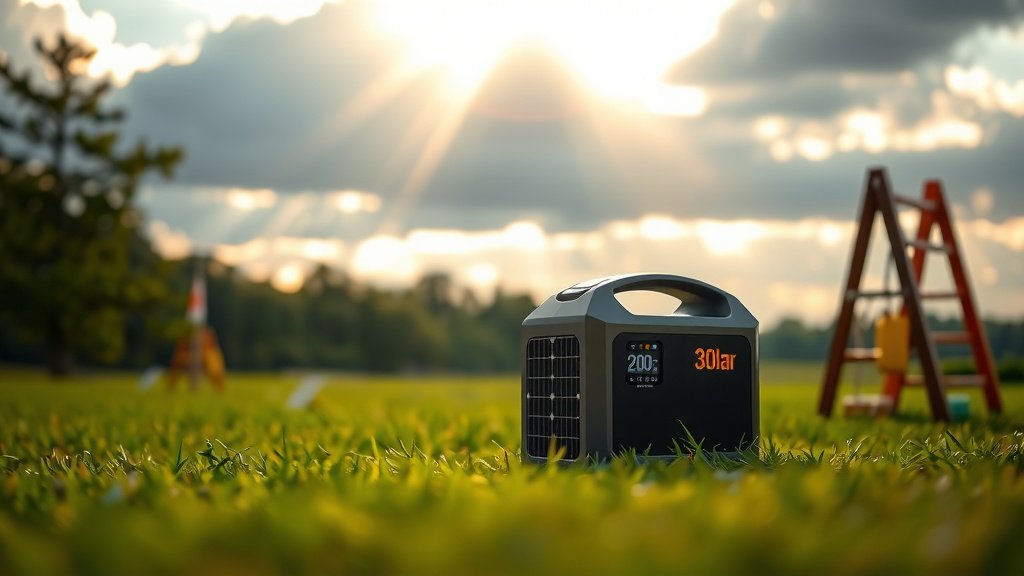
Yes, solar generators work in cloudy weather, but they produce less power than on sunny days – typically 10-50% of their peak capacity depending on cloud thickness.
Your solar generator will still charge during overcast conditions because solar panels can capture diffused sunlight that penetrates through clouds.
How Solar Generators Perform on Cloudy Days
You might think clouds completely block your solar generator from working. That’s not true. Solar panels don’t need direct sunlight to function.
Think of it like this: even on a cloudy day, you can still see outside. That light reaching your eyes is the same light your solar panels can use. It’s just less intense.
Power Output During Different Weather Conditions
Your solar generator’s output varies based on weather conditions. Here’s what research shows about typical power production:
| Weather Condition | Power Output | Charging Time |
|---|---|---|
| Bright sunny day | 100% | 4-6 hours |
| Light clouds | 70-80% | 6-8 hours |
| Heavy overcast | 10-25% | 12-20 hours |
| Rainy day | 5-15% | 20+ hours |
Why Clouds Don’t Stop Solar Panels Completely
Solar panels work by capturing photons from light. Clouds scatter and diffuse sunlight, but they don’t eliminate it completely.
I found that modern solar panels are quite sensitive to light. Even the dim light filtering through thick clouds can generate some electricity.
The Science Behind Cloudy Day Performance
When sunlight hits clouds, several things happen. Some light gets reflected back to space. Some gets absorbed by water droplets. But a portion still makes it through.
This scattered light comes from multiple directions instead of straight down. Your solar panels can still capture this diffused energy.
Factors That Affect Cloudy Weather Performance
Not all cloudy days are the same for your solar generator. Several factors determine how much power you’ll get.
Cloud Type and Thickness
Thin, wispy clouds barely affect your solar panels. You might only lose 10-20% of your normal power output.
Thick, dark storm clouds are different. They can reduce your power to just 10-15% of normal capacity.
High Clouds vs Low Clouds
High altitude clouds are usually thinner. They let more light through to your solar generator.
Low, heavy clouds block more sunlight. These are the ones that make your solar panels work hardest.
Time of Day Matters
Even on cloudy days, your solar generator works best during midday hours. The sun’s angle affects how much light penetrates clouds.
Morning and evening light has to travel through more atmosphere and clouds. This reduces the power reaching your panels.
Geographic Location Impact
Where you live affects your cloudy day performance. Some regions get more diffused light than others.
Coastal areas often have marine layer clouds that are relatively thin. Desert regions might have dust particles that scatter light differently.
Seasonal Differences
Winter clouds often sit lower and are denser than summer clouds. This means your solar generator might struggle more in winter overcast conditions.
Summer clouds tend to be higher and puffier, allowing more light gaps for your panels to capture.
Maximizing Solar Generator Performance in Cloudy Weather
You can take steps to get the most from your solar generator when clouds roll in.
Panel Positioning and Angle
Adjust your solar panels to capture as much available light as possible. On cloudy days, try positioning them to face the brightest part of the sky.
Sometimes this isn’t due south like on sunny days. Look for breaks in the clouds and angle your panels toward those brighter spots.
Tracking Cloud Movement
Clouds move throughout the day. If you can safely adjust your panel position, follow the clearest patches of sky.
This takes some attention, but it can boost your power output by 20-30% on partly cloudy days.
Panel Maintenance for Better Light Capture
Clean panels work better in low light conditions. Dust, dirt, or water spots reduce efficiency when every photon counts.
I researched and found that dirty panels can lose up to 25% efficiency even in good weather. On cloudy days, this loss becomes more noticeable.
Quick Cleaning Tips
Use a soft cloth and clean water to wipe your panels. Avoid harsh chemicals that might damage the surface.
Check for bird droppings, leaves, or other debris that might block light reception.
Planning for Cloudy Weather Usage
Smart planning helps you get through cloudy periods without running out of power.
Battery Capacity Considerations
Your solar generator’s battery capacity becomes more important during cloudy weather. You’ll need stored power to bridge the gaps.
Research shows that having 2-3 days of battery backup helps most people get through extended cloudy periods.
Power Management During Low Production
Prioritize your most important devices when solar production drops. Maybe skip charging that tablet and focus on keeping your phone and lights powered.
Create a priority list of devices before cloudy weather hits. This helps you make quick decisions about power usage.
Weather Monitoring
Check weather forecasts to plan your power needs. If you see several cloudy days coming, charge your solar generator fully beforehand.
Many weather apps show cloud cover percentages. This gives you a better idea of what to expect from your solar panels.
Backup Charging Options
Consider having alternative charging methods for extended cloudy periods. Many solar generators can also charge from wall outlets or car chargers.
This hybrid approach ensures you don’t get stuck without power during long stretches of bad weather.
Common Myths About Solar Generators and Clouds
Let’s clear up some confusion about how clouds affect solar generators.
Myth: Solar Panels Don’t Work at All in Clouds
This is completely false. Solar panels generate some power even in heavy overcast conditions.
I found online that Germany, known for cloudy weather, is actually a leader in solar energy. This proves solar technology works in less than perfect conditions.
Myth: You Need Direct Sunlight for Any Power
Solar panels respond to all forms of visible light, not just direct sunbeams. Reflected and scattered light both contribute to power generation.
Even light reflected off snow, water, or buildings can help charge your solar generator.
The Edge-of-Cloud Effect
Sometimes your solar generator might produce more power on partly cloudy days than completely clear ones. This happens when clouds act like mirrors, reflecting extra light onto your panels.
Many experts call this the “edge-of-cloud effect.” It’s like getting a light bonus when conditions are just right.
Choosing the Right Solar Generator for Cloudy Climates
If you live somewhere with frequent clouds, certain features matter more.
Panel Efficiency Ratings
Higher efficiency panels perform better in low light conditions. Look for panels with efficiency ratings above 20% if cloudy weather is common in your area.
Monocrystalline panels typically handle low light better than polycrystalline options.
Battery Capacity Requirements
Cloudy climates need larger battery capacity. Calculate your daily power needs and multiply by 3-4 days for cloudy weather buffer.
This ensures you can ride out extended periods of poor solar conditions without running out of stored power.
Expandability Options
Choose a solar generator that lets you add more panels later. Extra panel capacity helps compensate for cloudy day power reduction.
Some systems let you daisy-chain multiple panels for increased charging capability when you need it most.
Conclusion
Your solar generator will work in cloudy weather, just not at full capacity. While power output drops to 10-50% of sunny day performance, you’ll still get useful electricity from diffused sunlight. Smart planning, proper positioning, and clean panels help maximize cloudy day performance. Consider your local weather patterns when choosing a solar generator, and always have backup charging methods for extended overcast periods. With realistic expectations and good planning, your solar generator remains a reliable power source even when clouds roll in.
Can solar generators charge through windows on cloudy days?
Solar panels can charge through windows, but glass blocks some light and reduces efficiency by 15-30%. On cloudy days, this double reduction makes indoor charging quite slow and often impractical for meaningful power generation.
Do solar generators work better in winter or summer clouds?
Summer clouds typically allow better solar generator performance because they’re often higher altitude and less dense. Winter clouds tend to be lower, thicker, and more persistent, reducing power output more dramatically.
How long can a solar generator run on battery power during cloudy weather?
Runtime depends on your power usage and battery capacity. Most solar generators provide 8-48 hours of power for basic devices like phones and lights, while high-power appliances might drain the battery in 2-6 hours during cloudy conditions.
Will rain damage my solar generator panels?
Quality solar panels are waterproof and designed to handle rain, snow, and harsh weather. Rain actually helps clean your panels, potentially improving performance once the clouds clear. Always check your specific model’s weather resistance rating.
Should I buy extra solar panels if I live in a cloudy climate?
Extra panels can help compensate for reduced cloudy day efficiency, but consider the cost versus benefit. Adding 50-100% more panel capacity often makes sense in consistently cloudy regions to maintain adequate charging speeds.