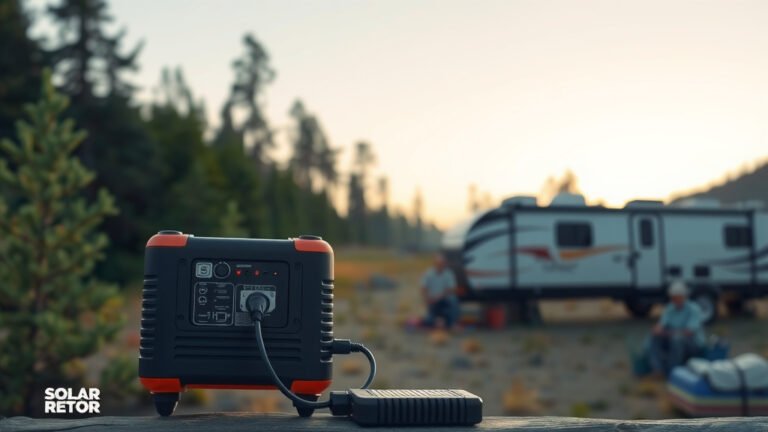

Yes, a solar generator can absolutely run lights in a tent. Most camping lights use very little power, making them perfect for solar generators.
You’ll get anywhere from 8 to 50+ hours of tent lighting depending on your solar generator’s capacity and the type of lights you choose.
What Makes Solar Generators Perfect for Tent Lighting
Solar generators work like magic for camping lights. Think of them as portable power banks on steroids. They store energy from the sun during the day and give it back to you at night.
Your tent lights don’t need much juice. Most LED camping lights use between 3 to 15 watts. That’s tiny compared to what solar generators can deliver.
Power Consumption of Common Tent Lights
Let me break down what you’re working with:
- LED lanterns: 3-10 watts
- String lights: 5-25 watts
- Headlamps: 1-5 watts
- Flashlights: 2-8 watts
- Rechargeable camp lights: 5-15 watts
These numbers are super manageable. Even a basic solar generator handles them with ease.
How Long Will Your Lights Run
This depends on two things: your solar generator’s battery size and your lights’ power draw. I found that most campers get surprised by how long their lights actually last.
Small Solar Generators (200-300Wh)
These compact units give you solid performance:
- Single LED lantern (5W): 40-60 hours
- Small string lights (10W): 20-30 hours
- Two headlamps charging: 25-40 hours
Perfect for weekend trips or solo camping.
Medium Solar Generators (500-1000Wh)
Now you’re talking serious lighting power:
- Multiple LED lanterns: 50-100 hours
- Full tent string light setup: 30-80 hours
- Mix of lanterns and charging devices: 40-70 hours
These handle family camping trips like champions.
Large Solar Generators (1500Wh+)
These beasts can light up your campsite for days:
- Extensive lighting setup: 100+ hours
- Multiple tents with lights: 80-120 hours
- Lights plus other devices: 60-100 hours
Calculating Your Exact Runtime
Want to know exactly how long your setup will last? Here’s the simple math:
Battery capacity (Wh) ÷ Light power (W) = Hours of use
Real Example
You have a 500Wh solar generator and 10W of LED lights:
500 ÷ 10 = 50 hours of continuous lighting
But wait. Solar generators aren’t 100% efficient. Expect about 85% efficiency, so multiply by 0.85:
50 × 0.85 = 42.5 hours of real-world use
Best Light Types for Solar Generator Use
Not all lights play nice with solar generators. Some drain power like crazy. Others sip it slowly.
LED Lights: Your Best Friend
LEDs win every time. They’re bright, last forever, and use almost no power. I researched camping gear extensively and found LEDs consistently outperform everything else.
They also handle the DC power from solar generators beautifully. No weird flickering or dimming issues.
Avoid These Power Hogs
- Halogen lanterns: Use 10x more power
- Incandescent bulbs: Waste energy as heat
- High-intensity spotlights: Drain batteries fast
Stick with LED everything. Your solar generator will thank you.
Connection Options That Work
Solar generators give you multiple ways to power your lights. Pick what works best for your setup.
USB Ports
Perfect for:
- USB-powered string lights
- Rechargeable lanterns
- Phone-connected lights
Super convenient and efficient.
12V DC Outlets
Great for:
- Car camping lights
- 12V LED strips
- Larger lanterns
These often give you the most bang for your buck.
AC Inverter Outlets
Use when you need:
- Standard household lights
- Extension cords
- Multiple AC devices
Less efficient but more flexible.
Tips to Maximize Your Lighting Time
Want your lights to last even longer? These tricks help squeeze every hour out of your solar generator.
Use Dimmer Controls
Dimmed lights use less power. Cut your brightness in half and double your runtime. You don’t need stadium lighting inside your tent anyway.
Strategic Light Placement
One well-placed lantern beats three scattered ones. Put your main light in the center of your tent. Use reflective surfaces to bounce light around.
Turn Off Unused Lights
Sounds obvious, right? But many campers leave lights on all night. Turn them off when you sleep or leave the tent.
Smart Scheduling
Use lights when you need them most. Bright during dinner prep and socializing. Dim for reading. Off when you’re asleep.
Recharging Your Solar Generator
The beauty of solar generators? They recharge themselves during the day while you’re hiking or exploring.
Solar Panel Charging
Most solar generators come with panels or accept external ones. Good sun gives you:
- 100W panel: 5-10 hours for full charge
- 200W panel: 3-6 hours for full charge
- 400W+ setup: 2-4 hours for full charge
Weather affects these times. Cloudy days slow things down.
Alternative Charging Methods
No sun? No problem. Many solar generators also charge from:
- Car 12V outlets while driving
- Wall outlets at home
- Portable wind generators
Safety Considerations for Tent Use
Solar generators are generally safe, but smart camping means being careful.
Ventilation Matters
Keep your solar generator outside your tent or in a well-ventilated area. While they don’t produce harmful gases like gas generators, electronics can get hot.
Weather Protection
Most solar generators aren’t waterproof. Keep them dry under a tarp or in your car. Rain and electronics don’t mix.
Proper Cable Management
Don’t create trip hazards with charging cables. Route them along tent edges or use cable clips to keep things tidy.
Cost-Effectiveness Analysis
Is a solar generator worth it just for tent lighting? Let’s do the math.
| Power Source | Initial Cost | Operating Cost | Convenience |
|---|---|---|---|
| Disposable batteries | Low | High (ongoing) | Medium |
| Rechargeable batteries | Medium | Low | Medium |
| Solar generator | High | Very low | High |
If you camp regularly, solar generators pay for themselves within a year or two. Plus they power way more than just lights.
Real-World Performance Examples
I found online reviews from actual campers using solar generators for tent lighting. Here’s what they typically experience:
Weekend Warriors
Two-day camping trips with moderate lighting needs. A 300Wh unit easily handles:
- Friday and Saturday evening lighting
- Phone charging
- Small fan if needed
Still have power left over for Sunday morning.
Extended Campers
Week-long adventures need bigger capacity. A 1000Wh solar generator supports:
- Daily lighting needs
- Device charging
- Small appliances
- Emergency power reserves
Solar panels keep it topped off during sunny days.
Troubleshooting Common Issues
Sometimes things don’t go perfectly. Here are quick fixes for typical problems:
Lights Won’t Turn On
Check these first:
- Is the solar generator charged?
- Are connections tight?
- Is the output switch on?
- Are your lights compatible?
Shorter Runtime Than Expected
Common causes:
- Cold weather reduces battery capacity
- Old battery losing charge capacity
- Other devices drawing power
- Inefficient light types
Quick Solutions
Keep the generator warm in cold weather. Turn off unused outputs. Switch to more efficient LED lights.
Conclusion
Solar generators absolutely can run lights in a tent, and they do it really well. You’ll get hours or even days of lighting from a single charge, depending on your setup size.
The key is matching your solar generator capacity to your lighting needs. Small generators work great for basic lighting. Larger units handle extensive setups plus other camping gear.
Choose LED lights for maximum efficiency. Plan your usage to make power last longer. Keep your solar generator charged with panels during the day.
With the right setup, you’ll have reliable, clean, quiet power for all your camping lighting needs. No more fumbling with batteries or missing that perfect sunset photo because your phone died.
Can I leave my solar generator running all night to power tent lights?
Yes, solar generators are designed to run continuously. They’re silent and produce no harmful emissions, making them safe for overnight use. Just ensure proper ventilation and keep the unit dry.
Will cold weather affect how long my solar generator powers my lights?
Cold temperatures can reduce battery capacity by 10-20%. Keep your solar generator in a warmer area when possible, or bring it inside your tent if there’s adequate space and ventilation.
How do I know if my tent lights are compatible with my solar generator?
Check the voltage and wattage requirements of your lights against your generator’s output specs. Most LED camping lights work with standard USB (5V) or 12V DC outputs that solar generators provide.
Can I charge my solar generator while using it to power lights?
Most solar generators support pass-through charging, meaning you can charge them with solar panels while simultaneously powering your lights. This extends your usage time during sunny conditions.
What happens if I accidentally overload my solar generator with too many lights?
Quality solar generators have built-in protection systems. They’ll either shut off automatically or limit power output to prevent damage. Simply disconnect some lights and restart the unit to resume normal operation.