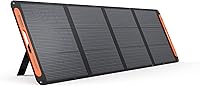
What Is an N Type Bifacial Solar Panel?
An N type bifacial solar panel uses N type silicon cells that collect light on the front and back, so the rear side can add power from reflected light. The N type design helps efficiency and heat behavior, while the bifacial build needs a clear rear and a reflective surface below to work well.
On this page (11 sections)
- What is an N type bifacial solar panel and how does it work?
- What does N type mean in a solar cell?
- How does rear light capture add power?
- What is an N type bifacial solar panel compared with a standard panel?
- Which products help you learn bifacial setup in real life?
- Can you put a bifacial panel flat on a roof?
- How do you size a bifacial panel for a battery or power station?
- What is the best solar panel for camping if you want bifacial gain?
- What is the best solar panel when you need rear light capture?
- How should you set up and care for a bifacial panel?
- What should you know before you buy bifacial solar panels?
An N type bifacial solar panel uses N type cells for front-side conversion and a transparent rear for rear-side capture. The front takes direct sun.
The rear adds power from light reflected up from the ground, so setup differs from a standard panel.
What is an N type bifacial solar panel and how does it work?
It makes direct current power on both faces. The front takes direct sun, and the rear takes reflected light from below.
Cell type and bifacial design are separate. N type describes the silicon inside, while bifacial describes the build, with glass or a clear back sheet for rear light.
Front watts show direct sun output. Rear gain depends on albedo, the reflectivity below, so snow, sand, and light concrete beat dark soil or grass.
A panel pressed to a roof blocks rear light, while a raised frame leaves room for it.
What does N type mean in a solar cell?
N type means electrons are the main charge carriers in the silicon layer. That design loses fewer electrons to defects, so efficiency stays higher and output holds up better in heat.
P type uses holes as main carriers. It is common and often good value, but N type usually leads on efficiency and heat behavior.
N type often pairs with TOPCon cells, short for tunnel oxide passivated contact. A thin oxide layer and polysilicon contact cut losses where metal touches silicon.
How does rear light capture add power?
Rear capture works when light that misses the front finds the back. Sunlight hits the ground, bounces up, and enters the rear cells from behind.
Spec sheets call this bifacial gain, usually shown as a percent above the front rating under set test conditions. Real gain varies with surface color, height, tilt, and shade, so treat the number as a guide.
Surface color is the main lever you control. White gravel, pale concrete, snow, and sand send more light back than dark asphalt or grass.
Height is next. A raised panel lets reflected light reach more of the rear face, though height will not fix a dark surface or blocked rear.
What is an N type bifacial solar panel compared with a standard panel?
A standard panel uses the front face only. Its back is usually opaque, so light reaching the rear is wasted.
A bifacial panel trades some simplicity for rear gain. It needs a back that light can enter and mounting that keeps the rear open, which suits ground arrays, carports, and raised setups over bright surfaces.
Cost is a concern. Bifacial modules often cost more per watt, and mounting may cost more too.
The extra spend makes sense only when the rear sees light for many hours.
Our score weighs specs, features and buyer feedback against what you are shopping for. Here we compared cell type, build, wattage, weight, folded size, controller type, cable reach, and input limits.
Which products help you learn bifacial setup in real life?
Two portable kits and one extension cable show the contrast between front-only portable gear and true bifacial modules. For a portable bifacial example, see this EcoFlow 220W panel review.
The kits are not bifacial, which is useful to know.
They show the size, weight, controller, and input limits of hand carried power.
What does a 100W portable kit show about panel limits?
The DOKIO 100W Portable Foldable Solar Panel Kit weighs 6 lb and folds to 19 x 26 x 0.5 in. It uses monocrystalline silicon for 12V charging, with a standalone PWM controller and dual USB ports.
Specs list 110 watts maximum power and 18 volts maximum voltage.
This kit is front-side only, so it cannot show rear capture. It shows weight, fold size, cable reach, and input caps.
The 9.84 ft cable lets you place the panel in sun while the controller stays shaded. DOKIO notes some power stations cap input at 60W, so check your unit first.
That cap matters for bifacial gear too. Extra watts beyond the limit do not charge faster.
What does a 200W portable kit show about scale?
The DOKIO 200W Portable Foldable Solar Panel Kit weighs 9.7 lb and folds to 20 x 27 x 1.1 in. It uses monocrystalline silicon and a standalone PWM controller for 12V systems.
Specs list 220 watts maximum power and 18 volts maximum voltage, with SAE, XT60, alligator clip, and DC options.
Moving from 100W to 200W adds about 3.7 lb and a thicker fold. More watts help larger batteries, but the kit is harder to carry.
DOKIO notes some power stations cap input at 100 to 150W for this class. Like the 100W kit, this one is front-side only, not a test of rear capture.
Why does cable length matter for bifacial placement?
The BougeRV 20 Feet 10AWG Solar Extension Cable is 20 ft long and uses 10AWG tinned-coated pure copper. It has male and female solar connectors plus a bare wire end for controller hookup, rated from -40 F to 194 F.
BougeRV says 10AWG helps limit loss compared with thinner 14AWG or 12AWG cable.
Cable reach matters more for bifacial panels than many buyers expect. A longer cable lets you place the panel over a bright surface while the controller stays cool.
Connector fit is a practical check. This cable uses solar connectors and a bare end, so confirm your panel and controller match those types.
Can you put a bifacial panel flat on a roof?
You can put a bifacial panel flat on a roof, but the rear adds little when it sits close. The roof blocks reflected light, so you get mostly front-side power.
Raised mounting changes the math. Standoffs, a tilt frame, or a carport mount leave a gap for light to bounce up to the rear.
Tilt also matters. Ground arrays often use tilt and row spacing that serve both faces.
Roof installs rarely get that freedom, so rear gain stays low.
Use this rule: flat and close means front-only results. Raised and open over a bright surface means rear gain is possible.
How do you size a bifacial panel for a battery or power station?
Start with the input limit of your battery or power station, not panel watts. That limit is the ceiling for charge power.
Next, check voltage. The DOKIO kits list 18 volts maximum voltage and 12 volts output for 12V systems.
Bifacial modules for larger arrays often run higher, so read the full spec sheet.
Then check current and connector type. Current limits protect wires and controllers from heat, and connector type decides whether cables plug in directly or need adapters.
After limits, think about daily energy, not just peak watts. Rear power can help in morning and late afternoon when reflected light is strong.
What is the best solar panel for camping if you want bifacial gain?
For camping, a front-only portable panel is often the best choice. Camp setups move often, shade changes fast, and the ground is rarely a bright reflector.
The DOKIO kits fit as a contrast. They fold small, weigh 6 lb or 9.7 lb, and carry a controller for 12V charging.
Our guide to the best solar panel for camping covers portable picks in more depth.
If you still want rear capture at camp, set the panel over a bright tarp, pale sand, or light rock and lift it on a stand. Keep the rear free of shade from chairs, tents, and the frame.
Check the best solar panel for power station guide if your load has a strict input cap.
What is the best solar panel when you need rear light capture?
When rear capture is the goal, choose a true bifacial module and plan the mount around the rear face. Look at our best bifacial solar panels guide to compare modules built for rear input.
Our buying guide to what is the best solar panel helps you weigh cell type, watts, and mount style together. N type cells do not create rear gain by themselves.
Bifacial build and open mounting create it.
For larger systems, our guide to bifacial solar panels 500w covers high-watt modules for ground arrays and commercial roofs.
For smaller needs, our best 100w bifacial solar panel guide helps you sort true bifacial small panels from front-only foldable kits. For bulk buys, our guide to bifacial solar panels by pallet covers freight, damage checks, and storage.
How should you set up and care for a bifacial panel?
Set the panel high enough for reflected light to reach the rear, and keep the rear face clean. Dust on the back blocks light just as dust on the front blocks sun.
Check shade through the day, not just at noon. A fence, tree, or vehicle can shade the rear in the afternoon even if it misses the front at noon.
Keep cables and controllers in shade when you can. The DOKIO kits use a 9.84 ft cable for that reason, and the BougeRV cable gives 20 ft of reach.
Inspect connectors and mounts after storms or moves. Solar connectors should lock with a firm click.
What should you know before you buy bifacial solar panels?
Before you buy, confirm four things: cell type, bifacial build, input limits, and rear light access. If any one is weak, the panel may not pay off.
Ask for front and rear ratings in the spec sheet. A true bifacial module should show how the rear adds power under set conditions.
If the sheet shows only front watts and the back is opaque, treat the panel as front-only.
Match the panel to your controller, battery, or power station on voltage, current, and watts. Bifacial gain is useless if your device cannot take the extra power.
Think about where the panel will live. Ground arrays with bright surfaces get the most from bifacial build.
Flat roofs and folded camp kits get the least.
Frequently asked questions
What is an N type bifacial solar panel in simple terms?
It is a solar panel built with N type silicon cells and a see-through back sheet. The front faces the sun, and the rear can use light reflected from ground, water, snow, or a roof.
That extra rear input can raise daily output when the reflective surface and mounting height are right.
Is a bifacial panel better than a regular panel?
A bifacial panel can produce more when light reaches the rear, but it needs space behind it and a reflective surface below. A regular panel is simpler if you mount it flat on a roof or carry it folded.
Your mounting, surface color, and shading matter as much as the cell type.
Do portable foldable panels capture rear light?
Most portable kits are front-side only, with an opaque backing that blocks rear light. They are built for ease of use, not rear capture.
If rear capture is your goal, look for a panel or module that is clearly made as bifacial and has no opaque backing.
What should you check before buying a bifacial panel?
Check front and rear power ratings, controller and input limits, connector type, mounting height, and the surface below the panel. Confirm that your battery or power station can accept the voltage and wattage.
Also check whether the rear side will stay unshaded during the hours you need power.