
The best camping power station for beginners is one that balances ease of use, sufficient power output, and a reasonable price. Our research found that the Jackery Explorer 300 offers a great starting point for campers who need reliable power without complicated features. It’s a user-friendly unit that can charge your essentials.
You want a power station that’s simple to operate right out of the box. Nobody wants to be fumbling with complex settings when they’re trying to relax outdoors. A good beginner model will efficiently power your phone, lights, and perhaps a small cooler, making your camping trip much more comfortable and convenient. It’s all about getting reliable electricity for common camp gadgets.
TL;DR:
- Easy to use, beginner-friendly models are best.
- The Jackery Explorer 300 is a top pick for beginners.
- Look for units that power phones, lights, and small coolers.
- Avoid overly complex power stations.
- Reliable power makes camping more enjoyable.
Ready to ditch dead batteries on your next outdoor adventure? Let’s walk through what makes a camping power station perfect for newcomers and help you pick the right one.
Choosing the Perfect Portable Power Station for Your First Camping Trip
Selecting your first camping power station doesn’t have to be hard. We’ll guide you through the essentials to help you make an informed choice for your outdoor adventures.
Understanding Your Basic Camping Power Needs
Before you pick a power station, think about what you need to power. Are you just keeping your phone alive, or do you have bigger plans? Your devices will dictate the size and capacity of your unit.
Common Devices Campers Power
Most beginners start with a few key items. These often include your smartphone, headlamps or lanterns, and maybe a small fan. Some even want to run a portable cooler for food and drinks.
- Smartphones: For navigation, photos, or emergencies.
- LED Lanterns/Headlamps: Essential for night vision and safety.
- Small Fans: A lifesaver on warm nights in the tent.
- Portable Coolers (12V): Keep food fresh without ice.
- Camera Batteries: Capture those beautiful outdoor memories.
Every device has a power draw. Knowing this helps you pick a power station that can last your whole trip. Think about how many times you’ll charge each item.
Key Features to Look For in a Beginner Power Station
When you’re new to this, simplify your decision. Focus on a few core features: battery capacity, output ports, and portability. These are the most important factors for a good experience.
Battery Capacity (Watt-Hours) Explained
Battery capacity tells you how much energy a power station can store. It’s measured in Watt-hours (Wh). The higher the number, the longer it can power your devices. For beginners, something in the 200-500Wh range is often ideal.
To put it simply, if you have a device that uses 10 watts and you want to run it for 10 hours, you need 100Wh (10W x 10h). Adding up the needs of all your devices helps you find the right Wh capacity.
Output Ports: What Can You Plug In?
Look for a variety of output ports. You’ll want standard AC outlets (like the ones in your home) for larger items. USB-A and USB-C ports are vital for charging phones and tablets. A 12V DC car outlet is perfect for portable coolers.
- AC Outlets: For laptops, small fans, or camera chargers.
- USB-A Ports: Standard for most phones and small electronics.
- USB-C Ports (PD): Faster charging for newer smartphones and tablets.
- 12V DC Car Port: Great for automotive accessories or specific coolers.
The more port options you have, the more versatile your power station will be. Ensure it has enough of the right type for your gear.
Portability and Durability for Outdoor Use
You’re taking this thing camping, right? So, its size and weight matter. A beginner unit should be easy to carry and not take up too much space in your car or tent. Look for built-in handles.
Durability is also key. Camping can be tough on gear. While you don’t need military-grade protection, a power station should be able to withstand minor bumps and dust. Some units have more rugged casings than others.
Charging Your Power Station
How do you charge the power station itself? Most can be recharged via a wall outlet before your trip. Many also offer solar panel charging, which is fantastic for longer trips. Some even charge from your car’s 12V outlet while you drive.
Solar charging adds a layer of independence, letting you stay off-grid longer. Consider buying a compatible solar panel if you plan extended stays away from traditional power sources.
Why the Jackery Explorer 300 Shines for Beginners
We found that the Jackery Explorer 300 consistently comes up as a top choice for beginners. It balances ease of use with good power, making it a reliable camping companion.
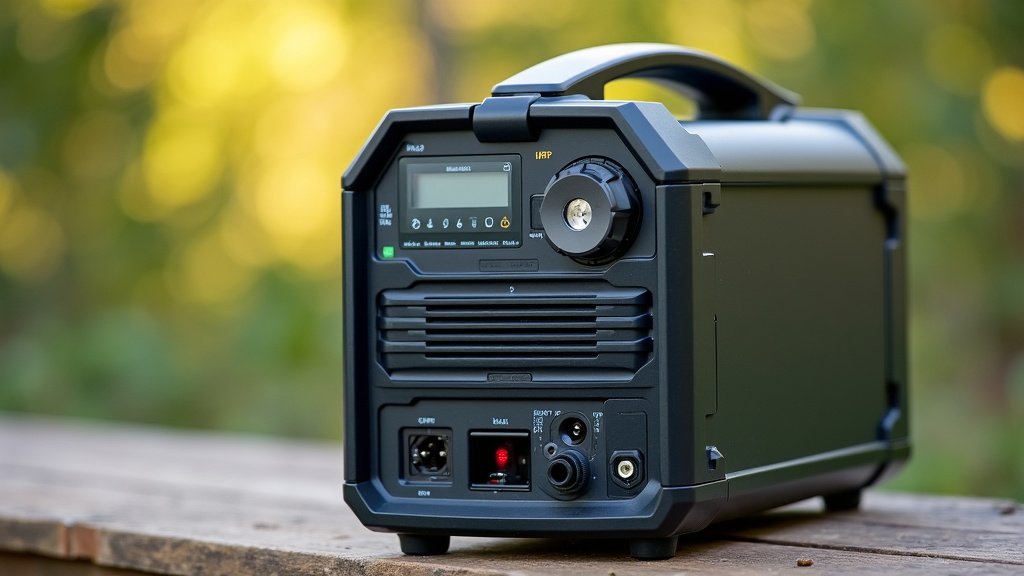
It’s compact and light enough to carry without hassle. You get plenty of ports, including AC, USB, and 12V. Plus, it’s known for its straightforward operation – just plug in and go!
Jackery Explorer 300 Quick Specs
| Feature | Detail |
|---|---|
| Battery Capacity | 292Wh |
| AC Output (Pure Sine Wave) | 300W (500W Peak) |
| USB Ports | 2x USB-A, 1x USB-C PD 60W |
| DC Output | 1x 12V Car Port |
| Weight | 7.1 lbs (3.2 kg) |
| Recharge Time (AC) | Approx. 2.5 hours |
This unit offers a great blend of capacity and power. For most beginner campers, 292Wh is enough to keep essential devices charged for a weekend trip, especially if you manage your power use wisely.
Safety First: Using Your Power Station Wisely
You want your outdoor adventure to be safe. Power stations are generally very safe devices, but a few simple practices can keep you and your unit working perfectly. Always read the manual for your specific power station.
- Keep it dry. Avoid rain and direct water exposure.
- Place it on a stable surface. Don’t let it roll around.
- Keep ventilation clear. Don’t cover it while in use.
- Store it in a cool, dry place when not in use.
- Don’t try to open or repair it yourself.
Many power stations come with built-in safety features like overcharge protection and temperature control. These help prevent issues, but your careful use is the best defense.
Avoid These Mistakes When Buying Your First Power Station
It’s easy to get overwhelmed. Here are a few common pitfalls to steer clear of when you’re a first-timer. Your goal is simplicity and practicality.
- Buying too big: Don’t overspend on capacity you won’t use.
- Ignoring port types: Ensure it has the right outlets for your gear.
- Forgetting recharge time: How long does it take to charge up?
- Not checking weight: Can you comfortably carry it?
- Skipping reviews: See what other beginners say about ease of use.
By avoiding these common mistakes, you’ll feel more confident in your purchase. Remember, the best power station for you is one that fits your needs without being confusing or excessive.
Your Beginner’s Camping Power Station Checklist
Before you hit that “buy” button, run through this quick checklist. It will help ensure you’re making a choice that truly suits your camping style.
- Is the capacity (Wh) adequate for my core devices for the trip length?
- Does it have all the port types I need (AC, USB-A, USB-C, 12V)?
- Is it lightweight and portable enough for me to carry?
- Can it be recharged easily (wall, car, solar)?
- Are the controls simple and intuitive to use?
- Is it within my budget for a first-time purchase?
You want a power station that enhances your camping experience, not complicates it. By focusing on these practical aspects, you’re well on your way to a powered-up and enjoyable outdoor adventure.
Conclusion
Choosing your first camping power station doesn’t have to be daunting. By understanding your basic power needs and focusing on key features like capacity, port options, and portability, you can confidently select a unit that enhances your outdoor adventures. The Jackery Explorer 300 stands out as an excellent, user-friendly choice for beginners, providing reliable power without unnecessary complexity. Remember to prioritize safety and avoid common pitfalls like overbuying or ignoring port types. With this knowledge, you’re ready to pick the perfect power companion and keep your essential gear charged on every trip.
Frequently Asked Questions
How long does a camping power station typically last on a single charge?
The duration depends entirely on its battery capacity (Watt-hours) and the devices you’re powering. A 300Wh station might power a phone for days or a small cooler for several hours. Always match the capacity to your expected device usage.
Can I use a camping power station inside my tent?
Yes, portable power stations are safe to use inside tents as they don’t emit carbon monoxide or require ventilation like gas generators. Just ensure it’s kept dry and placed on a stable surface. Always follow the manufacturer’s safety guidelines.
Are all camping power stations able to be recharged by solar panels?
Not all models offer solar charging capabilities, though many do. If solar recharging is important to you, double-check the product specifications. You’ll also need a compatible solar panel, usually sold separately, often from the same brand.
What’s the difference between Watt-hours (Wh) and Watts (W)?
Watt-hours (Wh) measure the total energy capacity of the battery. Watts (W) measure the instantaneous power draw of a device or the maximum output of the station. Think of Wh as the “fuel tank size” and W as the “engine’s horsepower.”
Should I fully discharge my power station before recharging it?
For most modern lithium-ion battery power stations, it’s actually better to avoid fully discharging them. To prolong battery life, try to keep it charged between 20% and 80%, and fully charge it before a trip or storage.
