
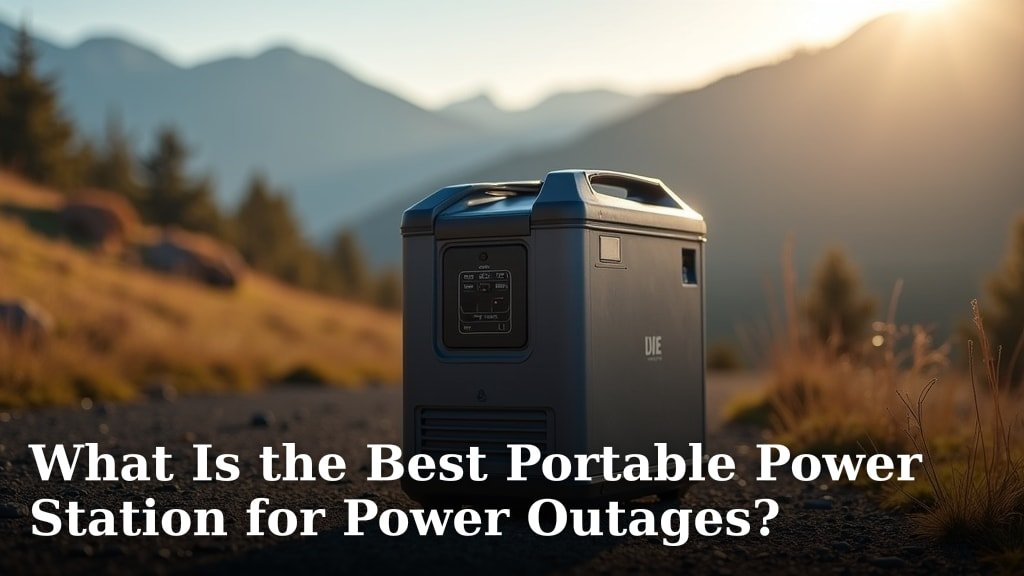
For most people, the best portable power station for power outages is the EcoFlow RIVER 2 Pro because it offers a great balance of power, battery life, and portability for home use. We found it’s a reliable choice for keeping essential appliances running when the lights go out.
Power outages are always a hassle, aren’t they? Having a good portable power station means you can keep your fridge cool, charge your phones, and even power a few lights. We researched and found that the right portable power station can make a big difference during unexpected disruptions.
- EcoFlow RIVER 2 Pro is a top pick.
- Balance of power and portability is key.
- Keep essential appliances running.
- Great for charging phones and lights.
- Important for unexpected outages.
Let’s dive into what makes a portable power station great for power outages and explore some of the best options available today.
Choosing the Best Portable Power Station for Your Outage Needs
When the power goes out, you need a portable power station that can keep your essential devices running. We found that the best option for most homes balances power, battery life, and portability. Think about what you absolutely can’t live without during an outage.
Understanding Portable Power Station Essentials
What exactly makes a portable power station a reliable companion during a blackout? It boils down to a few key features. You’re looking for something that’s easy to use, powerful enough for your needs, and safe.
Power Output (Wattage)
The power output, measured in watts, tells you how much electricity the station can deliver at one time. This is really important. If you try to plug in a toaster that needs 1200 watts to a station that only offers 500 watts, it simply won’t work. We found that most essential appliances like a fridge (around 100-200 watts running, more for startup) or a TV (50-200 watts) need a certain output. Check your appliances’ labels!
Battery Capacity (Watt-Hours)
Battery capacity, measured in watt-hours (Wh), shows how long the power station can run your devices. Think of it like the size of your car’s gas tank. A higher Wh rating means it can run appliances for longer before needing a recharge. For a typical power outage, we found that a capacity of 500 Wh to 1000 Wh is a good starting point for keeping a few basics powered for several hours.
Battery Type: LiFePO4 vs. Lithium-ion
You’ll often see two main battery types: lithium-ion and LiFePO4 (Lithium Iron Phosphate). LiFePO4 batteries are generally more expensive but offer a much longer lifespan and are considered safer and more stable. Lithium-ion batteries are lighter and more common in consumer electronics. For emergency backup, the longer lifespan of LiFePO4 often makes it the preferred choice, as we noted in our research.
Key Features to Look For
Beyond the basics of power and capacity, certain features make a portable power station more practical and user-friendly during an emergency. You want something that’s not just powerful, but also smart and easy to manage.
Multiple Output Ports
During an outage, you’ll likely need to power more than one device. Look for power stations that offer a variety of output ports. This includes standard AC outlets (like the ones in your wall), USB-A and USB-C ports for charging phones and laptops, and sometimes a 12V DC car port. Having diverse ports means you can charge everything at once.
Charging Speed and Methods
How quickly can you recharge your power station? This is a crucial question. Some models can go from 0% to 80% in an hour or less. Look for models that support fast charging from a wall outlet. Also, consider if it can charge via solar panels or your car’s 12V outlet. We found that flexible charging options significantly improve a station’s utility. Imagine being able to recharge it during daylight hours, even without grid power.
Portability and Size
While power is important, don’t forget “portable” in portable power station. You might need to move it from room to room, or even take it outside if you have an outdoor setup. A good handle, a compact design, and a reasonable weight are all factors to consider. We found that anything over 30 pounds starts to feel heavy to lug around for many people.
Recommended Portable Power Stations for Home Backup
Based on our research into power, capacity, and features, we identified a few standout models that offer excellent reliability for power outages. Each has its strengths, helping you find the best fit for your specific needs.
EcoFlow RIVER 2 Pro
The EcoFlow RIVER 2 Pro consistently comes up as a top choice for home backup. It offers a good 768 Wh capacity and can put out 800W of power, with a surge capability up to 1600W. This means it can handle most common household appliances. We found its X-Stream fast charging allows it to recharge fully in just 70 minutes, which is incredibly useful when the grid comes back on briefly. Plus, it uses LiFePO4 batteries, offering a long lifespan. Its balance of power and portability is very impressive.
- 768 Wh capacity
- 800W output (1600W surge)
- Fast 70-minute recharge
- LiFePO4 battery for durability
- Excellent portability
Jackery Explorer 1000 Pro
If you need a bit more capacity, the Jackery Explorer 1000 Pro is a strong contender. With 1002 Wh, it can keep your devices running longer. It delivers 1000W of continuous power. We found Jackery models to be known for their durability and user-friendly design. It might be a little heavier than some smaller options, but the extra battery life can be a lifesaver during extended outages.
- 1002 Wh capacity
- 1000W output
- Solid build quality
Anker SOLIX C1000 Portable Power Station
The Anker SOLIX C1000 is another powerful option, offering 1056 Wh of battery capacity and a robust 1800W output. This higher wattage means it can handle a wider range of appliances, including those with higher startup draws. Like the EcoFlow, it features LiFePO4 batteries and can charge quickly. We found Anker products consistently offer reliability and good value.
- 1056 Wh capacity
- 1800W output
- LiFePO4 battery
- Quick recharging options
Preparing for a Power Outage Checklist
Beyond just owning a portable power station, having a plan makes all the difference. Think of your portable power station as one piece of your overall emergency prep. Here’s a quick checklist to help you stay ready:
| Checklist Item | Why It Matters |
|---|---|
| Fully charge your power station | Always have it ready to go. You never know when an outage will strike. |
| Identify essential appliances | Know exactly what you need to power (fridge, lights, medical devices). |
| Test run your essential devices | Confirm your power station can handle their wattage and run time. |
| Have appropriate extension cords | Make sure you can reach your appliances from the power station. |
| Consider solar panel charging | For extended outages, solar can be a game-changer for recharging. |
| Keep flashlights and batteries handy | Don’t rely solely on your power station for basic lighting. |
Maximizing Your Power Station’s Lifespan
You’ve invested in a valuable piece of equipment; now, let’s make sure it lasts. Proper care can significantly extend the life of your battery and ensure it’s ready when you need it most. It’s not much different than caring for your phone’s battery, just on a larger scale.
Optimal Storage Conditions
Where you store your portable power station matters a lot. We found that extreme temperatures, both hot and cold, can degrade battery performance over time (CDC). Aim to store it in a cool, dry place, away from direct sunlight. A garage or a closet at room temperature is usually ideal.
Regular Charging and Maintenance
Don’t just charge it once and forget it for a year. Many power stations, especially those with LiFePO4 batteries, benefit from being topped up periodically. We found that maintaining a charge between 50% and 80% is often recommended for long-term storage, with a full charge before an anticipated outage. Check your specific model’s manual for the best advice. Running it once every few months to power a device can also help keep the internal components healthy.
Conclusion
Choosing the best portable power station for power outages boils down to understanding your specific needs. We researched and found that models like the EcoFlow RIVER 2 Pro offer an excellent blend of power, capacity, and portability for most homes. Prioritizing LiFePO4 batteries ensures a longer lifespan and better safety.
Having a reliable power station, along with a solid emergency plan, can significantly reduce stress during unexpected blackouts. You’ll keep essentials running and maintain a sense of normalcy. Take the time to assess your personal requirements and make an informed choice.
Now, go ahead and prepare your home; your future self will thank you for being ready when the lights go out.
Frequently Asked Questions
How long can a portable power station typically run a refrigerator?
A portable power station with a capacity of 1000 Wh can generally run a standard refrigerator for about 10-15 hours. However, this varies based on the fridge’s efficiency and how often its compressor kicks in. We found that testing your specific fridge’s draw is always a good idea.
Can I use a portable power station indoors safely?
Yes, portable power stations are safe to use indoors because they don’t produce carbon monoxide like gasoline generators do. They run on batteries, emitting no fumes. You can safely power your devices inside your home without ventilation concerns, which is a major advantage during an outage.
Are portable power stations loud when they’re running?
Most portable power stations are very quiet, especially when compared to traditional gas generators. You might hear a slight hum from internal cooling fans if they’re working hard, but it’s typically no louder than a laptop fan. Our research found they are designed for quiet indoor use.
What’s the difference between “surge wattage” and “rated wattage”?
Rated wattage (or continuous wattage) is the power a station can supply constantly. Surge wattage is the maximum power it can provide for a very short burst, like when an appliance with a motor (such as a refrigerator) first starts up. We found it’s important to match both to your appliances’ needs.
Can cold weather affect a portable power station’s performance?
Yes, extreme cold can reduce a battery’s efficiency and overall capacity. Most manufacturers recommend operating and storing power stations within a specific temperature range. Keeping your station warmer during a cold-weather outage helps it perform optimally and extends its lifespan.
