How to Choose a 400W Plug In Solar Panel System
A 400w plug in solar panel system is usually two 200W panels wired in series, or four 100W panels, matched to a charge controller or portable power station input. Check voltage, current, connector type and panel size before you buy a packaged setup.
On this page (12 sections)
- How does a 400W plug in solar panel system actually connect?
- What voltage should you check before you wire panels in series?
- Which connector types work with plug in solar panels?
- How do charge controllers fit a 400W plug in setup?
- How fast will 400W solar panels charge a power station?
- What panel size and weight should you plan for?
- How do N-Type, 16BB and bifacial designs affect output?
- Which of these three options reaches 400W most simply?
- How should you mount, aim and maintain plug in panels?
- What mistakes should you avoid with 400W plug in solar panels?
- How do you size a 400W system for camping, RV and home backup?
- Which 400W plug in solar panel setup should you buy?
A 400w plug in solar panel system is two 200W panels in series, four 100W panels, or a packaged kit that reaches 400W, connected through solar connectors to a controller or power station.
The wattage alone does not make a system work.
You must match panel voltage to your device input first.
That check prevents damage and wasted money.
Our score weighs specs, features and buyer feedback against what you're shopping for.
We checked the specs for three common ways to reach 400W.
Each option suits a different roof, van ease, or ground setup.
Read the voltage and size rules before you pick.
How does a 400W plug in solar panel system actually connect?
A plug in system connects panel to panel, then panel to controller or power station, using solar connectors.
There is no wall plug that feeds solar power back through a normal outlet.
Current flows from the panels as direct current.
Your controller or power station converts and stores that power.
You then use alternating current from the station outlet if you need it.
Series wiring adds voltage and keeps current the same.
Parallel wiring keeps voltage the same and adds current.
That difference decides whether your device can accept the setup.
For portable power stations, many buyers use series wiring to raise voltage into the efficient range.
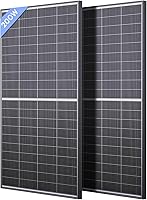
Callsun describes two of its 200W panels in series at 47.48V Vmp and 54.62V Voc with 8.43A operating current.
That fits many 60V-class station inputs.
Rule: Add up Voc in series and never exceed your controller or station limit.
What voltage should you check before you wire panels in series?
Check open-circuit voltage, called Voc, and maximum power voltage, called Vmp, for every panel.
Those two numbers control series wiring more than the 400W headline.
A Renogy 100W panel has a maximum voltage of 22.79 volts and 5.31 A.
Four in series would push voltage far beyond a typical 60V station input.
Two in parallel keep voltage low and raise current instead.
A Callsun 200W panel has 27.31 volts output and about 27.3V Voc per panel.
Two in series reach about 54.6V Voc.
Callsun says that sits safely within most 60V power station input ranges.
A Renogy 200W N-Type panel has a maximum voltage of 37.44 volts and 6.85 A.
Two in series reach roughly 75V Voc.
That exceeds a 60V station limit, so you need a controller rated for that voltage or a different wiring plan.
Rule: Series voltage must stay below the lowest rated input in your chain.
Which connector types work with plug in solar panels?
Most of these panels use standard solar connectors, often called MC4 style, for panel to panel and panel to controller links.
The connector name in the specs is "Solar Connector" for both Renogy options and "solar connector" for Callsun.
That shared style makes extension cables and splitters easy to find.
It does not guarantee every cable fits every controller.
Check pin size, polarity and cable gauge in your manual.
Polarity matters on every link.
A reversed positive and negative can damage a controller or station input.
Mark cables before you coil them for travel.
Some packaged kits include extension cables, while standalone panels include only the panels.
Callsun includes a manual and two 200W panels.
Renogy 100W comes as two panels.
Renogy 200W comes as one panel.
Rule: Match connector type, polarity and cable length before you order.
How do charge controllers fit a 400W plug in setup?
Use a charge controller matched to panel voltage, panel current and battery voltage when you charge batteries directly.
A portable power station with a built-in solar controller works differently.
MPPT controllers track the panel's best power point and suit higher voltage series strings.
PWM controllers suit simpler, lower voltage setups.
Both protect a battery from overcharging when sized correctly.
Renogy's 100W panel notes compatibility with various MPPT and PWM charge controllers.
Its open-circuit voltage stays under 25V.
That gives you room to choose either controller type within ratings.
Renogy's 200W panel guidance says a controller needs at least 40V max PV input for a single or parallel connection.
For series, multiply 40V by the number of panels.
That math shows why a single 200W panel suits many controllers, while two in series need a higher rated unit.
Rule: Size the controller for series voltage first, then check current.
MPPT or PWM for a 400W plug in solar panel?
Choose MPPT when series voltage is well above battery voltage or when you want better harvest in variable sun.
Choose PWM when voltage and current are simple and close to battery needs.
An MPPT controller can convert extra voltage into useful charging current.
That helps when two panels in series reach about 54.6V for a station or a 12V or 24V battery bank through a controller.
A PWM controller passes panel voltage more directly.
It can waste the extra voltage from a high Voc string.
That waste grows when panels run hot and voltage drops.
Rule: Pick MPPT for series strings, PWM only for matched low voltage.
How fast will 400W solar panels charge a power station?
Expect up to 400W under ideal sun, with real output often lower due to heat, angle, shade and losses.
The 400W rating uses standard test conditions, not a cloudy rooftop at noon.
Callsun states that two 200W panels in series reach 400W total with 47.48V Vmp and 8.43A operating current.
That current sits within many station limits.
Your station may still cap input watts below 400W.
Renogy's 100W panels each deliver 100W maximum, so a pair reaches 200W.
You need four panels to reach 400W.
That means more wiring, more roof space and more mounts.
Renogy's single 200W panel reaches half of 400W.
Two panels reach 400W, but their 37.44V maximum voltage each makes series wiring demanding.
Parallel wiring keeps voltage near one panel and doubles current to about 13.7A.
Rule: Compare station watt input, not just panel watt total.
What panel size and weight should you plan for?
Plan for panel footprint and weight before you promise yourself 400W on a van roof or portable stand.
Four small panels and two large panels take different space.
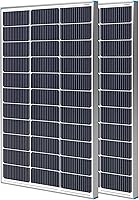
Renogy 100W panels measure 34.1 x 22.8 x 1.2 inches each and weigh 14.3 pounds as a pair.
Two pairs for 400W would cover about 10.8 square feet.
That spread suits rooftops with open space.
Callsun 200W panels measure 51.3 x 30.3 x 1.4 inches each and weigh 23.8 pounds each.
Two panels cover about 21.6 square feet.
The footprint is similar to four 100W panels, but the layout is simpler.
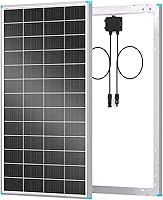
Renogy 200W measures 49.7 x 30.1 x 1.2 inches and weighs 23.4 pounds.
Two panels cover about 20.8 square feet.
Renogy says this 200W design is 7.5% smaller and 11.7% lighter than previous models.
Rule: Measure roof space and lifting weight before choosing panel count.
How do N-Type, 16BB and bifacial designs affect output?
Look for N-Type cells with 16BB busbar design when you want high efficiency in a compact panel.
All three options here use that cell approach with 25% to 25.6% efficiency.
Renogy 100W uses A+ grade N-Type cells at 25% conversion efficiency.
Renogy says it delivers 20W more than a standard 100W panel of the same design.
The 16BB design helps reduce hot spots and hidden cracks.
Callsun 200W uses N-Type monocrystalline cells at 25.6% efficiency with 16BB technology.
It adds a transparent backsheet for bifacial capture.
Rear side light can add output under suitable mounting conditions.
Renogy 200W also uses 16BB cells at 25% efficiency.
The maker says 16BB reduces microcrack risk and supports performance in heat.
It also cites low degradation of 1% or less in the first year and 0.4% a year after that.
Rule: Efficiency helps, but voltage and size decide daily use.
What does bifacial actually add for plug in use?
Bifacial panels capture light from the front and rear sides through a transparent backsheet.
Callsun lists direct, reflected and diffuse light as sources for the rear side.
The gain depends on mounting height and ground surface.
A panel flat on a dark roof gets little rear light.
A panel raised on legs over a light surface gets more.
Callsun also uses a dual-module parallel design inside each panel.
If one section is shaded, the other section can keep generating power.
That helps with tree shade and temporary shadows.
Rule: Choose bifacial for raised mounts, not for flush roofs.
Which of these three options reaches 400W most simply?
Reach 400W with the fewest wiring steps for your device input, not with the most panels.
Simplicity reduces connection errors and speeds setup.
Callsun packaging includes two 200W panels and a manual.
Each panel weighs 23.8 pounds and measures 51.3 x 30.3 inches.
Pre-drilled mounting holes help with compatible hardware for RV, van, marine or rooftop use.
The bifacial rear side and anti-shade split design suit portable ground placement.
The IP68-rated junction box and tempered glass support outdoor use.
Callsun cites 10 years of technical support and at least 84.5% rated output after 25 years.
Rule: Pick Callsun when your station accepts about 54.6V in series.
Renogy 100W panels are compact at 34.1 x 22.8 inches each.
Renogy says each panel is 11% smaller and 8% lighter than its predecessor.
That helps in mini vans and tight rooftops.
The panels carry an IP67 rating with low-iron tempered glass and a corrosion-resistant aluminum frame.
The temperature coefficient is -0.29% per degree Celsius.
That limits power loss in heat compared with a higher coefficient.
The item highlight lists 200W for 12V battery systems, IP67 module use for RV, marine, rooftop, farm, trailer, cabin and home off-grid.
Four panels would serve a larger 400W array with more flexible placement.
Rule: Pick four 100W panels when you need split placement.
Renogy 200W is a 24V panel for 12V and 24V battery systems, including lithium, AGM and deep-cycle types.
It measures 49.7 x 30.1 inches and weighs 23.4 pounds.
The maker positions it for Class B vans, RVs, marine, boats, trailers and roofs.
The panel aims to reduce current loss and boost system efficiency, with more power even in cloudy conditions.
It carries an IP67 rating.
Renogy cites a 10-year output and material commitment and 25-year 80% output.
A single panel keeps wiring simple for a controller based setup.
Two panels need careful series or parallel math.
That makes this option strong for starting at 200W, then expanding later.
Rule: Pick one 200W Renogy panel when simple controller wiring matters most.
How should you mount, aim and maintain plug in panels?
Mount panels where they get direct sun with safe airflow and secure fixings for wind.
Renogy and Callsun both list RV, van, marine, rooftop and off-grid uses.
Use compatible mounting hardware with pre-drilled holes where available.
Callsun notes pre-drilled mounting holes for straightforward installation.
Never drill a panel frame outside the marked holes.
Tilt and angle trade off by season and travel direction.
A flat roof mount suits parking in many directions.
A ground stand lets you track the sun during the day.
Keep glass clean and free of leaves, dust and bird mess.
Renogy notes that dirt and stains reduce output.
A soft cloth and water handle most cleaning without harsh scrubbing.
Rule: Secure for wind, clean for output, and check mounts each season.
What mistakes should you avoid with 400W plug in solar panels?
Avoid series wiring that exceeds Voc limits, mixing mismatched panels, and skipping a controller for direct battery charging.
Those three errors cause most setup failures.
Do not assume a "12V" or "24V" label equals panel voltage.
Callsun and Renogy both explain that the label means the panel suits a system of that voltage.
The panel's actual Voc and Vmp are separate numbers.
Do not mix a 100W panel with a 200W panel in the same series string.
Different current ratings pull the string down to the weakest panel.
Keep strings matched by model and wattage.
Do not ignore temperature.
Panels lose power as they heat, even with a low coefficient.
Callsun lists -0.30% per K, Renogy 100W lists -0.29% per degree Celsius, and Renogy 200W cites a low coefficient for hot climates.
Rule: Match panels in a string and respect every voltage limit.
How do you size a 400W system for camping, RV and home backup?
Size the system around your daily watt-hours, battery capacity and sun hours, not around 400W alone.
A 400W array in five peak sun hours makes about 2,000Wh before losses.
For camping, portable placement matters.
Our Best Solar Panel For Camping guide helps you compare smaller portable options.
A 400W ground setup suits basecamp use where you can move panels to follow sun.
For RV and van use, roof space and weight limit your array.
Check our best 400w rigid solar panels roundup for panel shapes that fit tight roofs.
For packaged setups, see the best 400w solar panel kit guide for included mounts and cables.
For cell type basics, read what is the best type of solar panel before you choose monocrystalline, bifacial or flexible designs.
For a broader buying framework, start with what is the best solar panel and then narrow to your 400W wiring plan.
Our Best 400W Solar Panel roundup also compares single panel options that can anchor a 400W build.
Rule: Match array size to battery and daily use, then check wiring.
Which 400W plug in solar panel setup should you buy?
Buy the setup whose series voltage fits your station or controller without extra parts.
That single rule narrows the field fast.
Pick Callsun two-panel series for a 60V-class portable power station.
Its 54.6V Voc and 8.43A current line up with that use.
Pick four Renogy 100W panels for split roof placement and 12V battery expansion.
Pick Renogy 200W panels for a clean controller based 12V or 24V build.
If you plan a single large panel instead of a pair, compare those choices in our rigid panel roundup.
If you want mounts, cables and a controller in one box, compare kits before you mix parts yourself.
Rule: Voltage fit beats wattage total every time.
About this guide: we compared specs, wiring and sizes for a 400w plug in solar panel system from three panel options.
We research, we don't test.
Use your device manual for final voltage limits.
Frequently asked questions
What does plug in mean for a 400W solar panel system?
It means the panels connect with solar connectors to a controller or power station rather than hardwiring into a wall. You still need a compatible input voltage and current, so check your device manual before wiring panels in series or parallel.
Can I plug two 200W panels straight into a power station?
Often yes, if the combined open-circuit voltage stays below the station limit. Two 27.3V panels in series reach about 54.6V, which fits many 60V-class inputs, but your exact model may differ.
Always verify Voc and maximum current first.
Is a 400W panel better than two 200W panels?
Total wattage matters more than the label. Two 200W panels give you placement flexibility and a lower voltage per panel, while one large panel needs more roof or ground space.
Compare dimensions, weight and wiring voltage for your setup.
Do I need a charge controller with plug in panels?
You need one if you charge a battery directly, unless your power station or controller already has a built-in solar charge controller. Direct battery charging without a controller risks overvoltage and overcharging.
Use an MPPT or PWM controller matched to your panels.
Why does my panel make less than 400W?
The 400W rating uses standard test conditions with ideal sun and temperature. Real sun angle, heat, shade, dirt and wiring losses reduce output, so lower power is normal.
Keep panels clean and pointed at the sun for best results.