Anker SOLIX C1000 Review: Worth It? (October 2026)
The original Anker SOLIX C1000 suits camping and short backup needs if you want 1,056Wh of capacity, 1,800W output and an expansion option. Its main trade-off is that the newer Gen 2 has higher output and faster stated charging.
On this page (7 sections)
- What does the Anker SOLIX C1000 offer?
- What can you power with 1,056Wh?
- Is the C1000 useful for camping, RVs and outages?
- How does the C1000 compare with the C1000 Gen 2?
- Should you choose the C1000 with a BP1000 battery?
- What should you know about solar charging?
- How do you decide whether the C1000 fits?
The Anker SOLIX C1000 is a 1,056Wh portable power station with 1,800W output, suited to camping, RV trips and backup for compatible devices at home. It stands out from the C1000 Gen 2 because the original model can expand with a BP1000 battery.
The key trade-off is output versus expansion. Choose the original if added capacity matters, or consider the newer Gen 2 if you need its higher stated output.
What does the Anker SOLIX C1000 offer?
The original C1000 pairs a 1,056Wh LiFePO4 battery with 1,800W output and 2,400W peak output. For a similar capacity class, see the BLUETTI AC180 power station.
It has 11 ports, app controls and support for up to 600W of solar input.
Anker SOLIX C1000 Portable Power Station: Best for balanced portable power

- 1,056Wh LiFePO4 battery
- 1,800W output, 2,400W peak
- Up to 600W solar input
- Expansion battery compatibility
A portable power station for camping, RV use and home outages, with 11 ports and support for a BP1000 expansion battery. Its 1,800W output is lower than the Gen 2's 2,000W.
Pros
- 1,056Wh capacity
- Up to 600W solar input
- Compatible with the BP1000 expansion battery
- App controls for charging speed and power stats
Cons
- Lower output than C1000 Gen 2
- UltraFast mode needs the app and suitable temperatures
- AC and DC inputs cannot be used at the same time
Anker says UltraFast charging can reach 80% in 43 minutes under ideal conditions: no load, UltraFast mode on and an ambient temperature between 68 and 122°F. The mode is enabled through the Anker app, and the stated operating temperature range for that fast charging is 68–122°F.
The station weighs 27.6 lb and measures 14.8 x 8.07 x 11.02 in. That gives you a concrete size to compare with your vehicle storage, camping setup or backup space.
What can you power with 1,056Wh?
The C1000 can supply compatible devices up to its 1,800W output limit, while its 1,056Wh capacity helps estimate how long they may run. For AC devices, Anker gives this estimate: 1,056Wh × 0.9 ÷ device power in watts.
For example, a 100W AC load works out to about 9.5 hours before accounting for other real-world factors. Higher-power devices draw down the stored energy faster, and some appliances may need more starting power than their normal running draw.
Check both the appliance's running watts and its startup demand before relying on the power station. The 2,400W peak figure is not the same as continuous output.
For another size in the Anker range, see our Anker SOLIX C300 review. The smaller model may fit lighter loads and tighter storage spaces better.
See the C300 vs C300 DC comparison to compare its outlet options.
Is the C1000 useful for camping, RVs and outages?
The original C1000 is suited to portable power needs where its capacity and output match your devices. It can be charged from AC, a car charging cable or compatible solar panels.
For a campsite, list the devices you plan to use and their wattage, then estimate total energy over the trip. A refrigerator, lights and phones used together for long periods will draw more energy than occasional phone charging.
For home backup, decide which essential devices you want to keep running and for how long. The C1000's capacity alone can't promise a specific runtime without knowing the load and whether devices use AC or DC power.
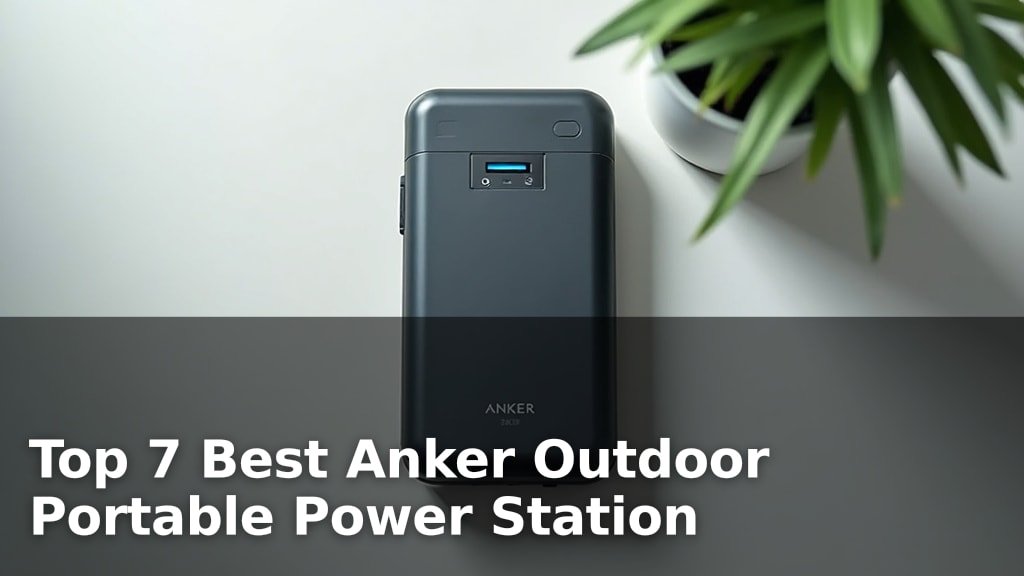
Browse our Top 7 Best Anker Outdoor Portable Power Station picks if you want to compare several Anker options for outdoor use.
How does the C1000 compare with the C1000 Gen 2?
The original C1000 offers expansion support, while the C1000 Gen 2 provides higher output and faster stated AC charging. The right choice depends on whether you value added capacity or more output from a single station.
Anker SOLIX C1000 Gen 2 Portable Power: Best for higher output

- 1,024Wh capacity
- 2,000W output, 3,000W peak
- 49-minute stated full recharge
- 10 ms UPS switchover
The newer C1000 option raises output to 2,000W and states a 49-minute UltraFast recharge. It gives up the original model's expansion support.
Pros
- Higher output than the original C1000
- 10 ports
- 10 ms UPS switchover
- TOU mode in the Anker app
Cons
- No expansion battery support
- Lower capacity than the original C1000
- UltraFast charging depends on battery temperature
The Gen 2 has 1,024Wh capacity, 2,000W output and 3,000W peak output. Anker states a 49-minute full recharge with HyperFlash, which is enabled through its app; the charging speed depends on battery cell temperature.
The Gen 2 also has a 10 ms UPS switchover and TOU mode in the app. It has no expansion feature, so its capacity stays at 1,024Wh.
Our Anker SOLIX C1000 vs C1000 Gen 2 comparison lays out the differences in more detail. If you're choosing among the brand's models more broadly, see Best Anker Solix Portable Power Station.
Should you choose the C1000 with a BP1000 battery?
Choose the C1000 and BP1000 bundle if you need 2,112Wh of combined capacity and want the original model's expansion setup. For another model-specific example, see RIVER 3 extra battery options.
The 1,800W output stays the same, so the extra battery adds stored energy rather than higher output.
Anker SOLIX C1000 Power Station and BP1000: Best for more stored energy

- 2,112Wh combined capacity
- 1,800W output, 2,400W peak
- Up to 600W solar input
- Includes BP1000 expansion battery
This bundle pairs the original C1000 with a BP1000 to provide 2,112Wh of capacity. The expansion battery only works with the C1000 and cannot power devices by itself.
Pros
- Double the original C1000's capacity
- 11 ports
- BP1000 is designed for C1000 compatibility
- App control
Cons
- More capacity means a larger setup to move
- Expansion battery cannot be used alone
- The two items may arrive separately
The BP1000 must connect to the C1000 to charge or discharge, and it works only with that power station. The bundle may arrive in separate shipments, so check both packages if one comes first.
This setup may suit a longer camping trip or a backup plan with more energy needs. Compare the OUPES MEGA 2 power station if you are weighing other higher-capacity options.
First check the wattage of each device you expect to run, since added capacity doesn't raise the station's output ceiling.
What should you know about solar charging?
The C1000 accepts up to 600W of solar input and can use a compatible 11–60V solar charger with an XT-60 connector. Anker names its PS100, PS200 and PS400 panel series as options for best compatibility.
For 11–32V, the supported current is up to 10A; for 32–60V, it is up to 12.5A. Confirm the panel's voltage and connector before connecting it, and follow the station's manual for safe setup.
Anker states a 1.8-hour full solar recharge with 600W input. Actual charging time depends on conditions and available solar input, so plan around the power you can collect rather than the best-case time alone.
How do you decide whether the C1000 fits?
The original C1000 makes sense if you want 1,056Wh, 1,800W output and the option to expand capacity with a BP1000. Its app-based charging controls and solar input add flexibility for home and outdoor use.
Pick the C1000 Gen 2 if its 2,000W output and 49-minute stated full recharge better match your needs, and you don't need expansion. Choose the C1000 and BP1000 bundle if you want more stored energy while keeping the original station's output.
If you plan to recharge with a fuel generator during extended outages, read How to Charge a Portable Power Station with a Generator? before choosing your setup.
The score weighs specs, features and buyer feedback against what you're shopping for. Check your devices' running and startup wattage, then choose the C1000 configuration that fits those loads and the runtime you need.
Frequently asked questions
What do you use the Anker SOLIX C1000 for?
Use the Anker SOLIX C1000 for camping, RV power and backup for devices during an outage. Its 1,056Wh battery and 1,800W output can run compatible loads, but runtime depends on what you connect; for AC devices, Anker's estimate uses 90% conversion efficiency.
Can the Anker SOLIX C1000 charge from solar panels?
Yes, the original C1000 supports up to 600W of solar input. Anker specifies an 11–60V solar charger with an XT-60 connector, with current limits that vary by voltage; check panel voltage and connector compatibility before connecting.
Can you expand the original Anker SOLIX C1000?
Yes, the original C1000 can pair with the BP1000 expansion battery for a combined 2,112Wh. The BP1000 is compatible only with the C1000, and it cannot charge or power devices by itself.
Is the original C1000 better than the C1000 Gen 2?
Choose the original C1000 if you want the option to add a BP1000 expansion battery. The Gen 2 has higher output at 2,000W and a stated 49-minute full recharge, but it has no expansion feature; compare the two against your load and capacity needs.