Anker SOLIX C1000 vs C1000 Gen 2: Which Should You Choose? (October 2026)
Choose the C1000 for expandable capacity and 11 ports, or the C1000 Gen 2 for higher output, faster full charging and lower weight. The right fit depends on whether you value expansion or a more portable unit with 2,000W output.
On this page (9 sections)
- Anker SOLIX C1000 vs C1000 Gen 2: what is the main difference?
- Should you choose the original C1000 or Gen 2 for capacity?
- Which model has more output for your devices?
- Which C1000 charges faster?
- Which is better for solar recharging?
- Which is easier to move and store?
- Can either model work for home backup?
- Is the original C1000 or Gen 2 the better fit for camping?
- Which one should you choose: C1000 or C1000 Gen 2?
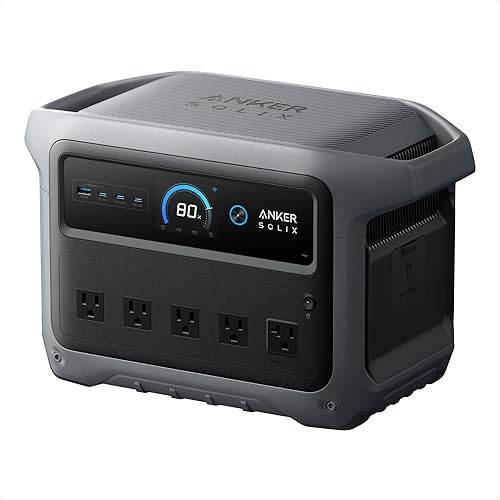
Choose the C1000 for expandable capacity and 11 ports, or the C1000 Gen 2 for higher output and a lighter build. In this Anker SOLIX C1000 vs C1000 Gen 2 comparison, the key tradeoff is the original model's expansion option versus the Gen 2's stronger output.
The original C1000 stores 1,056Wh and provides 1,800W of output, with 2,400W SurgePad output. The Gen 2 stores 1,024Wh and provides 2,000W, with a 3,000W peak.
Both support up to 600W of solar input. Anker gives each a 1.8-hour full solar recharge claim, while their AC charging claims differ.

Anker SOLIX C1000 vs C1000 Gen 2: what is the main difference?
The original C1000 can expand with a BP1000 battery; the Gen 2 cannot expand, but it delivers more output. Choose by the feature that matters most for your outage plan, campsite or mobile setup.
The original's capacity is 1,056Wh, just 32Wh more than the Gen 2's 1,024Wh. That small gap is less important than the Gen 2's 200W higher rated output or the original's option to add a BP1000.
The Gen 2 also has a 3,000W peak rating, compared with 2,400W SurgePad output for the original. Peak and SurgePad figures are not the same kind of rating, so compare your devices' running and startup needs with each station's stated limits.
For a closer look at the original station's features and tradeoffs, see our Anker SOLIX C1000 review. If you're comparing other sizes, our Best Anker Solix Portable Power Station guide covers the broader lineup.
Should you choose the original C1000 or Gen 2 for capacity?
Choose the original C1000 if you may need more stored energy later. It works with the BP1000 expansion battery to reach a combined 2,112Wh, while the Gen 2 has no expansion option.
The BP1000 must be connected to the C1000 to charge and discharge. It is only compatible with the original C1000, so it cannot add capacity to the Gen 2.
The ready-to-use bundle combines the original C1000 and BP1000. It provides 2,112Wh total, but Anker notes that the station and battery may arrive separately.
If you expect to use one station without an added battery, the C1000 and Gen 2 have nearly the same base capacity. Estimate how long your devices will run from watt-hours and their power draw, allowing for inverter losses on AC loads.
Which model has more output for your devices?
The Gen 2 has the higher rated output at 2,000W, with 3,000W peak output. The original C1000 provides 1,800W and 2,400W SurgePad output.
That difference can matter when several devices run together or when a device needs a higher startup surge. Add the running wattage of the equipment you plan to use, and check whether any motor or compressor has a separate starting requirement.
Don't treat either peak figure as a continuous output rating. The C1000 Gen 2's 3,000W peak and the original's 2,400W SurgePad output are not directly interchangeable labels.
How many devices can each station connect?
The original C1000 has 11 ports and the Gen 2 has 10. Count the connections your setup needs, including charging equipment and small electronics, rather than relying on the port count alone.
For a compact USB-focused option, read the Anker SOLIX C300 DC review.
The number of ports doesn't tell you how much power every port can deliver at once. Check the output limits and connection types in the manuals for your specific devices.
Which C1000 charges faster?
The Gen 2 claims a full AC recharge in 49 minutes, while the original C1000 claims 80% in 43 minutes under ideal conditions. These claims describe different charging milestones, so they don't guarantee a direct winner by time alone.
The original's 43-minute figure assumes no load, UltraFast mode enabled in the Anker app, and an ambient temperature between 68°F and 122°F. Anker says temperatures outside those conditions can change the charging time.
The Gen 2 uses HyperFlash and claims a full charge at 1,600W in 49 minutes. Its charging rate depends on battery temperature, and Anker says charging slows noticeably when the cells are between 0°C and 20°C.
Both use the Anker app to enable fast charging. If your station will recharge between short outings or during an outage, leave time for the actual conditions in your room rather than planning around the fastest claim.
Which is better for solar recharging?
Either model can suit a setup with up to 600W of solar input and a claimed 1.8-hour full recharge. Confirm your panel voltage, connectors and current limits against the manual before buying or connecting panels.
The original C1000 accepts an 11–60V solar charger with an XT-60 connector. It supports up to 10A at 11–32V and up to 12.5A at 32–60V.
The Gen 2 also supports up to 600W, with a 60V maximum. Solar recharge time depends on conditions and the connected panels, so the 1.8-hour figure is a best-case claim rather than a schedule to count on.
If solar is central to your setup, compare panel compatibility and charging limits alongside capacity. A larger panel does not help if its voltage or connector does not match the station's requirements.
Which is easier to move and store?
The Gen 2 is lighter on the stated weight figures and has a smaller size claim than similar models. The original C1000 weighs 27.6 lb, while the Gen 2 weighs 11.3 kg.
Anker describes the Gen 2 as 14% smaller and 11% lighter than similar models. The original C1000 is described as 15% smaller than comparable 1kWh units, so those percentages use different comparisons.
Measure your storage space and travel route before choosing. The listed dimensions are 14.8 x 8.07 x 11.02 inches for the original and 15.1 x 8.2 x 9.6 inches for the Gen 2.
A compatible case is available for both generations, with an adjustable shoulder strap and zipper openings. Check its 13.8 x 12 x 9.8 inch dimensions against the station before ordering.
The smaller dimensions don't make either station weightless. Think about how often you'll lift it, where you'll set it down and whether a case makes transport easier for your route.
Can either model work for home backup?
The Gen 2 adds a 10 ms UPS switchover claim, while the original offers more flexibility if you add a BP1000. Match the station to the equipment and backup time you need.
The Gen 2's UPS feature is intended to keep equipment such as laptops and CPAP machines running through a switchover. Check the device manufacturer's guidance and the station manual before relying on it for essential equipment.
The original C1000 can provide longer energy storage when paired with its expansion battery. That does not increase its 1,800W output rating, so a larger capacity won't make an appliance with a high power draw compatible.
For either model, estimate runtime using the device's wattage and the station's usable energy. The original C1000's own guidance suggests accounting for inverter losses on AC output.
Is the original C1000 or Gen 2 the better fit for camping?
Choose the Gen 2 when lower carry weight and higher output matter most; choose the original when you want the option to expand capacity. For a short trip, the base capacities are close enough that your device list and carrying distance may decide it.
The original C1000 is positioned for camping and RV use, with 11 ports and a 600W solar input. The Gen 2 is also designed for camping and adds a 2,000W output rating.
If you are considering a smaller station for lighter loads, compare the Anker SOLIX C300 review and the Anker SOLIX C300 vs C300 DC comparison. Those models are a separate size choice, so check their capacity and output against your own equipment.
Which one should you choose: C1000 or C1000 Gen 2?
Pick the original C1000 if expansion and 11 ports matter more; pick the Gen 2 if you want 2,000W output, a 3,000W peak and its 49-minute full-charge claim. The original and Gen 2 start with nearly equal capacity, so your decision should rest on those differences.
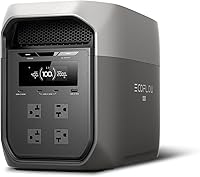
You can also compare the C1000 with EcoFlow DELTA 2.
For longer backup, the C1000 with BP1000 gives you 2,112Wh combined. For another capacity comparison, see Jackery Explorer 2000 Plus vs 2000 V2.
For portability, consider the Gen 2's 11.3 kg weight and compare it with the exact original model dimensions and your carrying needs.
If brand choice is still open, read our comparisons of whether Anker Solix is worth it over Jackery and whether Anker or Jackery is better. Choose the station whose output, capacity and charging options match the equipment you plan to run.
Frequently asked questions
Is the Anker SOLIX C1000 Gen 2 better than the original C1000?
The Gen 2 is better if you need 2,000W output, 3,000W peak output, a 49-minute full-charge claim and lower weight. The original C1000 is the better fit if you want expansion: it works with the BP1000 battery to reach 2,112Wh.
Neither is the right choice for every setup.
Can you expand the C1000 Gen 2?
No. Anker says the C1000 Gen 2 dropped expansion to reduce size and weight.
The original C1000 can connect to the BP1000 expansion battery, which is designed for that station and cannot be used on its own.
Which C1000 has more output?
The C1000 Gen 2 has more output at 2,000W, with a 3,000W peak. The original C1000 is rated for 1,800W and up to 2,400W SurgePad output.
Check the running and startup needs of your devices before choosing either station.
Which C1000 charges faster?
The original C1000 has a 43-minute claim to reach 80% under ideal conditions, while the Gen 2 claims a full charge in 49 minutes with HyperFlash. Temperature, load and charging settings affect real charging time, so treat both as conditional claims.
Do both C1000 models support solar charging?
Both support up to 600W of solar input and claim a full solar recharge in 1.8 hours. The original C1000 supports an 11–60V solar charger with an XT-60 connector, with current limits that vary by voltage.
Check each model's manual and panel compatibility before connecting.