Anker SOLIX C300 Review: Worth It? (October 2026)
The Anker SOLIX C300 suits compact portable power when you need AC outlets for small devices, with 288Wh capacity and a 300W total AC output. Choose the C300 DC if you only need USB and car-socket power.

On this page (8 sections)
- Anker SOLIX C300 review: what does it offer?
- Which devices can the C300 power?
- Is the C300 suitable for camping?
- Can you recharge the C300 with solar?
- C300 versus C300 DC: which one should you choose?
- How does the C300 compare with other Anker Solix stations?
- What should you check before buying the C300?
- Is the Anker SOLIX C300 worth choosing?
The Anker SOLIX C300 is a compact 288Wh power station for trips where AC outlets matter. It provides three AC outlets with 300W total output, plus USB and car-socket charging, but its capacity is better suited to short, modest loads than extended backup.
Choose the C300 if your gear needs a standard plug and stays within its output limit. If your devices charge by USB, the C300 DC removes the AC outlets, while a larger unit such as the Anker SOLIX C1000 review may suit heavier or longer power needs.
Anker SOLIX C300 review: what does it offer?
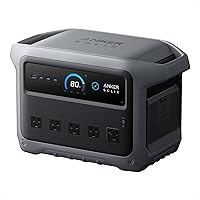
The Anker SOLIX C300 combines 288Wh capacity, 300W total AC output and eight charging ports in a portable format. It fits a campsite, travel setup or short power interruption when the devices are modest and you can recharge between uses.
Anker SOLIX C300 Portable Power Station: Best for compact AC power

- 288Wh capacity
- 300W total AC output
- Three AC outlets
- Eight charging ports
The AC equipped C300 adds three outlets for standard plug-in devices while keeping the 288Wh capacity and 300W output. Its compact capacity favors short, modest loads over long runtimes.
Pros
- Three AC outlets with 300W total output
- Eight ports across AC, USB and car socket
- Wall, solar, car and USB-C charging options
Cons
- 600W surge is not the same as continuous output
- Shoulder strap is sold separately
The C300 has three AC outlets, two 140W USB-C ports, one 15W USB-C port, one 12W USB-A port and a 120W car socket. The AC outlets share the stated 300W output, so add the wattage of devices you plug in before running them together.
Anker says the C300 can recharge to 80% in 50 minutes from a wall outlet. It also supports charging by solar, car or USB-C, giving you several ways to restore its charge depending on your trip.
What the C300’s 288Wh capacity means in practice
The 288Wh capacity is a limit on stored energy, not a promise of a fixed number of hours. Runtime changes with device wattage, how often you use it and energy lost during conversion.
For a rough estimate, divide 288Wh by a device’s wattage, then plan for less time because AC conversion uses some energy. A 60W load, for example, would use the full stated capacity in under five hours even before accounting for those losses.
This makes the C300 more suitable for charging phones, camera batteries and other modest loads than running high-draw appliances for a long stretch. Check both the device’s running wattage and any startup surge before connecting it.
Anker lists 600W surge output, but that figure does not mean the C300 can provide 600W continuously. For a device that needs more than 300W while running, select a power station rated for that load.
Which devices can the C300 power?
The C300 can power compatible devices within its port and output limits, including phones, laptops, cameras and other small gear. Match the device’s input needs to the correct outlet, and keep total AC use under 300W.
| Connection | C300 output |
|---|---|
| AC outlets | 3 outlets, 300W total |
| USB-C | 2 ports at 140W each, 1 port at 15W |
| USB-A | 1 port at 12W |
| Car socket | 1 socket at 120W |
| Capacity | 288Wh |
| Surge output | 600W |
The two 140W USB-C ports support fast charging, while the lower-output USB-C and USB-A ports suit smaller electronics. Check your device’s charging requirements, since a compatible cable and port matter as much as the station’s total capacity.
Think through what you would run at the same time. A laptop and camera charger may fit the C300’s use case, while a kettle or other high-wattage appliance can exceed its AC limit.
Is the C300 suitable for camping?
The C300 suits camping setups that need a few hours of modest device charging and a way to run compatible AC gear. Its 288Wh capacity favors phones, cameras and a laptop over appliances that draw power continuously.
The compact design is described as 15% smaller than similar designs, and Anker says it produces 25dB from 3.3 ft away. The shoulder strap is sold separately, so include another carrying method in your plan if you expect to move it often.
Before leaving, list your devices and estimate their combined energy use. A phone topped up once is a small load; repeated laptop use and several camera battery charges can use the capacity much faster.
For a longer trip, plan charging stops or a compatible solar panel. If your needs are mostly USB devices, compare the C300 DC power bank station review to see whether you can skip AC outlets.
Can you recharge the C300 with solar?
Yes, the C300 can recharge from compatible 11–28V solar panels with an XT60 connector. Anker recommends its 60W or 100W panels and says the C300 is not compatible with the SOLIX PS30, PS200 or PS400.
Solar input depends on sunlight, panel angle and conditions, so the panel’s rated wattage does not guarantee a fixed recharge time. Keep the station positioned safely and follow the panel and power station instructions.
Anker also warns that panels over 100W can cause a device malfunction. Check voltage and connector compatibility before connecting a third-party panel, even when its wattage seems suitable.
The C300’s AC model can also recharge from a wall outlet, car or USB-C. Anker says it reaches 80% in 50 minutes from a wall outlet, which may be useful before a trip when solar conditions are uncertain.
C300 versus C300 DC: which one should you choose?
Choose the C300 for AC outlets and the C300 DC if USB and car-socket charging cover your devices. Both have 288Wh capacity and 300W output, but the AC model adds three standard outlets.
The C300 DC has seven ports: a 120W car socket, two 140W USB-C ports, one 100W USB-C port, one 15W USB-C port and two 12W USB-A ports. Its first activation requires an 18W or higher USB-C wall charger through either the USB-C2 or USB-C3 port, or compatible solar input.
The AC equipped model has eight ports and includes three AC outlets, while the DC version offers more USB ports. The Anker SOLIX C300 vs C300 DC comparison lays out the port differences if you are choosing between them.
A C300 DC carry option is the Lebakort storage case for the Anker SOLIX. It is designed for the C300 DC and holds accessories in a mesh pocket; it does not include the power station.
How does the C300 compare with other Anker Solix stations?
The C300 is the compact choice when 288Wh and 300W are enough for your gear. Step up to a higher-capacity station when you need more stored energy or have devices that exceed its output limit.
Compare the Anker C1000 and C1000 Gen 2 for larger options.
Anker’s SOLIX range includes models with different capacities and port layouts. Compare the exact unit against your device list, charging options and expected time away from a wall outlet.
Our guide to the best Anker Solix portable power station can help narrow the choice across the range. If you are weighing brands, read Is Anker or Jackery better? and Is Anker Solix worth it over Jackery? for a broader comparison.
What should you check before buying the C300?
Confirm device wattage, port type and recharge plan before choosing the C300. Those three checks determine whether its compact capacity will cover your use.
- Add the running wattage of devices that may use the AC outlets together.
- Check startup surges for equipment with motors or compressors.
- Match USB-C charging needs to the port and cable.
- Confirm solar voltage and XT60 connector compatibility.
- Decide whether you need the separately sold shoulder strap.
The C300 includes an AC charging cable, safety manual and warranty information. Anker states a five-year warranty and describes the battery as LiFePO4, designed for 3,000 cycles; review the warranty terms for your region before buying.
Is the Anker SOLIX C300 worth choosing?
The C300 is a sensible fit if you need AC outlets, multiple charging ports and 288Wh for compact portable use. Its 300W total AC limit and finite capacity make it a poor match for high-draw appliances or long periods without a recharge.
Pick the AC equipped C300 for standard plug-in devices, and choose the C300 DC if USB and car-socket charging are enough. If your planned loads need more runtime or output, compare a larger model before settling on the compact option.
Frequently asked questions
Does the Anker SOLIX C300 have AC outlets?
Yes. The AC equipped Anker SOLIX C300 has three AC outlets with 300W total output, alongside USB-C, USB-A and a car socket.
The C300 DC is a different model with seven charging ports but no AC outlets, so check the model name before choosing one for plug-in devices.
Can the Anker SOLIX C300 charge with solar?
Yes. Anker recommends its 60W or 100W solar panels for the C300, using a compatible 11–28V panel with an XT60 connector.
The C300 is not compatible with the SOLIX PS30, PS200 or PS400; Anker also warns against panels over 100W for this model.
How much power can the C300 provide?
The C300 has 288Wh of capacity and a 300W total AC output, with a 600W surge figure. Actual runtime depends on the connected device and its power draw, so estimate from the device's wattage and allow for conversion losses rather than treating 288Wh as usable AC energy.
Should I choose the C300 or C300 DC?
Choose the AC equipped C300 if you need standard wall outlets for compatible devices up to its 300W total AC output. The C300 DC is better suited to USB and car-socket charging, and it avoids paying for AC outlets you won't use; compare the ports and charging needs of your gear first.