Battery Box vs Power Station: Which Should You Choose? (November 2026)
Choose a battery box for a modular 12-volt setup, or a power station for built-in battery capacity and outlets. Your devices, battery type and need for portability decide which system fits.
On this page (7 sections)
Choose a battery box for a modular 12-volt setup, or a power station for built-in battery capacity and outlets. That choice shapes how much work you do before you can use any power.
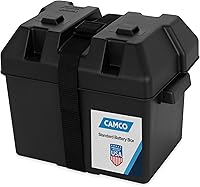
A battery box does not include the battery. It is a housing that protects a separate battery, keeps it in place and gives you a safer place to connect cables.
A portable power station combines the battery, charging controls and device outputs in one enclosure. You can often plug in a device as soon as the unit is charged, without choosing a battery or building wiring.
If you want control over battery type and size, a battery box gives you that freedom. You can match the battery to your boat, RV or trolling motor, and replace it later without replacing the whole system.
If you want fewer parts to manage, a power station keeps the main components together. That can suit camping, travel and backup use where speed and simplicity matter more than modularity.
This comparison covers marine and RV battery storage, camping power, emergency use, portability, output types and setup effort. We compared the features and stated specifications for the 4 products below.
Output type matters too. Some systems provide direct 12-volt connections for marine equipment, while others provide AC outlets for household-style plugs and USB ports for phones and laptops.
Setup effort is another part of the decision. A battery box may need a compatible battery, charger, cables and mounting hardware, while a power station mainly needs charging and a check that your devices fit within its output.
Maintenance differs as well. A separate battery needs its own care and charging routine, while a power station manages charging internally but still needs storage and output checks.
Use the sections below to match the system to your actual devices, battery chemistry and how you plan to use it on the water, at camp or at home.
 Best for Group 27 marine batteries
Attwood 9067-1 Vented Battery Box with Mounting
 Best for light portable power
Jackery Explorer 300 Portable Power Station
Battery box vs power station: what is the main difference?
A battery box is a housing for a separate battery, while a power station is a complete portable energy unit. That difference affects capacity, wiring, charging, and the devices you can connect.
A battery box works as part of a larger system. You choose a compatible battery, connect the required cables, and use the available terminals or ports.
The box itself does not store energy. Capacity comes from the battery inside, so runtime depends on that battery and on the load connected to it.
A power station arrives with its battery and outputs integrated. The Jackery Explorer 300 has 292Wh of capacity, while the Explorer 1000 v2 has 1,070Wh and 1,500W of rated output.
That design simplifies connection, but it also limits change. You cannot swap in a larger battery to extend runtime, and output is capped by the unit you bought.
With a battery box, wiring is often the main task. Cable routing, terminal fit, and secure mounting all need attention before use.
With a power station, checking device wattage is often the main task. Total load must stay within the rated output, and brief starting surges may matter for some appliances.
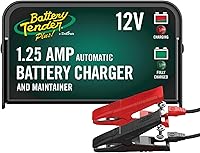
Charging also works differently. A battery box relies on a separate charger matched to the battery type, while a power station uses its built-in charging system.
Portability differs too. A battery box can be light on its own, yet the battery inside may add considerable weight and must be secured with care.
If you are still deciding what deep-cycle battery means, start with this guide to what is a deep cycle battery. It explains the battery type that often sits inside a modular 12-volt setup.
It also helps you avoid a common mismatch. A box built for one chemistry or battery size may not suit a different battery, even if the voltage looks the same.
Which system gives you more control?
A battery box gives you more control over battery choice and system design. A power station gives you less modularity but reduces the number of separate parts you need to select.
With a battery box, you can choose a battery that suits your boat, RV or other 12-volt equipment. You also decide how the battery is secured, charged and connected, subject to the battery and equipment instructions.
The Attwood 9067-1 fits Group 27 Series Batteries and uses a vented cover, a 40-inch hold-down strap and mounting hardware. Its interior measures 13.06 x 6.9 x 10.5 inches, so the battery must match that fit.
The Newport Trolling Motor Smart Battery Box Power adds external terminals, USB and 12V DC ports, a battery meter and 10A and 60A circuit breakers. It is compatible with lead-acid batteries only, so it does not suit a lithium-ion battery plan.
For more options, compare features in our guide to the best deep cycle battery box. If you plan to use lithium iron phosphate batteries, see the best battery box for LiFePO4 battery guide before choosing a case.
Which option is easier to use away from home?
A power station is usually easier when you want to connect devices without building a battery system. It combines charging inputs and output ports in one portable enclosure.
The Jackery Explorer 300 weighs 7.5 lb and has 2 AC outlets, a 100W USB-C port, 2 USB-A ports, and a 120W car port. Its rated output is 300W, with a 600W peak surge.
That mix suits smaller devices that need different plug types. A laptop, phone, camera battery, or drone battery can often share the unit, if their combined draw stays within the limit.
The 300W rating is a total limit, not a per outlet allowance. Running several devices at once divides the available output, so a device that works alone may overload when others are also plugged in.
The peak surge figure can help with brief start up demand, but it does not mean the unit can run a high draw appliance continuously at that level.
At 7.5 lb, the Explorer 300 is easier to carry than larger stations for short trips from a vehicle and camp setups where weight matters.
It can recharge from AC power, from a car port, or from an optional Jackery solar panel. High draw kitchen appliances can exceed its limit and need a larger model.
Plan around the smallest devices first. Phones, tablets, lights, and camera gear usually fit this class of unit better than appliances that heat, cool, or motor drive under load.
Carry the right cables for each port type and check the charge before you leave. A quick check at home is simpler than discovering a low battery at camp.
The Explorer 1000 v2 weighs 23.8 lb and has a 1,070Wh battery, 1,500W rated output and a 3,000W surge peak. It has 3 pure sine wave AC ports, 2 USB-C ports, 1 USB-A port, a DC car port and LED lights.
The larger Jackery is more capable, but it is also heavier to move. Use our guide on How To Choose Right Portable Power Station Size? to match capacity and output to your actual devices.
Which setup works better for boats and RVs?
A battery box usually fits a permanent or semi permanent marine setup better. It keeps a separate 12V battery secured while allowing wiring for a trolling motor, RV equipment, or other direct current loads.
The Attwood box is designed for Group 27 lead acid batteries and has a vented design. Its acid resistant polypropylene construction and included strap support a secured installation.
That design suits a battery that stays in place for repeated trips. Secure mounting reduces movement in a boat or RV, where vibration, turns, and rough water can stress loose connections.
The vented cover helps battery gases escape while it also limits water intrusion around the battery. The Attwood box includes a 40 inch hold down strap and mounting hardware to keep the battery locked in place.
The Newport box is more focused on trolling motor use. Its external terminals keep the motor connection accessible, while USB and 12V DC ports support compatible accessories.
External access makes daily use simpler on small watercraft. You can connect a motor or accessory without opening the box, which reduces awkward handling in a tight kayak or jon boat.
Its built in battery meter lets you check charge before launch. The box also includes 10A and 60A circuit breakers, which are part of its protection design for the accessory and trolling motor connections.
It is compatible with lead acid type batteries only, so it does not suit a lithium ion plan. Battery chemistry must be checked before any connection is made.
A power station can still help on a boat or RV trip when you want portable AC or USB power. It may be less suitable when your equipment already uses a dedicated 12V battery and fixed wiring.
Keep connections clean and protected and inspect straps and terminals for marine care. For a car focused setup, compare the options in our guide to the best battery box for car.
Fit is especially important on board. Measure the battery and the available space, check height and cable access, and confirm that the securing method suits the vessel or vehicle.
Which option is better for camping?
Choose the Explorer 300 for lighter camping loads and the Explorer 1000 v2 for higher output or longer runtime. A battery box makes more sense when your camping setup already uses a separate deep cycle battery and 12V equipment.
The Explorer 300 has 292Wh of capacity and a compact form factor. Its 300W rated output suits smaller devices, but high draw appliances can exceed its limit.
For camping, that suits essentials such as phones, tablets, lights, camera batteries, and small electronics. It is easier to place near a tent or picnic table, and easier to carry back to a vehicle.
The Explorer 1000 v2 has 1,070Wh of capacity and 1,500W of rated output. Its LFP battery is specified for more than 4,000 charge cycles while retaining over 70% of its original capacity.
That larger capacity changes what camping use can look like. More stored energy supports more devices or longer use between charges, while the higher output can handle more demanding equipment within its rating.
The trade off is weight and bulk. At 23.8 lb, the larger Jackery takes more effort to move from a vehicle to camp, and it needs more space in a trunk or storage area.
Neither Jackery product includes a solar panel. The Explorer 300 can pair with Jackery panels, while the Explorer 1000 v2 is compatible only with Jackery solar panels for solar charging.
Solar charging can help extend a trip, but panel size and sunlight affect how much energy you recover each day. A panel should be treated as a supplement, not as a guarantee of full recharging.
If you want to compare another way to carry light during camp setup, see our guide to rechargeable vs battery headlamp. It covers a separate lighting choice rather than a replacement for a power source.
For camping, match the unit to your load list before you pack. Add up device wattage, think about runtime, and check whether AC, USB, or car port outputs cover the plugs you actually need.
How do charging and maintenance differ?
A power station keeps charging within its built-in system, while a battery box requires you to match the charger to the separate battery. For compatible lithium setups, compare 12V lithium battery boxes.
That makes battery boxes more flexible, but it also adds setup decisions.
The Explorer 300 can recharge through AC, a car port or an optional Jackery solar panel. The Explorer 1000 v2 has standard charging and an emergency charging mode that can reach full charge in 1 hour when enabled through the Jackery App.
A battery box does not determine charging time by itself. Battery size, charger output, battery chemistry and the connected equipment all affect the result.
Inspect battery-box straps, terminals, cables and covers before use. Keep the box secured, follow the battery instructions and avoid mixing a charger with a battery type it does not support.
The Newport box is specifically for lead-acid batteries. The Attwood box is also identified for lead-acid batteries and Group 27 batteries, so neither is a direct choice for a lithium-ion setup.
Which product should you choose?
Pick the Attwood 9067-1 when you need a vented Group 27 battery box for a boat or RV. Its fit, strap and mounting hardware make it the strongest match for a secured lead-acid battery installation.
Pick the Newport Smart Battery Box Power when your lead-acid trolling motor setup needs external terminals and accessory ports. Its built-in meter and circuit breakers add useful controls for a 12V marine system.
Pick the Jackery Explorer 300 when low weight and built-in outlets matter most. Its 292Wh capacity and 300W output fit lighter portable loads.
Pick the Jackery Explorer 1000 v2 when you need more capacity and higher output. Its 1,070Wh battery and 1,500W rated output suit larger portable backup needs, but the 23.8 lb weight takes more effort to carry.
A battery box is the better foundation for a battery system you plan to wire into a boat, RV or trolling motor. A power station is the simpler choice for portable AC, USB and DC power with fewer separate parts to manage.
The scores weigh specifications, features and buyer fit against the needs of this comparison. They do not replace checking your device wattage, battery chemistry, terminal type and installation instructions before use.
Frequently asked questions
Is a battery box the same as a power station?
No. A battery box holds and protects a separate battery, while a portable power station combines a battery, charging system and output ports in one enclosure.
A battery box gives you more freedom to choose the battery and wiring, while a power station is usually faster to use with ready-made AC, USB or DC outlets.
Which is better, a battery box or power station?
A battery box is better for a fixed 12V marine, RV or deep-cycle battery system. A power station is better when you want portable stored energy with built-in AC and USB outlets.
Choose based on the devices you need to run, the battery chemistry you use and how much setup you want to manage.
Can a battery box power a laptop?
A battery box alone cannot power a laptop because it is a case or power center rather than a complete AC power supply. You would need a suitable battery, wiring and an inverter, or a battery box with the correct DC output.
A power station such as the Explorer 300 includes AC and USB-C outputs.
Are power stations safer than battery boxes?
Neither design is automatically safer in every setup. A vented battery box can help manage gases from a lead-acid battery, while a power station keeps its battery and output controls in one enclosure.
Follow the manual, use the correct battery type and keep connections protected from water and damage.