6 Best AGM Deep-Cycle Batteries for RVs (November 2026)
The best AGM deep-cycle batteries for RVs include the Renogy 12 Volt 100Ah Deep Cycle AGM Battery for full-size RV house loads, the Interstate Batteries 12V 110 AH SLA/AGM Deep for high-capacity 12V replacement, and the Newport 12V 50Ah Deep Cycle AGM Marine for smaller marine-style RV setups.
On this page (6 sections)
The best AGM deep cycle battery for most RVs is the Renogy 12 Volt 100Ah Deep Cycle AGM Battery, because its 100Ah capacity gives a practical reserve for lights, fans, electronics and other 12V house loads. Choose Interstate's 110Ah model for the most 12V capacity here, or a smaller 35Ah battery when space and demand are limited.
AGM means absorbent glass mat, a sealed lead-acid design that holds the electrolyte in glass mat separators. For a quick explanation of how this battery type works, read our guide to what is a deep cycle battery.
Your RV battery choice should match daily energy use, available compartment space, voltage and charging equipment. Our guide to the best rv house battery covers the wider house-battery decision, including how capacity affects camping time.
Our picks at a glance
-
1
 Best for full-size RV house loads
Renogy 12 Volt 100Ah Deep Cycle AGM Battery
9.4/10 our score
See it on Amazon -
2
 Best for high-capacity 12V replacement
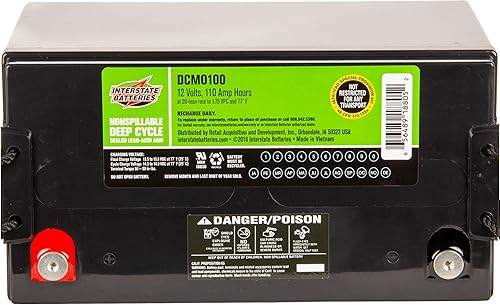
Interstate Batteries 12V 110 AH SLA/AGM Deep
9.0/10 our score
See it on Amazon -
3
 Best for smaller marine-style RV setups
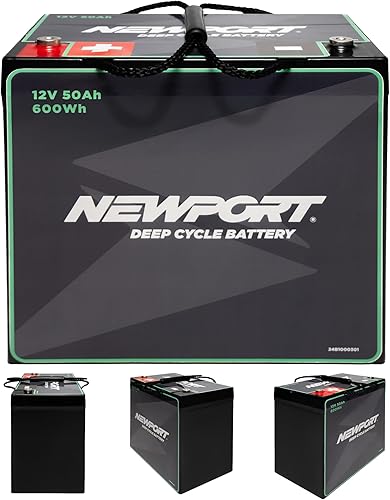
Newport 12V 50Ah Deep Cycle AGM Marine
9.4/10 our score
See it on Amazon
- 4
 Check it
Daakmax 12V 35ah Deep Cycle AGM Battery
Best for a two-battery compact bank - 5
 Check it
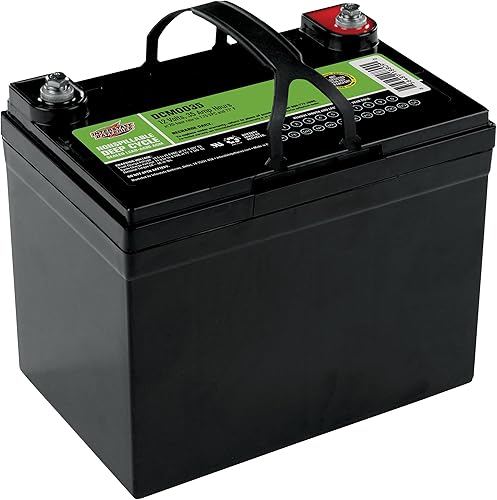
Interstate Batteries 12V 35Ah SLA AGM Deep
Best for compact RV power needs - 6
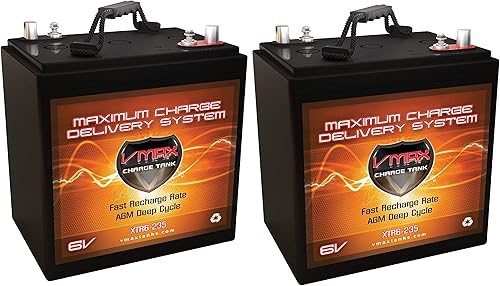 Best for a 6V RV battery bankCheck it
Which AGM deep-cycle battery is best for an RV?
The Renogy 100Ah battery is the strongest all-around pick for a 12V RV house system, while the Interstate 110Ah model gives the most 12V capacity here. Smaller RVs and lighter loads may suit the compact Interstate 35Ah, Newport 50Ah or Daakmax pair better.
Capacity is only the starting point, because fit, weight, terminals and charging settings can change the result. Match the battery to the RV you actually own, not just to the largest number on the page.
Start with your daily house loads. List the lights, fans, water pump, electronics and appliances you expect to run between charging sessions.
Next, confirm the system voltage your RV was built to use. A 12V battery suits a standard 12V house system, while the VMAXTANKS pair uses 6V batteries wired as a bank.
Then measure the compartment in every direction and check where the cables will land. A battery that is too tall, too wide or too heavy for the tray may fail even if the electrical specs look right.
Weight also deserves a clear look before you order. The larger house batteries are harder to lift into place and harder to remove later for service or replacement.
Terminals matter for a clean and secure install. The type and position should match your existing cables, or you may need adapters and extra work to make the connection safe.
Set-up is simpler when the battery chemistry matches your charger and solar controller. Use the AGM setting where one is offered, and keep cables short, tight and protected from rubbing.
Care is mostly about charge level and security. Keep the battery mounted firmly, inspect connections during routine checks and avoid leaving it discharged for long periods.
Use the picks that follow as a shortlist, then measure twice before you buy. The right choice fits your space, your wiring and your daily use without strain.
| Product | Best for | Capacity | Size | Weight | Our score |
|---|---|---|---|---|---|
| Renogy 12 Volt 100Ah Deep Cycle AGM Battery | full-size RV house loads | 100Ah | 13.1 x 6.9 x 8.6 in | 63.9 lb | 9.4 |
| Interstate Batteries 12V 110 AH SLA/AGM Deep | high-capacity 12V replacement | 110Ah | 12.99 x 6.81 x 8.35 in | 71.5 lb | 9.0 |
| Newport 12V 50Ah Deep Cycle AGM Marine | smaller marine-style RV setups | 50Ah | 32 lb | 9.4 | |
| Daakmax 12V 35ah Deep Cycle AGM Battery | a two-battery compact bank | 35Ah each | 9.1 | ||
| Interstate Batteries 12V 35Ah SLA AGM Deep | compact RV power needs | 35Ah | 5.16 x 7.68 x 6.42 in | 9.7 | |
| VMAXTANKS Qty | a 6V RV battery bank | 235Ah each | 8.7 |
Best AGM deep-cycle batteries for RV house loads
The best AGM battery depends on how much energy you use between charging sessions and how much battery weight your RV can carry. Larger capacity gives you more reserve, but it also brings more weight and a greater need for careful mounting.
Renogy 12 Volt 100Ah Deep Cycle AGM Battery: Best for full-size RV house loads
- 100Ah capacity
- 12V sealed AGM lead-acid design
- 1100A maximum discharge for 5 seconds
- Parallel connections up to 4P
The 100Ah capacity gives an RV more usable house-battery room than the smaller picks. Its sealed AGM design and support for parallel connections suit larger 12V setups.
Pros
- 100Ah capacity
- Works with RV and off-grid applications
- Temperature range from -4 to 140 F
Cons
- Heavy 63.9 lb weight
- Recommended discharge limit is above 50% for longer cycle life
The Renogy 12 Volt 100Ah Deep Cycle AGM Battery is the best fit for a full-size 12V RV house system. Its 100Ah capacity gives more reserve than the 35Ah and 50Ah options, so it better matches an RV that runs several smaller loads between charging sessions.
Renogy states that the battery can support a maximum discharge current of 1100A for 5 seconds. The battery is 13.1 x 6.9 x 8.6 inches and weighs 63.9 lb, so measure the compartment and plan the lift before installation.
The sealed lead-acid AGM design is suited to RV, solar, marine and off-grid applications. Renogy also states that the battery can operate across a discharge temperature range of -4 to 140 F and supports parallel connections up to 4P.
Renogy recommends avoiding discharge below 50% to help protect cycle life. When stored, charge it to 100% and recharge it after 3 months.
Choose it when your RV needs a single larger 12V house battery. If you need more capacity later, use matching batteries with the same voltage, capacity and AGM chemistry.
Interstate Batteries 12V 110 AH SLA/AGM Deep: Best for high-capacity 12V replacement
- 110Ah capacity
- 12V sealed AGM battery
- Insert terminal with bolt
- 12.99 x 6.81 x 8.35 in
This is the largest 12V capacity in the group, making it a fit for buyers who want more reserve for RV and solar applications. The 71.5 lb weight calls for careful installation planning.
Pros
- Highest 12V capacity here
- Sealed and spill-proof AGM design
- Insert terminal with bolt
Cons
- Heaviest 12V battery here
- Not a golf cart battery replacement
The Interstate Batteries 12V 110 AH SLA/AGM Deep is the highest-capacity 12V option in this roundup. Its 110Ah rating gives a little more stated reserve than the Renogy 100Ah, but the 71.5 lb weight makes installation and removal more demanding.
The battery measures 12.99 x 6.81 x 8.35 inches and uses an insert terminal with bolt. Interstate describes it as rechargeable, maintenance-free and spill-proof through its AGM and VRLA design.
It is intended for deep-cycle applications including RV, solar and wind systems. The battery also fits many mobility applications, but it is not a replacement for a golf cart battery.
The larger capacity makes this a good choice when your RV has room for a heavier 12V battery and you want more reserve from one unit. Check the compartment dimensions, terminal position and support surface before ordering.
Choose this Interstate when capacity matters more than weight. For a lighter setup or smaller compartment, the 50Ah Newport or 35Ah Interstate is easier to handle.
Newport 12V 50Ah Deep Cycle AGM Marine: Best for smaller marine-style RV setups
- 50Ah capacity
- 12V sealed AGM lead-acid design
- Marine terminal
- 32 lb weight
The 50Ah capacity sits between compact mobility batteries and full-size house batteries. Its marine terminal and 32 lb weight may suit a smaller RV power setup where portability matters.
Pros
- Middle-size 50Ah capacity
- Sealed AGM construction
- Manageable 32 lb weight
Cons
- Marine-focused design
- Less capacity than the 100Ah and 110Ah picks
The Newport 12V 50Ah Deep Cycle AGM Marine Battery suits a smaller RV power setup that needs more reserve than a compact 35Ah battery. Its 50Ah capacity is a middle option for light appliance loads, electronics and short trips.
This is a 12V sealed lead-acid AGM battery with a marine terminal. It weighs 32 lb, which is easier to move than the 63.9 lb Renogy and 71.5 lb Interstate 110Ah batteries.
Newport describes it for trolling motors and compatible 12V boating electronics, and the product data also identifies it as a deep-cycle marine battery. For an RV, confirm that the marine terminal and physical fit match your existing cables and compartment.
The battery is a practical choice when you want a single unit that remains manageable to carry. Its trade-off is lower capacity than the 100Ah and 110Ah batteries, so it may require charging sooner under heavier loads.
Choose it for a smaller RV, a light-duty house system or a marine-style electrical setup. For extended off-grid use, move up to a 100Ah or 110Ah battery if the space and weight limits allow it.
Daakmax 12V 35ah Deep Cycle AGM Battery: Best for a two-battery compact bank
- 2 batteries included
- 35Ah per battery
- Heavy-duty ABS casing
- Zinc-plated M6 bolts
This two-battery pack gives you two 12V, 35Ah AGM batteries for compact RV, camping or off-grid systems. It suits buyers who want matching batteries for a small bank.
Pros
- Two batteries in one pack
- Leak-proof AGM construction
- Designed for RV and off-grid use
Cons
- 35Ah per battery
- More wiring and mounting work than a single battery
The Daakmax 12V 35ah Deep Cycle AGM Battery pack is best for a compact bank because it includes 2 matching 12V, 35Ah batteries. The pair gives you two units to plan around rather than one larger battery, which can help when a compartment or mounting layout favors separate batteries.
Each battery uses sealed lead-acid AGM construction with a heavy-duty ABS casing. Daakmax describes the casing as vibration-resistant and leak-proof, with zinc-plated M6 bolts for wiring.
The batteries are designed for RV, UPS backup, marine, camping and off-grid solar systems. Each battery is rechargeable and rated at 35Ah, so calculate the final bank capacity from the wiring arrangement and your RV's system voltage.
This pack may suit a buyer who wants matching batteries for a small system or a replacement pair. It also means more mounting, cable routing and connection work than a single battery.
Choose Daakmax when two compact batteries fit your installation better than one larger unit. Confirm the correct series or parallel arrangement with your RV system before connecting them.
Interstate Batteries 12V 35Ah SLA AGM Deep: Best for compact RV power needs
- 35Ah capacity
- 12V sealed lead-acid AGM design
- Group U1 or GT9L size
- 5.16 x 7.68 x 6.42 in
The compact 35Ah format works when an RV needs a smaller battery for light house loads or a replacement in a tight compartment. It is also listed for RV use among other applications.
Pros
- Small 35Ah format
- Compact Group U1 or GT9L size
- Maintenance-free and spill-proof
Cons
- Less reserve than larger house batteries
- Not a golf cart battery replacement
The Interstate Batteries 12V 35Ah SLA AGM Deep is the best compact option for light RV house loads. Its 35Ah capacity and 5.16 x 7.68 x 6.42 inch dimensions make it much easier to fit and carry than the larger 100Ah and 110Ah batteries.
It uses a sealed lead-acid AGM design with an insert terminal. Interstate identifies the format as Group U1 or GT9L and includes terminal hardware when applicable.
The battery is designed for deep-cycle mobility use and is also identified for RVs, scooters, wheelchairs and other applications. Interstate specifically says this model is not a replacement for golf cart batteries.
A 35Ah battery fits an RV with modest demands, such as lights, small electronics or short periods away from shore power. It offers less reserve than every larger-capacity pick here, so it is not the first choice for long appliance-heavy trips.
Choose it when the compartment is small or your daily load is low. If you need longer time between charges, compare the physical space required by the Newport 50Ah or Renogy 100Ah.
VMAXTANKS Qty: Best for a 6V RV battery bank
- 2 batteries included
- 6V and 235Ah per battery
- 1.62kWh energy per battery
- 500-minute reserve capacity per battery
This pair is built for a 6V AGM battery bank rather than a single 12V replacement. Each battery has 235Ah capacity and 1.62kWh of energy, so the setup requires the right series wiring plan.
Pros
- Two 6V batteries
- 235Ah per battery
- Designed for RV and solar use
Cons
- Requires a 6V bank setup
- 78 lb listed weight
The VMAXTANKS pair is the right choice for an RV designed around a 6V AGM battery bank. It includes 2 XTR6-235 batteries, each rated at 6V and 235Ah with 1.62kWh of energy and 500 minutes of reserve capacity.
This is a different installation path from the 12V batteries above. A pair of 6V batteries normally requires a series wiring plan to create a 12V bank, so confirm the connections, charger settings and cable sizes for your RV.
VMAXTANKS identifies the batteries for solar, home, RV and industrial use. The stated weight is 78 lb, so account for the combined battery weight and make sure the compartment can support it.
The large per-battery capacity gives this pair a strong reserve when installed correctly. The trade-off is size, weight and the need to replace or configure the bank as a matched 6V setup.
Choose VMAXTANKS when your RV already uses a compatible 6V bank or you are planning one from the start. Choose a 12V battery instead if you need a simpler one-unit replacement.
How do you choose an AGM house battery for an RV?
Choose an AGM house battery by matching capacity, voltage, dimensions, terminals and charging settings to your RV. The battery with the highest amp-hour number is not automatically the best choice if it cannot fit securely or your charger is not set for AGM charging.
If you are changing chemistries, see lithium battery conversion for RVs.
What size AGM battery does an RV need?
A small RV with light lighting and electronics loads may work with 35Ah or 50Ah. A larger house system that runs several loads between charges is better suited to 100Ah or 110Ah, while the VMAXTANKS pair is for a planned 6V bank.
Use our guide to deep cycle battery for rv size before choosing capacity. Write down each device's watts and hours of use, then add reserve for cloudy weather, travel delays and charging limits.
Is one large battery better than two smaller AGM batteries?
One large battery is simpler to mount and wire, while two smaller batteries can fit a split compartment or provide matching units for a bank. The Daakmax pack includes two 35Ah batteries, while VMAXTANKS includes two 6V, 235Ah batteries for a different system design.
Use matching voltage, capacity and chemistry when connecting batteries. Renogy recommends using batteries with the same capacity, voltage and AGM type, preferably from the same brand.
How should you care for an AGM RV battery?
Keep the battery charged, avoid repeated full discharge and use the correct AGM setting on your charger or solar controller. Renogy recommends staying above 50% discharge and charging to 100% before storage.
Inspect cables and terminals during routine RV maintenance. Keep the battery secure, protect connections from accidental contact and leave enough access to remove it when service is needed.
AGM versus LiFePO4 for RV house batteries
AGM is a sealed lead-acid option with familiar 12V formats and no routine water maintenance. LiFePO4 batteries are another common RV choice, but they differ in weight, charging requirements, usable capacity and system compatibility.
That difference starts with charging. AGM batteries work well with common RV chargers and solar controllers when the AGM setting is selected and the voltage is correct.
LiFePO4 batteries usually need charging profiles made for lithium, because the voltage curve and charge acceptance are different. Using the wrong profile can limit performance or shorten service life.
Weight is another practical trade-off. AGM batteries are heavier for the same stated capacity, so a large AGM bank can add a lot of load to the rig.
Usable capacity also needs care in the comparison. AGM batteries are best kept within a safer discharge range, while lithium options can often use more of their rated capacity in daily service.
System compatibility matters as much as the battery itself. Check the charger, solar controller, inverter and battery monitor before you switch chemistry or replace an old bank.
AGM suits buyers who want a familiar sealed lead-acid fit and simple maintenance, with no routine topping up with water. That helps when the battery sits in a hard to reach compartment.
LiFePO4 suits buyers who want lighter weight and deeper regular use within its design limits. It still needs the right settings, proper cable sizing and a monitor that reads the bank correctly.
If you are comparing chemistries, see our guide to the best 200ah lifepo4 rv battery and our broader list of the best lifepo4 battery for rv. Choose based on the complete system, including charger, solar controller, battery monitor and installation space.
For many RV owners, the deciding factor is not chemistry alone. It is whether the whole system works together, fits the compartment and matches how you camp.
Can an RV battery run household appliances?
An AGM battery can supply energy to RV appliances when the battery bank, inverter and wiring are sized for the load. The Renogy 100Ah model is described for appliances such as a fridge, microwave, CPAP machine, coffee maker and laptop, but actual run time depends on wattage and usage.
Run time drops fast as wattage climbs, so a short appliance burst and an all day load are very different jobs. A coffee maker or microwave draws hard for a short time, while a fridge cycles on and off through the day.
Start by reading the wattage on each appliance and adding the items you truly run together. That total tells you more about battery drain than a simple list of devices.
Startup demand matters because some motors and compressors pull a brief surge when they switch on. The inverter and cables must handle that surge without tripping or heating up.
Repeated deep discharge can shorten the life of an AGM battery, so plan to recharge before the bank runs very low. Loose terminals and long thin cables can also waste power and create heat under load.
For RV use, try the setup with one appliance at a time and watch the monitor. That shows how each device affects voltage and how quickly the bank recovers after charging.
If you are planning emergency home power as well as RV use, read Can A Solar Generator Power A House? and Can A Solar Generator Power A Whole House?. Those guides explain why battery capacity and inverter output must be considered together.
Treat household appliances as occasional loads unless your bank is sized for regular use. Sorting short bursts from long running loads will keep the system safer and the battery in better shape.
Which AGM deep-cycle battery is best for your RV?
Choose the Renogy 100Ah for a balanced 12V RV house battery with substantial reserve. Pick the Interstate 110Ah when you want the highest 12V capacity here and can manage its 71.5 lb weight.
Those two are the main full-size choices, but they are not the only sensible answers. The best fit depends on compartment size, how much you run between charges and how easily you can lift and secure the battery.
Choose the Newport 50Ah for a smaller single-battery setup, the Daakmax pair when two compact 35Ah batteries fit your layout, and the Interstate 35Ah for light loads or tight spaces. Pick VMAXTANKS only when a 6V AGM bank matches your RV wiring plan.
Each path has a clear trade-off. The Newport gives middle capacity in a more manageable single unit, while the Daakmax pair offers two matching batteries at the cost of more wiring.
The Interstate 35Ah suits modest demand and a small compartment, but it leaves less reserve for long trips. The VMAXTANKS pair offers large per-battery capacity, yet it only works when the whole system is planned as a 6V bank.
Before you decide, check the physical fit and the electrical fit together. Measure the tray, confirm the terminal position and make sure your charger or solar controller can be set for AGM charging.
A heavier battery may need a second pair of hands, a stronger support surface and clear access for cable checks and removal. For daily care, keep the battery secure and avoid repeated deep discharge.
If you expect to expand later, keep the same voltage, capacity and AGM chemistry, and use the same brand where you can, to keep the bank balanced. Choose for how you camp, not just for the largest capacity listed.
Our top 3 picks at a glance
-
1
Best for full-size RV house loads
Renogy 12 Volt 100Ah Deep Cycle AGM Battery
9.4/10 our score
See it on Amazon -
2
Best for high-capacity 12V replacement
Interstate Batteries 12V 110 AH SLA/AGM Deep
9.0/10 our score
See it on Amazon -
3
Best for smaller marine-style RV setups
Newport 12V 50Ah Deep Cycle AGM Marine
9.4/10 our score
See it on Amazon
Frequently asked questions
What is the best AGM deep cycle battery for an RV?
The Renogy 12 Volt 100Ah Deep Cycle AGM Battery is the best AGM deep cycle battery for most RV house loads in this group. Its 100Ah capacity gives more reserve than the 35Ah and 50Ah choices, while its 12V format fits common RV electrical layouts.
Choose a smaller battery when space and load needs are limited.
How many amp hours does an RV house battery need?
The right capacity depends on your daily loads, charging time and the battery bank voltage. A 35Ah battery fits lighter needs, while 100Ah or 110Ah gives more room for repeated appliance use.
List your watt-hours for lights, fans, electronics and appliances before choosing.
Are AGM batteries good for RVs?
AGM batteries can suit RVs because sealed AGM designs are maintenance-free and spill-proof. They work well for repeated cycling when charged with the correct settings and kept within the recommended discharge range.
They are heavier than many lithium options, so compare weight, capacity and installation space.
Can you use a 6V AGM battery in an RV?
Yes, a pair of 6V AGM batteries can form an RV battery bank when wired correctly in series. The VMAXTANKS pair is designed around two 6V, 235Ah batteries.
Confirm your RV wiring, charger settings and compartment size before using a 6V bank.
Should you discharge an AGM RV battery completely?
No. Avoid fully discharging an AGM battery when possible because deep discharge can shorten cycle life.
Renogy recommends not discharging its 100Ah AGM battery below 50% and recommends fully charging it before storage.
Use your battery monitor and recharge it after use.