9 Best Lithium Batteries for Trolling Motors (November 2026)
The best lithium trolling motor batteries include the LiTime 24V 100Ah Group 31+ LiFePO4 Lithium for 24V boat motors, the BtrPower 12V 50Ah Trolling Motor LiFePO4 Battery for 30–50 lb thrust motors, and the ECO-WORTHY Portable 12V Lithium Battery for kayaks and compact loads.
On this page (7 sections)
- How we chose lithium batteries for trolling motors
- Compare lithium trolling motor batteries by voltage and capacity
- The best lithium batteries for trolling motors
- How do you choose a LiFePO4 battery for a trolling motor?
- What should you check before installing a lithium trolling motor battery?
- Are LiFePO4 trolling motor batteries safer than other lithium batteries?
- Which lithium trolling motor battery should you choose?
The best lithium battery for trolling motor use is the LiTime 24V 100Ah for compatible 24V motors. For 12V setups, choose BtrPower for a light 50Ah battery, LiTime for its stated 60A discharge support, or a 100Ah model when you need more capacity.
A lithium trolling motor battery needs to match the motor's voltage and current demand. Battery capacity affects how long you can run, but the motor's draw, speed setting, boat load and conditions all shape actual runtime.
If you need a refresher on what a deep-cycle battery is, start there. If you want to compare chemistries and sizes, see our guide to the best deep-cycle battery for a trolling motor.
Our picks at a glance
-
1
 Best for 24V boat motors
LiTime 24V 100Ah Group 31+ LiFePO4 Lithium
9.5/10 our score
See it on Amazon -
2
 Best for 30–50 lb thrust motors
BtrPower 12V 50Ah Trolling Motor LiFePO4 Battery
9.3/10 our score
See it on Amazon -
3
 Best for kayaks and compact loads
ECO-WORTHY Portable 12V Lithium Battery
9.2/10 our score
See it on Amazon
- 4
 Check it
SUPER EMPOWER 25.6V 100Ah LiFePO4 Lithium Battery
Best for 25.6V systems - 5
 Check it
LiTime 12V 50Ah Trolling Motors LiFePO4 Lithium
Best for 12V peak-thrust demand - 6
 Check it
LOSSIGY 36V Lithium Golf Cart Battery
Best for compatible 36V systems - 7
 Check it
DC HOUSE 12V 100Ah Bluetooth LiFePO4 Trolling
Best for 12V capacity and app monitoring - 8
 Check it
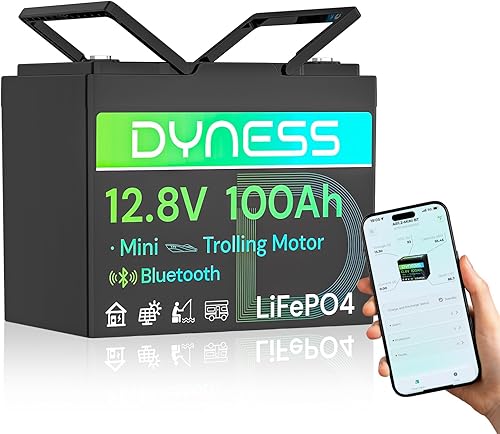
Dyness 12V 100Ah Bluetooth LiFePO4 Lithium Battery
Best for a compact 100Ah battery - 9
 Check it
BUKNUWO 12V 100Ah LiFePO4 Lithium Battery
Best for Bluetooth status checks
How we chose lithium batteries for trolling motors
We compared voltage, stated capacity, discharge information, battery size, weight and features that affect marine setup. Our score weighs specs and features against the needs of someone choosing a lithium battery for a trolling motor.
A higher score here reflects a closer fit for the stated motor voltage and a useful combination of capacity and practical details. Always confirm your motor's voltage and current draw in its manual before choosing a battery.
Compare lithium trolling motor batteries by voltage and capacity
The voltage column is the first filter: choose a battery system that matches your motor. Capacity and weight then help you narrow options that fit your boat and planned use.
| Product | Best for | Voltage | Capacity | Dimensions | Our score |
|---|---|---|---|---|---|
| LiTime 24V 100Ah Group 31+ LiFePO4 Lithium | 24V boat motors | 24V nominal system | 100Ah | 13.11 x 6.93 x 9.45 in | 9.5 |
| BtrPower 12V 50Ah Trolling Motor LiFePO4 Battery | 30–50 lb thrust motors | 12V | 50Ah | 9.3 | |
| ECO-WORTHY Portable 12V Lithium Battery | kayaks and compact loads | 12.8V | 20Ah | 8.70 x 4.45 x 4.61 in | 9.2 |
| SUPER EMPOWER 25.6V 100Ah LiFePO4 Lithium Battery | 25.6V systems | 25.6V nominal | 100Ah | 20.94 x 8.13 x 8.56 in | 9.1 |
| LiTime 12V 50Ah Trolling Motors LiFePO4 Lithium | 12V peak-thrust demand | 12.8V | 50Ah | 9.0 | |
| LOSSIGY 36V Lithium Golf Cart Battery | compatible 36V systems | 36V | 100Ah | 8.6 | |
| DC HOUSE 12V 100Ah Bluetooth LiFePO4 Trolling | 12V capacity and app monitoring | 12.8V | 100Ah | 10.2 x 6.6 x 9.2 in | 8.3 |
| Dyness 12V 100Ah Bluetooth LiFePO4 Lithium Battery | a compact 100Ah battery | 12.8V | 100Ah | 10.19 x 6.61 x 8.22 in | 8.2 |
| BUKNUWO 12V 100Ah LiFePO4 Lithium Battery | Bluetooth status checks | 12.8V | 100Ah | 8.1 |
The best lithium batteries for trolling motors
LiTime leads this group for compatible 24V systems, while the 12V and higher-voltage choices cover different motor and boat needs. For another brand lineup, compare Renogy lithium batteries.
Read each model's connection and charging limits before planning a battery bank.
LiTime 24V 100Ah Group 31+ LiFePO4 Lithium: Best for 24V boat motors
- 24V, 100Ah
- Bluetooth 5.0 monitoring
- IP65 waterproof housing
- Fits Group 31 trays
A 24V, 100Ah option for compatible 70–100 lb thrust systems, with Bluetooth monitoring and a mini Group 31 footprint.
Pros
- Bluetooth monitoring of SOC, voltage and current
- IP65 housing
- Designed for 24V trolling motors
Cons
- Too tall for standard sealed Group 31 boxes
- Not for engine starting
LiTime's 24V 100Ah battery is our leading pick for boats with a compatible 24V trolling motor. The manufacturer positions it for 70–100 lb thrust systems, and the Bluetooth 5.0 app shows state of charge, voltage and current.
Its dimensions are 13.11 x 6.93 x 9.45 in, and it fits BCI Group 31 trays. The extra height means it won't fit inside standard sealed Group 31 boxes, so measure the available space and box before choosing it.
The battery has an IP65 waterproof housing and a smart BMS with more than 20 protections. LiTime says its EV-grade cells support 6,000 or more cycles at 100% depth of discharge; treat cycle life as a manufacturer claim, and follow the care and charging instructions.
Choose this battery when your motor is 24V and you want 100Ah capacity with phone monitoring. For a narrower look at 24V models, compare our best 24V trolling motor batteries guide.
BtrPower 12V 50Ah Trolling Motor LiFePO4 Battery: Best for 30–50 lb thrust motors
- 12V, 50Ah
- Built-in 50A BMS
- Weighs 11 lb
- Supports up to 4 matching batteries
A light 12V battery intended for 30–50 lb trolling motors, with a built-in BMS and support for up to 4 matching batteries in series or parallel.
Pros
- Low 11 lb weight
- Designed for 30–50 lb motors
- Series and parallel expansion supported
Cons
- 50Ah capacity
- Charging guidance specifies a lithium charger
BtrPower suits smaller 12V motors, with a stated range of 30–50 lb thrust. At 11 lb, its 50Ah battery is easier to carry than many larger marine batteries, and the built-in 50A BMS protects against overcharge, over-discharge, overcurrent and short circuits.
The battery supports up to 4 identical units in series or parallel. For a secure trolling motor hookup, compare trolling motor battery quick connectors.
BtrPower recommends a lithium charger with 14.4–14.6V output and charging current no higher than 10A, so check that your charger matches those limits. For RV use, check whether RV converters can charge lithium batteries.
Its 50Ah capacity is a practical starting point for smaller motors, but runtime depends on current draw and use. Check your motor's maximum current before pairing it with this battery.
Choose BtrPower if you have a compatible 12V motor and value low carry weight. Our guide to the best 12V lithium battery for a trolling motor covers more 12V-specific options.
ECO-WORTHY Portable 12V Lithium Battery: Best for kayaks and compact loads
- 12V, 20Ah
- Bluetooth 5.1 monitoring
- Weighs 5.4 lb
- Compact carry-grip design
A compact 20Ah battery for small boats and kayaks where size and carry weight matter; confirm your motor's current draw before choosing this capacity.
Pros
- Compact size and ergonomic grip
- Bluetooth monitoring
- Low-temperature charging cutoff
Cons
- 20Ah capacity may limit run time
- DC port is limited to 5A
The ECO-WORTHY battery is the smallest-capacity choice here, with 20Ah in a case measuring 8.70 x 4.45 x 4.61 in. Its 5.4 lb weight and carry grip suit kayaks or compact boats where moving and storing the battery matters.
Bluetooth 5.1 lets you check voltage, current and capacity on a phone. It also has a 20A BMS and temperature protection that stops charging below 20°F and discharging below -4°F, with automatic resumption once the battery warms to 32°F.
ECO-WORTHY describes it for marine use, including trolling motors, but a 20Ah capacity may be limiting for a motor with high current draw or a long outing. Its DC output port is limited to 5A, so don't use that port for a load above its stated limit.
Choose it when a small battery is more useful than extended run time. For more compact options, see our best small trolling motor battery guide.
SUPER EMPOWER 25.6V 100Ah LiFePO4 Lithium Battery: Best for 25.6V systems
- 25.6V, 100Ah
- 2560Wh rated energy
- 100A BMS
- Weighs about 42 lb
A 25.6V, 100Ah deep-cycle battery for compatible marine systems, with a 100A BMS and low-temperature protection.
Pros
- 2560Wh rated energy
- Defined dimensions for installation planning
- Supports compatible 25.6V charging
Cons
- Large and heavy at about 42 lb
- Requires charging above its low-temperature cutoff
SUPER EMPOWER's battery is designed for compatible 25.6V systems and provides 100Ah capacity, or 2560Wh of rated energy. Its 25.6V nominal output and 100A BMS make it an option for boats whose motor system matches those requirements.
The case measures 20.94 x 8.13 x 8.56 in and weighs about 42 lb. Measure the installation area and plan how you'll lift it before buying, since this is a larger battery than the 12V 50Ah picks.
Its BMS includes cell balancing and overcurrent, overvoltage and temperature protection. Charging pauses below 32°F, while discharge protection activates below -4°F; the battery must warm above the charging cutoff before it can charge.
Choose it for a compatible 25.6V setup that needs 100Ah in one enclosure. It supports LiFePO4-compatible charging equipment, including a suitable charger or a solar setup with a compatible charge controller.
LiTime 12V 50Ah Trolling Motors LiFePO4 Lithium: Best for 12V peak-thrust demand
- 12V, 50Ah
- 60A continuous discharge for 30 minutes
- Bluetooth 5.0
- Weighs 11.27 lb
This 12V, 50Ah LiFePO4 option supports 60A continuous discharge for 30 minutes and offers Bluetooth status monitoring.
Pros
- 60A continuous discharge for 30 minutes
- Bluetooth monitoring
- Low-temperature charging cutoff
Cons
- 50Ah capacity
- Bluetooth activation may require a lithium-activation or MPPT charger
LiTime's 12V 50Ah model stands out for its stated discharge capability: 60A continuous for 30 minutes. That can suit a compatible motor that needs a brief higher-current demand, but compare the rating with your motor's maximum draw.
It weighs 11.27 lb and measures 7.68 x 6.54 x 6.77 in. Bluetooth 5.0 connects to the LiTime app for battery status, while the 50A BMS includes low-temperature charging cutoff and protection against overcharge, over-discharge, overcurrent and short circuits.
LiTime says the battery uses EV-grade LiFePO4 cells and provides 640Wh. Its Bluetooth may need activation with a lithium-activation or MPPT charger on first use or after being switched off, so check the manual if monitoring doesn't appear right away.
Choose this model when a 12V, 50Ah battery fits your motor and its discharge needs. Its stated 60A support offers a useful point of comparison with other batteries in this capacity range.
LOSSIGY 36V Lithium Golf Cart Battery: Best for compatible 36V systems
- 36V, 100Ah
- Built-in 200A BMS
- Bluetooth and included monitor
- Parallel connection supported
A 36V, 100Ah battery that names trolling motors among its uses, with an included charger and monitor; check that your motor and installation match its system.
Pros
- 100Ah capacity
- Includes charger and monitor
- Bluetooth monitoring
Cons
- Weighs 66.9 lb
- Cannot be connected in series
LOSSIGY's 36V 100Ah battery is a specialized choice for a compatible 36V trolling motor. It includes a 43.8V 25A charger and a monitor, plus Bluetooth status viewing and a built-in 200A BMS.
At 66.9 lb and 20.47 x 10.59 x 8.66 in, it needs substantial space and careful handling. LOSSIGY says the battery supports parallel connections, but not series connections, so don't plan to combine units in series to reach a higher voltage.
The maker also gives a 1000A peak current figure and says the charger can take the battery from 0% to 100% in 4 hours. Charging time depends on conditions, so use the supplied charger instructions and allow for the battery's required setup.
Choose it only if your motor and installation are made for its 36V system. Its golf cart focus and size make voltage and physical fit especially important to verify.
DC HOUSE 12V 100Ah Bluetooth LiFePO4 Trolling: Best for 12V capacity and app monitoring
- 12V, 100Ah
- Bluetooth 5.1 app monitoring
- Low-temperature cutoff
- Weighs 23.8 lb
A 12V, 100Ah option for trolling motors, with app monitoring and low-temperature protection; it is not designed for engine starting.
Pros
- 100Ah capacity
- App reports battery status and faults
- Low-temperature cutoff
Cons
- Not for engine starting
- Requires a dedicated lithium charger
DC HOUSE provides a 12V, 100Ah option with Bluetooth 5.1 monitoring through its app. The app can show state of charge, voltage and current, and the 100Ah capacity suits buyers who want more stored energy than a 50Ah battery offers.
It weighs 23.8 lb and measures 10.2 x 6.6 x 9.2 in. The maker describes it as close to Group 24 size, though it is about 0.32 in taller than standard Group 24 dimensions, so check trays and compartments before buying.
The battery has low-temperature protection: charging cuts off below 19.4°F and discharge below -4°F, with recovery after warming to 32°F. DC HOUSE says the battery is not for engine starting and calls for a dedicated lithium charger.
Choose this battery when 12V and 100Ah match your motor and you want phone monitoring. Confirm your motor's current draw and the battery's discharge limits before connecting it.
Dyness 12V 100Ah Bluetooth LiFePO4 Lithium Battery: Best for a compact 100Ah battery
- 12V, 100Ah
- Bluetooth 5.0 monitoring
- Group 24 size
- Weighs 20.9 lb
A Group 24-sized 100Ah battery with app monitoring and low-temperature protection, for buyers who need higher capacity in a compact case.
Pros
- 100Ah capacity in a compact case
- Bluetooth monitoring
- Low-temperature charging cutoff
Cons
- Charge with a LiFePO4-specific charger
- Bluetooth range is limited to about 10 m
Dyness offers a 12V 100Ah battery in a Group 24-sized case. At 20.9 lb and 10.19 x 6.61 x 8.22 in, it combines 100Ah capacity with a relatively compact footprint for a boat with limited battery space.
Bluetooth 5.0 monitoring connects to the Dyness app for voltage, current, capacity and system status. Its low-temperature protection stops charging below 32°F and resumes at 41°F, while power cutoff activates at -4°F.
Dyness recommends a LiFePO4-specific charger and a charge rate of 0.2C for battery health. Follow the manual and match the charger to your system rather than assuming a charger for a different chemistry is suitable.
Choose Dyness if your motor is 12V and you need 100Ah in a compact Group 24 case. Measure height and terminal clearance as well as the footprint.
BUKNUWO 12V 100Ah LiFePO4 Lithium Battery: Best for Bluetooth status checks
- 12.8V, 100Ah
- Bluetooth 5.0 app monitoring
- 100A BMS
- Weighs 22 lb
A 12.8V, 100Ah battery with Bluetooth status checks and a 100A BMS, suited to compatible trolling motor and marine setups.
Pros
- Phone monitoring of SOC, voltage and temperature
- 100A BMS
- Supports series or parallel connections
Cons
- Confirm dimensions and fit before buying
- Charging limits depend on temperature
BUKNUWO's 12.8V, 100Ah battery includes Bluetooth 5.0 monitoring and a 100A BMS. The app can display state of charge, voltage, current, power, temperature and protection status within about 33 ft, making it useful when you want to check battery status from nearby.
It weighs 22 lb and the maker gives a 1.28kWh energy capacity. The battery supports series or parallel connections up to 4S4P, but confirm the motor's voltage and follow the manufacturer's configuration guidance before expanding a system.
BUKNUWO describes high- and low-temperature cutoffs and gives different cycle-life figures based on depth of discharge. Those are manufacturer claims, and actual service life depends on use, charging and storage conditions.
Choose it for a compatible 12V motor when Bluetooth monitoring and 100Ah capacity are priorities. Confirm its physical dimensions and charging requirements before installation.
How do you choose a LiFePO4 battery for a trolling motor?
Choose a LiFePO4 battery by matching voltage, checking current draw, then deciding how much capacity and space your boat needs. The motor manual and battery manual are the best sources for those limits.
Start with voltage. A 12V motor needs a compatible 12V battery system, while 24V and 36V motors require matching systems; don't assume a battery can be rewired into a different voltage unless its maker permits that configuration.
Next, compare the motor's maximum current with the battery's continuous discharge rating and BMS limit. A battery's amp-hour capacity doesn't by itself show whether it can supply the current your motor needs.
Then consider how long you want to run. A higher Ah rating stores more energy, but speed, boat weight, water conditions and throttle use affect real runtime.
Which LiFePO4 battery for a trolling motor matches the voltage?
A LiFePO4 battery for a trolling motor must match the motor's rated system voltage. The picks here include 12V, 25.6V, 24V and 36V models, so check the motor label and manual before considering capacity.
Some nominal system labels differ from a battery's actual nominal voltage, such as a 12.8V battery used in a 12V system. Follow the equipment makers' compatibility guidance rather than connecting batteries based on rounded labels alone.
How much capacity does a trolling motor battery need?
Capacity depends on the motor's current draw and how many hours you expect to use it. A 100Ah battery stores more energy than a 50Ah battery, but it may also take more room and weigh more.
A rough estimate is to divide battery capacity in amp-hours by the motor's average draw in amps. This estimate doesn't account for changing throttle, battery cutoff behavior or other losses, so use it only as a planning guide.
What should you check before installing a lithium trolling motor battery?
Check the case dimensions, terminals, enclosure and charging setup before installing a lithium battery. A battery that fits the electrical system may still be too tall for its tray or box.
Measure the battery compartment, including height above the terminals and space needed for cables. The LiTime 24V battery fits a Group 31 tray but is too tall for standard sealed Group 31 boxes, a difference that can affect a tight boat installation.
Choose a LiFePO4-compatible charger with the correct voltage and output for the battery. Cold-weather limits matter too: several batteries here pause charging at low temperatures, and the cutoff points differ by model.
A trolling motor battery box can help organize and protect a setup, but check its inside dimensions and ventilation or connection requirements against the battery manual. Keep the battery dry within its stated protection limits and secure it against movement.
Are LiFePO4 trolling motor batteries safer than other lithium batteries?
LiFePO4 is a lithium-ion chemistry with different properties from other lithium chemistries, but safe use still depends on the battery design and correct installation. A battery management system can provide protections, though it doesn't replace following charging and wiring instructions.
Look at the specific battery's BMS protections, temperature limits, enclosure rating and certifications. For a closer explanation of the chemistry and safety tradeoffs, read is LiFePO4 safer than lithium-ion batteries.
LiFePO4 batteries are used in energy storage products, including solar generators, but the details vary by system. Our guide explains what LiFePO4 means in a solar generator and how the chemistry fits that use.
Which lithium trolling motor battery should you choose?
Choose the LiTime 24V 100Ah if your motor is a compatible 24V system and you want app monitoring. For 12V motors, pick BtrPower for a light 50Ah option, LiTime for its stated 60A discharge support, or a 100Ah battery when capacity and fit are more important.
The best lithium battery for trolling motor use is the one that matches your motor's voltage and current draw, fits the compartment and uses a compatible charger. Verify those details in both manuals before buying, then compare our best deep-cycle battery for a trolling motor guide if you want to weigh lithium against other deep-cycle choices.
Our top 3 picks at a glance
-
1
Best for 24V boat motors
LiTime 24V 100Ah Group 31+ LiFePO4 Lithium
9.5/10 our score
See it on Amazon -
2
Best for 30–50 lb thrust motors
BtrPower 12V 50Ah Trolling Motor LiFePO4 Battery
9.3/10 our score
See it on Amazon -
3
Best for kayaks and compact loads
ECO-WORTHY Portable 12V Lithium Battery
9.2/10 our score
See it on Amazon
Frequently asked questions
What size lithium battery do I need for a trolling motor?
Match the battery voltage to the motor first, then choose capacity based on current draw and the hours you want to run. A 50Ah battery may suit a smaller 12V setup, while 100Ah options provide more stored capacity.
Check the motor manual for its current draw and the battery maker's limits.
Is LiFePO4 a good battery type for a trolling motor?
LiFePO4 is a common lithium chemistry for deep-cycle marine batteries. Compare the battery's voltage, continuous discharge rating, capacity, charging requirements and protection features with your motor.
For background on whether LiFePO4 is safer than lithium-ion batteries, review the chemistry and safety distinctions.
Can I use a 12V lithium battery with any trolling motor?
No. The motor must be designed for 12V, and its current draw must stay within the battery's discharge limits.
Some motors need 24V or 36V systems.
Check both manuals before connecting a battery, and use a correctly rated charger.
Can lithium trolling motor batteries be connected in series?
Some models support series connections and others do not. BtrPower allows up to 4 matching batteries in series or parallel, while LOSSIGY says its 36V battery supports parallel connection only.
Follow the battery maker's configuration limits and use matching batteries.
Do lithium trolling motor batteries need a special charger?
Use a charger made for the battery's LiFePO4 chemistry and voltage. BtrPower recommends 14.4–14.6V output for its 12V model, and other batteries may have different requirements.
Check the specific manual before charging, especially in cold conditions.