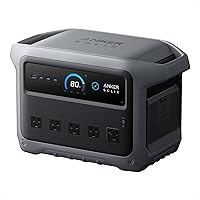
9 Best VEVOR Portable Power Stations (October 2026)
The best VEVOR portable power stations include the Jackery Explorer 300 Portable Power Station for light camping loads, the Jackery Explorer 1000 v2 Portable Power Station for flexible mid-size power, and the BLUETTI Elite 100 V2 Portable Power Station for fast charging and UPS use.
On this page (5 sections)
The best VEVOR portable power station depends on the devices you need to run and how long you need them powered. This comparison includes alternatives from Jackery, BLUETTI, OUPES, Anker and VTOMAN because the listed products for this guide do not include a VEVOR model.
A portable power station's capacity and output answer different questions. Watt-hours help estimate how long stored energy may last, while watts indicate whether the station can handle a device's draw.
Use this roundup to compare compact units, mid-size options and higher-capacity stations. For more choices across brands, see our Best Outdoor Portable Power Station 2026 guide.
Our picks at a glance
-
1
 Best for light camping loads
Jackery Explorer 300 Portable Power Station
9.7/10 our score
See it on Amazon -
2
 Best for flexible mid-size power
Jackery Explorer 1000 v2 Portable Power Station
9.6/10 our score
See it on Amazon -
3
 Best for fast charging and UPS use
BLUETTI Elite 100 V2 Portable Power Station
9.6/10 our score
See it on Amazon
- 4
 Check it
OUPES Mega 1 Portable Power Station 1024Wh
Best for expandable capacity - 5
 Check it
Jackery HomePower 3600 Plus Power Station
Best for larger home backup needs - 6
 Check it
BLUETTI Elite 30 V2 Portable Power Station
Best for compact backup with UPS - 7
 Check it
Anker SOLIX C300 Portable Power Station
Best for USB-C charging on trips - 8
 Check it
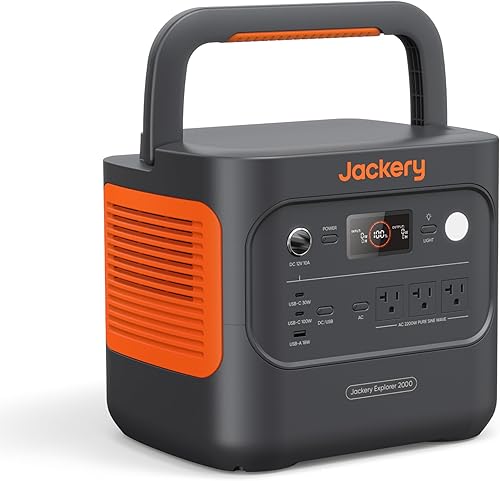
Jackery Explorer 2000 v2 Portable Power Station
Best for 2kWh portable capacity - 9
 Check it
VTOMAN Jump 600X Portable Power Station 600W
Best for 600W output in a small pack
How we compared portable power stations for VEVOR shoppers
We compared capacity, output, weight, ports and charging features to show what each alternative is suited for. Our score weighs specs and features against the needs of someone shopping for a VEVOR portable power station.
There is no VEVOR-branded model among the products included here, so treat these as comparison points rather than VEVOR recommendations. Before choosing a VEVOR unit, compare its specific battery capacity, continuous output, surge rating, port mix and solar input with the same criteria.
Capacity, output and charging features compared
The right station balances stored energy, output and recharge options for your devices. A larger battery can provide more stored energy, but it does not automatically mean higher output or easier transport.
| Product | Best for | Capacity | Rated output | Weight | Our score |
|---|---|---|---|---|---|
| Jackery Explorer 300 Portable Power Station | light camping loads | 292Wh | 300W | 7.5 lb | 9.7 |
| Jackery Explorer 1000 v2 Portable Power Station | flexible mid-size power | 1,070Wh | 23.8 lb | 9.6 | |
| BLUETTI Elite 100 V2 Portable Power Station | fast charging and UPS use | 1,024Wh | 25 lb | 9.6 | |
| OUPES Mega 1 Portable Power Station 1024Wh | expandable capacity | 1,024Wh | 27.8 lb | 9.5 | |
| Jackery HomePower 3600 Plus Power Station | larger home backup needs | 3,584Wh | 77.2 lb | 9.5 | |
| BLUETTI Elite 30 V2 Portable Power Station | compact backup with UPS | 288Wh | 9.5 lb | 9.4 | |
| Anker SOLIX C300 Portable Power Station | USB-C charging on trips | 288Wh | 4.13 kg | 9.3 | |
| Jackery Explorer 2000 v2 Portable Power Station | 2kWh portable capacity | 2,042Wh | 39.5 lb | 9.1 | |
| VTOMAN Jump 600X Portable Power Station 600W | 600W output in a small pack | 268.8Wh | 9.9 lb | 8.9 |
What capacity should a portable power station have?
A capacity around 288Wh to 292Wh suits smaller electronics and shorter outings, while 1,024Wh to 1,070Wh offers a larger reserve for multiple devices. The 2,042Wh and 3,584Wh choices here target longer use or home backup needs.
Capacity alone does not give an exact runtime. Device draw, conversion losses and how you use the station all affect the result.
How much output do your devices need?
Check both the running wattage and any startup surge for the devices you plan to power. The compact Jackery Explorer 300 and Anker SOLIX C300 are rated at 300W, while several larger choices offer 1,500W to 3,600W output.
Keep the combined load below the station's rated output. For a refrigerator, pump or tool, check the manufacturer's power requirements before relying on a portable station.
Which charging features matter?
Charging speed and input compatibility can shape how useful a station is away from an outlet. The BLUETTI Elite 100 V2 and OUPES Mega 1 advertise fast AC recharge, while the Jackery Explorer 1000 v2 offers app-controlled charging modes.
Solar compatibility is model-specific. For how these systems differ, see portable power station vs solar generator.
Check voltage, connectors and maximum solar input, and include the cost and weight of any panel in your planning.
Portable power station picks for different needs
The best fit depends on the load, capacity and charging setup you prioritize. The picks below are ordered by score, with each one suited to a different use.
Jackery Explorer 300 Portable Power Station: Best for light camping loads
- 292Wh capacity
- 300W rated output
- 7.5 lb weight
- 100W USB-C PD
This compact unit is a fit for phones, cameras and other modest loads. Its 300W output and 292Wh capacity set clear limits for appliances and longer runtimes.
Pros
- Light 7.5 lb design
- 100W USB-C PD port
- Two AC outlets
Cons
- 300W rated output limits appliance choices
- Solar panel sold separately
The Jackery Explorer 300 is the lightest pick here at 7.5 lb, with a 292Wh capacity and 300W rated output. That combination is most useful for phones, cameras, laptops and other modest loads where carry weight matters.
Its ports include two AC outlets, a 100W USB-C PD port, two USB-A ports and a 120W car port. Jackery says the battery uses LiFePO4 chemistry and can retain more than 70% capacity after 4,000 charge cycles.
For solar charging, the Explorer 300 pairs with Jackery panels. Jackery gives an estimate of about 2.8 hours to reach 80% with a 100W panel, which is sold separately.
Choose it for a small camping setup or personal electronics. Its 300W output makes it a poor fit for appliances whose draw exceeds that limit.
Jackery Explorer 1000 v2 Portable Power Station: Best for flexible mid-size power
- 1,070Wh capacity
- 1,500W AC output
- Three AC ports
- App charging modes
A 1,070Wh battery and 1,500W output suit buyers balancing usable capacity with transport weight. Solar charging is compatible only with Jackery panels.
Pros
- Three pure sine wave AC ports
- 100W USB-C charging
- App offers charging modes
Cons
- Solar compatibility limited to Jackery panels
- Emergency one-hour charging must be enabled in the app
The Explorer 1000 v2 balances a 1,070Wh capacity with 1,500W AC output. At 23.8 lb, it is heavier than the compact units but remains portable for car camping and road trips.
It has three pure sine wave AC ports, two USB-C ports, one USB-A port and a DC car port. The app offers different charging modes, including an emergency one-hour charge option that must be enabled before use.
For solar charging, this model is compatible only with Jackery panels. That constraint matters if you already own panels from another brand.
Pick it when you want more capacity and AC output than a small power bank style station can provide. Read our Best Renogy Portable Power Station comparison if you're also weighing another brand.
BLUETTI Elite 100 V2 Portable Power Station: Best for fast charging and UPS use
- 1,024Wh capacity
- 1,800W AC output
- 10ms UPS
- 45 minutes to 80% AC charge
The Elite 100 V2 combines a 1kWh-class battery with a 10ms UPS function. Its listed AC charging rate reaches 80% in about 45 minutes.
Pros
- 10ms UPS switchover
- 11 ports
- App control over Wi-Fi and Bluetooth
Cons
- 25 lb carry weight
- Keep upright during storage and transport
The BLUETTI Elite 100 V2 offers 1,024Wh capacity and 1,800W rated AC output in a 25 lb body. Its 10ms UPS switchover is a useful feature for devices such as a router or computer that need quick backup during an outage.
BLUETTI says its TurboBoost AC charging can reach 80% in about 45 minutes. The unit also has 11 ports and app support through Wi-Fi and Bluetooth.
The maker says the station can run in silent mode at 30dB. Keep it upright during storage and transport, as BLUETTI advises against laying it on its side.
Consider it for a compact home backup setup or a campsite with higher draw devices. It is larger and heavier than the 288Wh choices, but holds much more energy.
OUPES Mega 1 Portable Power Station 1024Wh: Best for expandable capacity
- 1,024Wh capacity
- 2,000W continuous output
- Expandable to 5,120Wh
- Under 20ms UPS
The Mega 1 offers two-battery expansion up to 5,120Wh, plus a 2,000W continuous output. That flexibility suits buyers whose power needs may grow.
Pros
- Expandable with up to two extra batteries
- Dual 100W USB-C ports
- Under 20ms UPS transfer
Cons
- 27.8 lb weight
- Expansion requires separately acquired batteries
The OUPES Mega 1 pairs a 1,024Wh battery with 2,000W continuous output and can expand to 5,120Wh with two extra B2 batteries. For another model in the lineup, read the OUPES MEGA 2 review.
That makes it a fit for buyers who may want more stored capacity later.
OUPES says it can recharge from empty to 80% in 36 minutes through AC, or 26 minutes with AC and solar charging together. It also lists an under-20ms UPS transfer time and Bluetooth app controls.
At 27.8 lb, it weighs more than the Jackery Explorer 1000 v2 and BLUETTI Elite 100 V2. Account for that if you'll lift it often or carry it farther than a vehicle-to-campsite trip.
Choose this one if expansion matters as much as initial capacity. Compare it with our best VTOMAN portable power station guide for a smaller alternative.
Jackery HomePower 3600 Plus Power Station: Best for larger home backup needs
- 3,584Wh capacity
- 3,600W output
- Wheels and telescopic handle
- Four charging options
This large unit is designed around home backup, with 3,584Wh capacity and 3,600W output. Its wheels and telescopic handle help with moving the 77.2 lb station.
Pros
- Four charging options
- Capacity can expand with compatible units
- Wheeled design
Cons
- 77.2 lb weight
- Much larger than camping-focused options
The Jackery HomePower 3600 Plus is the high-capacity option here, with 3,584Wh and 3,600W output. It is intended for larger home backup needs, and its 77.2 lb weight and wheeled handle suit moving it around a home more than carrying it to a campsite.
See portable power stations with wheels for more rolling options.
Jackery lists four charging options: hybrid AC and DC, AC, solar and a gas generator. It says hybrid AC and DC charging can recharge the unit from 0% to 100% in about 2 hours.
Capacity can expand to 21kWh per unit or 43kWh with multiple units, according to Jackery. Confirm what additional equipment is required for the setup you have in mind.
Choose it when a compact camping station would not provide enough reserve. Its size and weight make it a different class of purchase from the smaller portable options.
BLUETTI Elite 30 V2 Portable Power Station: Best for compact backup with UPS
- 288Wh capacity
- 600W continuous output
- 10ms UPS
- 9.5 lb weight
This 288Wh unit offers 600W continuous output in a 9.5 lb format. Its 10ms UPS feature may suit small electronics that need backup during an outage.
Pros
- Compact carry weight
- 600W continuous output
- Multiple charging modes
Cons
- 288Wh capacity limits longer use
- Solar charging cable needs checking for panel choice
The BLUETTI Elite 30 V2 offers 288Wh capacity and 600W continuous output at about 9.5 lb. It has twice the rated output of the 300W compact stations in this group, while keeping a small footprint for travel.
It includes a 10ms UPS function and supports AC, car, solar and other charging modes. BLUETTI gives a 45-minute estimate to 80% charge through AC, with the full charge estimated at 70 minutes.
Panel connections need a little planning. The supplied cable works directly with the BLUETTI 60W panel, while other panel types may require a separate solar charging cable.
This is a compact option for laptops, lights and selected small appliances whose draw stays within its output. Its battery capacity remains modest for longer backup use.
Anker SOLIX C300 Portable Power Station: Best for USB-C charging on trips
- 288Wh capacity
- 300W output
- Two 140W USB-C ports
- 25dB noise claim
The C300 emphasizes USB-C charging, with two 140W ports and a 288Wh battery. Check panel voltage and connector requirements before planning solar charging.
Pros
- Two 140W USB-C ports
- Three AC outlets
- Recharge options include wall, car and solar
Cons
- 300W total AC output
- Solar panel compatibility is limited
Anker SOLIX C300 is a compact 288Wh station with 300W output and a focus on USB-C charging. It has two USB-C ports rated at up to 140W each, plus three AC outlets, a car socket, another USB-C port and USB-A.
Anker says a wall outlet can recharge it to 80% in about 50 minutes. Solar charging has specific requirements: compatible panels must use 11–28V output and an XT60 connector.
The station weighs 4.13 kg, or about 9.1 lb. Anker recommends 60W or 100W panels and warns that panels over 100W can cause a malfunction.
Pick it if fast USB-C charging is a priority for a laptop, phone or camera kit. It is not the right choice for loads that need more than 300W from AC outlets.
Jackery Explorer 2000 v2 Portable Power Station: Best for 2kWh portable capacity
- 2,042Wh capacity
- 2,200W output
- 39.5 lb weight
- 20ms UPS
A 2,042Wh capacity provides a bigger reserve for home backup or outdoor use. At 39.5 lb, it's still a substantial unit to move.
Pros
- 2,200W output
- 100W USB-C PD port
- 20ms UPS switchover
Cons
- 39.5 lb weight
- Solar charging requires compatible cable
The Jackery Explorer 2000 v2 offers 2,042Wh capacity and 2,200W AC output for buyers who need a larger energy reserve. At 39.5 lb, it is still a carryable station, but is better suited to vehicle transport than long-distance carrying.
It has three AC ports and a 100W USB-C PD port. Jackery lists a 20ms UPS switchover and says the unit can charge to 80% in 66 minutes with AC fast charging.
For solar, Jackery says the unit can charge in as few as 6 hours with 400W panels. Solar charging uses a DC8020 cable, so check the connector setup when matching panels.
Choose it for backup or outdoor power where 2kWh capacity is useful. It cannot charge an electric vehicle, according to Jackery.
VTOMAN Jump 600X Portable Power Station 600W: Best for 600W output in a small pack
- 268.8Wh capacity
- 600W continuous output
- 9.9 lb weight
- 100W USB-C PD
The Jump 600X pairs a 600W output with a 268.8Wh battery and 9.9 lb weight. It suits lighter loads where USB-C charging and compact storage matter.
Pros
- 100W USB-C PD port
- Up to 120W MPPT solar input
- 600W continuous output
Cons
- 268.8Wh capacity
- Solar panel sold separately
The VTOMAN Jump 600X combines 600W continuous output with 268.8Wh capacity in a 9.9 lb body. Its 100W USB-C PD port can charge compatible laptops, and its 30W USB-C and USB-A ports support smaller devices.
VTOMAN says the unit accepts up to 120W MPPT solar input, with the panel sold separately. It also supports AC and car charging, plus combined AC and DC charging.
Use it for lights, laptops, fans and other loads that fit within 600W. The battery is smaller than the 1kWh class choices, so it is better for shorter trips than extended backup.
This is a useful alternative if you want more output than the smallest stations provide without moving to a 20 lb or heavier unit.
What should you check before choosing a VEVOR station?
Compare the specific VEVOR model's capacity, continuous output and charging limits with the devices you plan to run. Brand name alone does not tell you how long a station will last or whether it can start an appliance.
Make a short device list with each item's wattage and expected hours of use. Add the watt-hours, then leave a margin for conversion losses and devices whose draw changes over time.
Check ports and recharging before deciding. If you'll use solar, match panel voltage, connector and input limit; if you'll use AC, look at recharge time and any special mode or app steps.
For a basic explanation of capacity, ports and output, see What Is A Portable Power Station?. Our How to Use a Portable Power Station? guide covers safe setup and everyday operation.
Which portable power station fits your use?
Choose the Jackery Explorer 300 or Anker SOLIX C300 for light electronics and compact storage, and the BLUETTI Elite 100 V2 or OUPES Mega 1 for more capacity and output. For longer backup needs, compare the Jackery Explorer 2000 v2 and HomePower 3600 Plus against your load and transport limits.
If VEVOR is your preferred brand, use these products as feature benchmarks and confirm the exact VEVOR model's specs before buying. For another brand-focused comparison, see our Best Ecoflow Outdoor Portable Power Station guide.
Our top 3 picks at a glance
-
1
Best for light camping loads
Jackery Explorer 300 Portable Power Station
9.7/10 our score
See it on Amazon -
2
Best for flexible mid-size power
Jackery Explorer 1000 v2 Portable Power Station
9.6/10 our score
See it on Amazon -
3
Best for fast charging and UPS use
BLUETTI Elite 100 V2 Portable Power Station
9.6/10 our score
See it on Amazon
Frequently asked questions
How do I choose a VEVOR portable power station?
Start with the watt-hours needed for your devices and the watts they draw. Then check the station's continuous output, port types and charging inputs.
This comparison covers alternatives from several brands, so check VEVOR's current model specifications and compatibility before choosing a VEVOR unit.
What is the difference between watt-hours and watts?
Watt-hours measure stored energy, while watts measure the power a station can deliver at a moment. A higher watt-hour figure can support longer use, while output watts determine which devices can run.
Check both numbers against your devices and expected use time.
Can a portable power station run a refrigerator?
It depends on the refrigerator's running and startup power, plus how long you need it to run. Compare those numbers with the station's continuous output and capacity, and leave room for conversion losses.
Do not assume a station can run an appliance based on watt-hours alone.
Can I recharge a portable power station with solar panels?
Many stations support solar charging, but panel voltage, connector type and maximum input vary by model. Jackery Explorer 1000 v2 works with Jackery panels, while Anker SOLIX C300 has specific voltage and connector requirements.
Confirm compatibility before pairing a panel.