
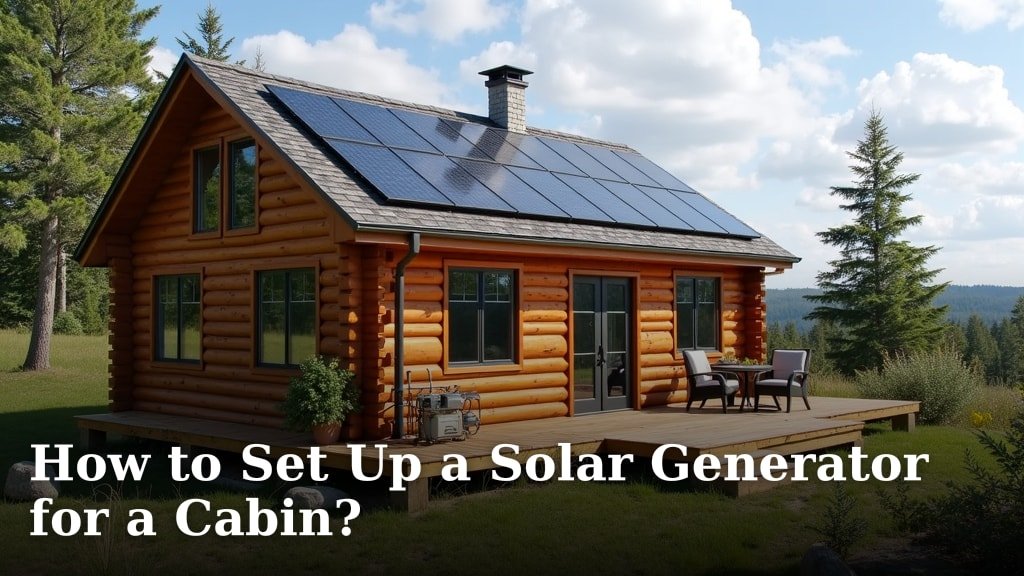
Setting up a solar generator for your cabin is simpler than you might think. You’ll want to assess your power needs first, then choose the right solar generator kit and understand how to connect it. This setup can provide reliable off-grid power for your escape.
Many cabin owners are looking for ways to power their remote retreats without relying on noisy, polluting gas generators. A solar generator offers a clean and quiet alternative. You can enjoy the comforts of home, like lights and charging devices, powered entirely by the sun. It’s a smart move for eco-friendly energy.
- Figure out how much power you need.
- Select a solar generator system for your cabin.
- Connect the solar panels to the generator unit.
- Plug in your devices and enjoy the sun’s power!
Ready to get your cabin powered up? Below, we’ll walk you through the easy steps to set up your own solar generator and start enjoying sustainable energy.
Getting Your Cabin Powered with Solar: A Step-by-Step Guide
Setting up a solar generator at your cabin is totally achievable. You don’t need to be an electrical engineer to get this done. We’ll break down the process so you can enjoy clean energy in your remote getaway. Think of it as giving your cabin a power-up, powered by sunshine!
Step 1: Calculate Your Cabin’s Power Needs
Before you buy anything, figure out what you need to power. This is the most important first step. Running a few LED lights and charging your phone is very different from running a mini-fridge or a coffee maker. Knowing your energy needs prevents you from buying a system that’s too small or unnecessarily large. Our guide to choosing the right size portable power station can help you calculate your energy needs.
List Your Appliances and Devices
Start by making a list of everything you plan to power. Write down each item. Next to it, note its wattage. You can usually find this information on a small sticker on the device itself. If you can’t find it, a quick online search for the model number will likely give you the answer. Remember to include things like phone chargers, lamps, fans, and any small kitchen appliances.
Estimate Usage Time
For each item on your list, estimate how many hours per day you’ll use it. Be realistic here. For example, a lamp might be on for 4 hours each evening. A phone charger might only be used for 2 hours. This helps you understand the total energy consumption over a typical day.
Total Your Watt-Hours
Now, for each appliance, multiply its wattage by its estimated daily usage hours. This gives you the watt-hours (Wh) for that item. Add up the watt-hours for all your devices. This total is your daily energy requirement in watt-hours. Many experts suggest adding a buffer of 20-25% to this number. This ensures you have enough power even on cloudy days or if you use something longer than planned (National Renewable Energy Laboratory).
Step 2: Choose the Right Solar Generator System
Once you know your power needs, you can select a solar generator kit. These kits typically include a portable power station (the “generator” part) and solar panels. The size of the power station is measured in watt-hours (Wh) or kilowatt-hours (kWh), and its output power is measured in watts (W). The solar panels are rated in watts (W) as well.
Understanding Power Station Capacity and Output
The capacity (Wh/kWh) is how much energy the battery can store. This needs to be higher than your daily energy needs. The output power (W) is how much power it can deliver at any one time. Make sure the output wattage is sufficient for your most power-hungry devices. For example, if you want to run a small blender, check its wattage and compare it to the power station’s output.
Matching Solar Panels to Your Needs
The solar panels convert sunlight into electricity. Their wattage determines how quickly they can recharge your power station. You’ll want enough solar panel wattage to recharge your power station within a reasonable amount of time, ideally before sunset. On a sunny day, you can typically expect your solar panels to produce about 70-80% of their rated wattage.
System Components to Look For
A good solar generator kit for a cabin usually includes:
- Portable Power Station: This is the heart of the system. It has a battery, an inverter (to convert DC to AC power for your devices), and ports for charging and output.
- Solar Panels: These capture sunlight. They can be rigid or foldable. Foldable panels are great for portability and storage.
- Charging Cables: You’ll need cables to connect the solar panels to the power station.
- Optional Accessories: Some kits might include extension cords or adapters.
Step 3: Setting Up Your Solar Generator
This is where you connect everything and start generating power. It’s usually a plug-and-play process, which is fantastic for cabin use. You want to set up the panels where they can get the most sun.
Finding the Perfect Spot for Solar Panels
Location is key for solar panels. Find an area at your cabin that receives direct sunlight for most of the day, ideally with no shade from trees or buildings. South-facing locations are generally best in the Northern Hemisphere. You might need to prop up the panels at an angle to catch the sun’s rays more effectively. Some panels come with built-in stands, or you might need to create a simple support.
Connecting the Solar Panels to the Power Station
Most solar generator systems use standard connectors, often MC4 connectors for the panels. You’ll plug your solar panel cable into the designated solar input port on your power station. Double-check your power station’s manual to ensure you’re using the correct port. It’s usually clearly marked. Make sure the connection is secure. You want to avoid any loose wires! Our guide explains how to connect your solar panels to the power station.
Positioning the Power Station
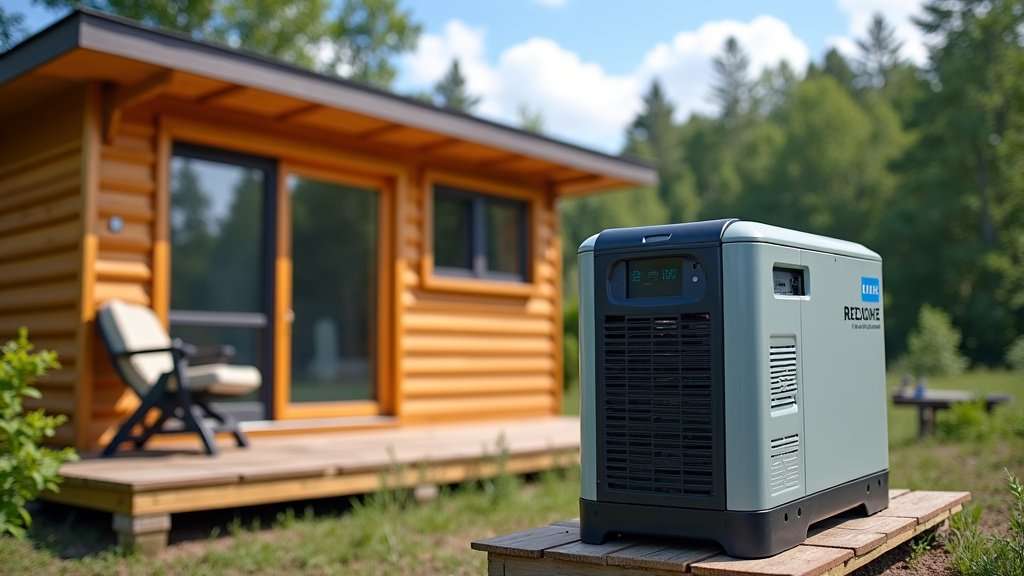
Place your power station in a convenient location. It should be close enough to the solar panels for the cables to reach easily, but also sheltered from the elements if possible. Keep it out of direct sunlight itself, as excessive heat can affect battery performance. A shaded spot near your cabin door is often ideal. Ensure it’s on a stable, flat surface.
Step 4: Charging and Using Your Solar Generator
Once everything is connected, the charging process begins. You’ll see the power station’s battery level start to rise as the sun works its magic.
Monitoring the Charging Process
Your power station will likely have a display showing its charge level, input power, and output power. Watch this display to see how well the panels are performing. On a sunny day, you should see a steady increase in battery percentage. If the sun is weak or the panels are shaded, the charging will be slower.
Plugging In Your Devices
When your power station has a sufficient charge, you can start plugging in your devices. Use the AC outlets on the power station for standard appliances. The USB ports are great for phones, tablets, and other gadgets. Be mindful of the power station’s continuous output wattage. Don’t try to run too many high-wattage devices at once.
Tips for Efficient Energy Use
To make the most of your solar generator, use energy-efficient appliances whenever possible. Switch to LED lighting, which uses far less power than traditional bulbs. Unplug devices when they are not in use to prevent phantom power drain. And always prioritize charging the power station during the brightest parts of the day.
A Quick Checklist for Setup Success
Here’s a simple checklist to make sure you’ve covered all the bases:
- Power Needs Assessed: You know your daily watt-hour requirements.
- System Chosen: Your power station and solar panels meet those needs.
- Ideal Panel Location Found: Panels are in direct sunlight, free from shade.
- Secure Connections Made: Cables are firmly plugged into the power station and panels.
- Power Station Positioned Safely: Unit is stable, accessible, and protected from extreme weather.
- First Charge Initiated: You’re actively monitoring the charging process.
Maintaining Your Solar Generator System
Keeping your solar generator in good shape ensures it performs reliably for years. It’s not complicated, just a few simple checks.
Cleaning Solar Panels
Over time, dust, dirt, and bird droppings can accumulate on your solar panels. This can reduce their efficiency. We found that simply wiping them down with a soft cloth and water can make a big difference. Avoid harsh chemicals or abrasive materials that could scratch the panel surface. A gentle rinse with a hose can often do the trick. Check your panel manufacturer’s recommendations for specific cleaning instructions.
Inspecting Connections and Cables
Periodically, give all your connections a quick look. Make sure the cables are free from damage, kinks, or fraying. Ensure the connectors are clean and securely attached. Loose connections can lead to power loss or charging issues. Think of it like checking the tire pressure on your car; a quick inspection prevents bigger problems down the road.
Battery Care Tips
Lithium-ion batteries, common in these power stations, have a long lifespan when cared for properly. Most manufacturers suggest avoiding extreme temperatures, both hot and cold. Don’t leave the power station in a car parked in the sun on a hot day, for instance. It’s also generally recommended to keep the battery within a moderate charge range rather than constantly topping it off or letting it drain completely to 0%.
Conclusion
You’ve now seen how setting up a solar generator for your cabin is a straightforward process. By understanding your power needs, selecting the right equipment, and following simple connection steps, you can enjoy reliable, clean energy. This system provides a quiet and eco-friendly alternative to traditional generators. Get ready to power your cabin with the sun and enhance your off-grid experience.
Your next step is to gather your power usage information and start comparing solar generator kits that fit your cabin’s requirements.
Frequently Asked Questions
How much solar panel wattage do I need for my cabin?
The solar panel wattage you need depends on your daily energy consumption and how quickly you want to recharge your power station. A general rule is to have at least as much solar wattage as your daily watt-hour need, if not more, to ensure adequate charging on sunny days.
Can I run high-wattage appliances like a microwave with a solar generator?
Some larger solar generators can handle high-wattage appliances, but you must check the unit’s continuous output wattage. Running a microwave or other powerful devices will drain the battery quickly, so ensure your power station’s output and battery capacity can support this usage.
What happens to my solar generator on cloudy days?
On cloudy days, your solar panels will produce less electricity. This means your power station will charge much slower, or not at all. It’s wise to have enough battery capacity to last through a few cloudy days or conserve your energy usage.
Do I need to connect my solar generator to my cabin’s electrical panel?
No, most portable solar generators are designed for direct use. You plug your devices directly into the power station’s outlets. They are not typically wired into a cabin’s main electrical panel, offering a simpler, plug-and-play power solution.
How often should I clean my solar panels?
You should clean your solar panels when you notice a visible layer of dust or grime that could impact performance. For many cabin locations, a gentle rinse with water or a wipe down with a soft cloth every few months is sufficient to maintain optimal efficiency.
