Is an Ecoflow Good for a Food Truck?
On this page (7 sections)
Yes, an EcoFlow power station can be a fantastic choice for your food truck, providing reliable and portable power. You can expect cleaner energy and less noise compared to traditional gas generators. This makes your mobile kitchen a more pleasant place to work and a better experience for your customers.
When you’re powering essential kitchen appliances like blenders, induction burners, or refrigerators, having a dependable energy source is key. An EcoFlow unit offers a silent operation and the ability to recharge from solar panels, making it an eco-friendly and potentially cost-saving option. It’s a modern solution for powering your business on the go.
- Yes, EcoFlow is a good power solution for food trucks.
- It offers quiet, clean energy for your appliances.
- You can power a variety of equipment.
- Consider portability and recharge options like solar.
Let’s take a closer look at how an EcoFlow unit can power your food truck dreams and what you should consider before buying.
Powering Your Food Truck: Why EcoFlow Fits the Bill
Can an EcoFlow power station truly handle the demands of a busy food truck? We found that the answer is a resounding yes. Many food truck owners are looking for ways to ditch noisy, smelly gas generators. EcoFlow units offer a quieter, cleaner alternative. This means a better working environment for you and a more pleasant experience for your customers.
Understanding the Benefits for Your Mobile Kitchen
Think about your typical day. You need to power blenders for smoothies, induction cooktops for frying, refrigerators to keep ingredients fresh, and maybe even lights and a sound system. Gas generators can be loud, expensive to fuel, and produce emissions. EcoFlow stations provide clean, consistent power without the fumes or constant roar.
The Quiet Revolution: Say Goodbye to Generator Noise
We’ve all heard them – those loud, intrusive gas generators that can drown out conversations. Imagine running your business without that constant noise. EcoFlow units operate at a whisper-quiet level. This makes a huge difference, especially in areas with noise ordinances or where you want to create a more relaxed atmosphere. Your customers will appreciate it, and you’ll probably thank yourself for the reduced stress.
Cleaner Energy for a Greener Operation
Fueling a food truck with traditional generators means dealing with gasoline and exhaust fumes. EcoFlow stations run on stored electricity, meaning zero emissions while in operation. This is not only better for the environment but also for your health and the air quality around your truck. Many food truck patrons are increasingly conscious of sustainability, and a cleaner operation can be a real selling point.
Versatility in Powering Your Appliances
What can you actually run with an EcoFlow? It really depends on the specific EcoFlow model you choose and the power needs of your appliances. Smaller units might handle your POS system, lighting, and a blender. Larger units, like the Delta Pro, can power more demanding appliances. We found that many owners successfully run induction burners, small refrigerators, coffee makers, and sound systems. Always check the wattage requirements of your appliances against the continuous and surge output of the EcoFlow unit.
Matching Your Appliances to the Right EcoFlow Model
This is where a little homework pays off. You’ll need to calculate the total wattage your essential appliances consume. For example, a blender might use 800 watts, while an induction cooktop could draw 1500 watts or more. If you plan to run both simultaneously, you’ll need a unit with a surge capacity well above 2300 watts. We found that EcoFlow offers a range of models, from portable RIVER units to the robust DELTA series, allowing you to pick the best fit. You’ll need to calculate the total wattage your essential appliances consume; our guide explains how.
| Appliance | Typical Wattage (Running) | Typical Wattage (Starting Surge) |
|---|---|---|
| Blender | 300-800 | 800-1200 |
| Coffee Maker | 800-1500 | 800-1500 |
| Induction Cooktop | 1000-1800 | 1000-1800 |
| Small Refrigerator | 100-200 | 400-600 |
| Laptop Charger | 50-100 | 50-100 |
| LED Lights | 5-20 per bulb | 5-20 per bulb |
Note: Wattage can vary greatly by brand and model. Always check your appliance’s label for specific power requirements.
Recharging Your EcoFlow: Keeping the Power Flowing
A critical aspect of any portable power solution is how you recharge it. EcoFlow units offer several convenient options, ensuring you’re never left in the dark (or without power!). We found that a combination of these methods often works best for food trucks.
Wall Outlet Charging: Quick Top-Ups
When you’re back at your commissary kitchen or a facility with standard outlets, you can simply plug in your EcoFlow to recharge. This is the quickest and most straightforward method. It allows you to fully replenish the battery overnight or during downtime, ensuring you start your next day fully powered. Many models can recharge from 0 to 80% in under an hour, which is fantastic.
Solar Charging: Harnessing the Sun’s Energy
This is where EcoFlow truly shines for eco-conscious food truck owners. You can connect portable solar panels directly to your EcoFlow unit. Imagine parking your truck in a sunny spot during setup and letting the sun do the work! We found that solar charging can significantly extend your operational time, especially for less power-intensive applications. It’s a cost-effective and sustainable way to keep your battery topped up throughout the day. The amount of power you get will depend on the size of the solar panels and the intensity of the sunlight.
Choosing the Right Solar Setup
EcoFlow offers its own range of foldable solar panels, designed for portability and efficiency. You’ll want to match the panel’s wattage to your EcoFlow model and your expected power usage. For a food truck, you might consider several 100W or 200W panels to maximize charging speed. Proper angling towards the sun is key to getting the most power. Some people even mount panels on their food truck roof, though this requires more permanent installation.
Car Charging: Power on the Move
While not the fastest method, you can also charge your EcoFlow using your vehicle’s 12V outlet while driving. This is a good way to get a trickle charge and ensure your unit is ready when you arrive at your destination. It’s a convenient backup option, especially if you have a long drive between locations.
Portability and Durability: Built for the Road
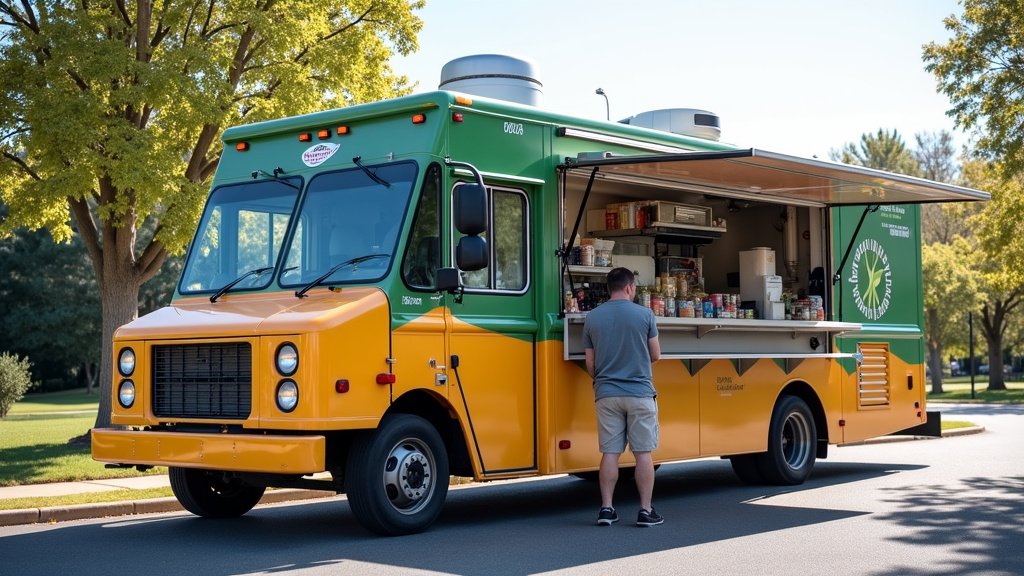
Food trucks are constantly on the move. That’s why portability and durability are essential. EcoFlow units are designed with these factors in mind. They typically feature sturdy construction and integrated handles, making them easy to move from your truck to your workspace. While they are heavy (due to the batteries), they are far more manageable than traditional generators, which often require wheels and a more involved setup.
Weight and Size Considerations
You’ll want to consider the physical space you have available in your food truck and how much weight you can comfortably manage. Larger capacity models are heavier. For example, a DELTA Pro can weigh upwards of 50 pounds, while smaller units might be under 20 pounds. Think about where you’ll store it and if you’ll need to move it in and out of the truck regularly. We found that securing the unit in place during transit is also a good idea.
Built to Withstand Bumps and Jiggles
The life of a food truck involves a lot of vibrations and movement. EcoFlow units are built with robust casings designed to handle these conditions. While not indestructible, they are generally more resilient than delicate electronics. Keeping it properly stowed when the truck is in motion will help ensure its longevity.
What to Consider Before You Buy
Making the switch to an EcoFlow for your food truck is exciting, but a little planning goes a long way. We’ve put together a few key points to help you make the best decision for your business.
- Assess your power needs: List all appliances and their wattage.
- Calculate total consumption: Figure out peak and average wattage.
- Determine recharge strategy: Will you rely on solar, wall outlets, or a mix?
- Consider battery capacity: How long do you need to run appliances between charges?
- Budget: EcoFlow units are an investment, but they can save money on fuel long-term.
- Space and weight: Ensure the unit fits comfortably in your truck.
By carefully considering these factors, you can confidently choose an EcoFlow system that will power your food truck reliably and efficiently for years to come.
Conclusion
Transitioning to an EcoFlow power station for your food truck is a smart move for cleaner, quieter operations. You can power essential appliances, boost your eco-friendly image, and create a better work environment. We found that by carefully matching an EcoFlow model to your specific wattage needs and planning your recharging strategy—whether through solar, wall outlets, or car charging—you’ll set yourself up for reliable, on-the-go power. Take the next step by calculating your appliance’s power draw and exploring the EcoFlow models that best fit your food truck’s unique demands.
Frequently Asked Questions
Can an EcoFlow power my induction cooktop?
It depends on the cooktop’s wattage. Many EcoFlow models, particularly the larger DELTA series, can handle the continuous and surge power requirements of most portable induction cooktops. Always check your cooktop’s label and compare it to the EcoFlow unit’s output ratings before purchasing.
How long will an EcoFlow last on a single charge?
The battery life depends on the EcoFlow model’s capacity and the total wattage of the appliances you’re running. A larger capacity unit will power your equipment for much longer. We found that using high-draw appliances simultaneously will drain the battery faster than running just a few low-wattage devices.
Is solar charging fast enough for a busy food truck day?
Solar charging is excellent for topping up your battery during downtime or for less power-intensive operations. For heavy use throughout the day, it’s best used as a supplement to wall charging. The speed depends on the size of your solar panels and the amount of direct sunlight you receive.
Are EcoFlow units durable enough for mobile use?
Yes, EcoFlow units are built with sturdy casings designed to withstand the vibrations and movement common in food truck operations. While they are portable, it’s always recommended to secure them properly during transit to prevent damage and ensure longevity.
What happens if my EcoFlow runs out of power mid-service?
This is why planning is key. Ensure your EcoFlow is fully charged before service, and monitor your battery level. If you have access to a 12V car outlet, you can get a trickle charge while driving between locations. Having a backup plan, like a smaller, secondary unit or access to a commissary, is always wise for critical operations.