
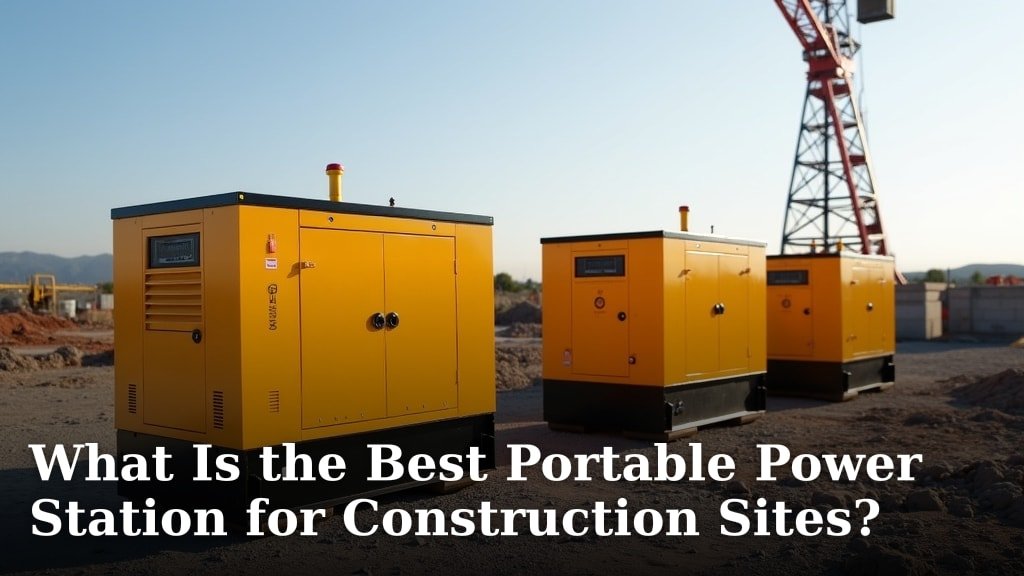
The best portable power station for construction sites offers ample power, long-lasting batteries, and rugged durability. You need a unit that can handle your tools and survive tough conditions. Look for models with high surge capacity and multiple outlets.
Construction sites demand reliable power for everything from drills to air compressors. Finding a portable power station that can keep up can seem tough. We’ve researched many options to help you choose the right tool for the job.
- The best portable power stations provide plenty of power and last a long time.
- They must be tough enough for construction environments.
- Look for high surge capacity and various outlet types.
- Consider portability and ease of use on site.
- Safety features are also very important.
Let’s walk through exactly what makes a power station a good fit for your demanding workdays.
Choosing the Right Portable Power for Your Construction Site
So, you’re on a construction site and need reliable power for your tools. This isn’t just about having a battery; it’s about having a workhorse that won’t quit. We’ve looked into what makes a portable power station truly shine in tough environments. The best ones offer steady power, dependable battery life, and can withstand the dust and bumps of a job site.
What to Look for in a Construction-Ready Power Station
Power Output: More Than Just a Number
The first thing you’ll notice on any power station is its wattage. For construction, you need enough power to start your tools and keep them running. Think about your most power-hungry tools. A small drill might need 300-500 watts, while a circular saw or air compressor can jump to 1000-2000 watts or more.
Continuous vs. Surge Wattage
This is super important. Continuous wattage is the power the station can output constantly. Surge wattage, also called peak or starting wattage, is the extra burst of power needed to get certain tools (like motors) up and running. Many tools require more power to start than to run. You need a power station with a surge capacity that’s at least 20-50% higher than your tool’s running wattage.
For example, if your compressor needs 1500 watts to run, but 3000 watts to start, you need a power station that can handle at least 3000 watts of surge power. We found that many sites underestimate this and end up with units that can’t even power their essential tools. Always check the surge capability.
Battery Capacity: Keeping the Juice Flowing
Battery capacity is measured in watt-hours (Wh). This tells you how much energy the power station can store. A higher Wh number means it can power your tools for longer. For construction, you’re likely working long days. A unit with 1000 Wh or more is often a good starting point. Some professional-grade units go up to 3000 Wh or even higher.
Think about your typical workday. How many hours do you usually use your tools? How much power do those tools consume per hour? You can do a rough calculation: (Total tool watts) x (Hours of use) = Wh needed. It’s always better to have a bit more capacity than you think you’ll need. Running out of power mid-task is a major productivity killer.
Durability and Build Quality: The Toughest Jobs Need Tough Gear
Construction sites are not pristine environments. Dust, dirt, vibrations, and accidental bumps are part of the territory. Your portable power station needs to be built like a tank.
Look for units with a rugged casing, often made of reinforced plastic or even metal. Some models include rubberized corners or protective bumpers. Water and dust resistance (IP ratings) are also great features, though often hard to find on high-power units. At a minimum, a solid, well-constructed body will go a long way in protecting the sensitive electronics inside.
Portability and Ease of Use: Moving Power Where You Need It
Even though it’s “portable,” a heavy unit can be a pain to move around a large or multi-level site. Consider the weight and any built-in handles or wheel kits. If you need to move it frequently between different work areas, a lighter unit or one with sturdy wheels makes a huge difference.
Also, think about how easy it is to operate. Are the displays clear and easy to read in bright sunlight? Are the ports clearly labeled and accessible? You don’t want to be fumbling with confusing buttons when you’re trying to get a job done quickly.
Outlet Types: Connecting All Your Tools
A good construction power station will offer a variety of outlets to accommodate different tools and devices. You’ll likely need:
- AC Outlets: These are your standard wall outlets for most tools. Look for units with multiple AC ports so you can plug in more than one device at a time.
- USB Ports (A and C): For charging phones, tablets, and other small electronics. USB-C Power Delivery (PD) is faster and can even power some laptops.
- DC Outlets: Less common now, but some older equipment might use them.
The type and number of outlets determine how many devices you can run simultaneously. A unit with 3-4 AC outlets is often ideal for a busy site. Also, check if the AC outlets are pure sine wave. This is important for sensitive electronics and some tools with variable speed controls. Pure sine wave output mimics grid power, protecting your gear.
Key Features to Prioritize for Site Work
Rechargeability: Keeping Your Power Station Alive
How will you recharge your power station? Most can be charged from a wall outlet, but on a construction site, that’s often not an option. Look for units that support solar charging. This allows you to replenish power using solar panels, especially useful for longer jobs or off-grid locations.
Some units also offer car charging, but this is typically very slow. Fast charging from a wall outlet is great for topping up between jobs. Consider the recharge time – how long does it take to get back to 80% or 100%? This affects your workflow.
Safety First: Protecting Your Gear and Yourself
Safety features are non-negotiable. Look for built-in surge protection, overload protection, and over-temperature protection. These prevent damage to your power station and, more importantly, to your expensive tools. Many battery management systems (BMS) also monitor cell health for optimal performance and longevity.
Some units have an emergency shut-off feature or battery indicators. It’s also wise to check if the manufacturer adheres to safety standards like those from UL or ETL. These certifications offer peace of mind that the unit has undergone rigorous testing.
Expandability: Growing with Your Needs
Some higher-end power stations allow you to connect extra battery packs. This is a fantastic option if you find you need more capacity down the line. Instead of buying a whole new, larger unit, you can simply add more power. This can be a more cost-effective solution for growing businesses.
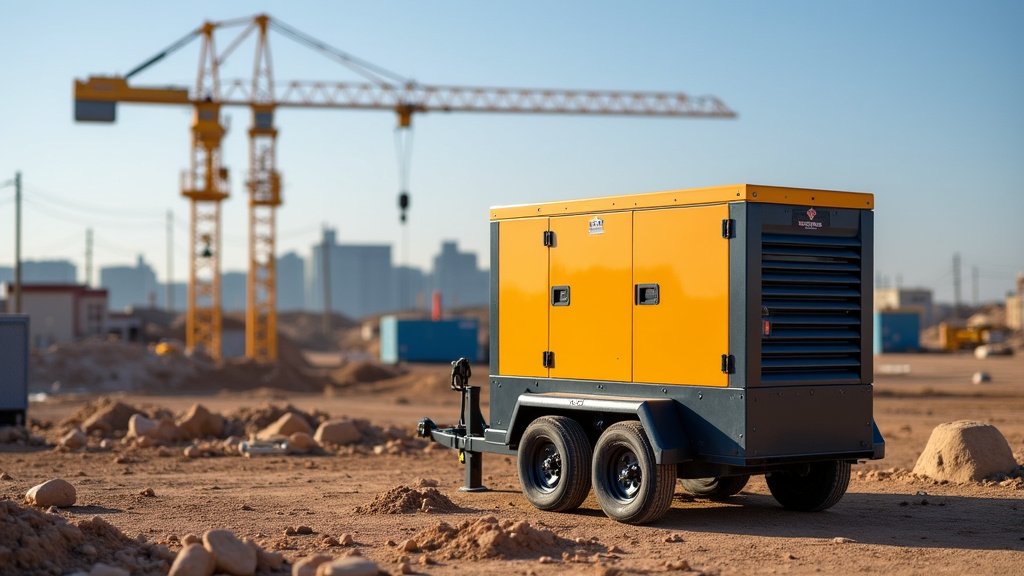
A Quick Checklist for Your Construction Power Station
Here’s a quick rundown to help you choose:
- Wattage: Does it meet the surge and continuous needs of your primary tools?
- Capacity (Wh): Will it last your typical workday without constant recharging?
- Durability: Is the casing robust enough for a job site environment?
- Ports: Does it have the right types and number of AC and USB outlets?
- Recharge Options: Can you recharge it effectively on-site (e.g., solar)?
- Safety Features: Does it have overload, surge, and temperature protection?
By focusing on these key areas, you can narrow down the options and find a portable power station that truly serves as a reliable extension of your power grid on any construction site. It’s about making sure your tools have the energy they need, when they need it, without adding unnecessary hassle to your day.
Conclusion
You’ve learned that the best portable power station for your construction site is more than just a battery; it’s a reliable workhorse. Prioritizing sufficient wattage, ample battery capacity, and rugged construction will ensure your tools stay powered through demanding days. Don’t forget to consider the type of outlets and rechargeability to match your specific workflow. Now that you know what to look for, take the next step by assessing your site’s power needs and comparing specific models against these key criteria. This smart investment will boost your productivity and keep your projects moving forward.
Frequently Asked Questions
How much wattage do I really need for my construction tools?
For most construction sites, you’ll want a power station that can handle at least 1500-2000 watts continuously, with a surge capacity of 3000 watts or more. This ensures your tools, especially those with motors like air compressors or circular saws, can start up reliably. Always check the wattage requirements of your most power-hungry tools.
Can a portable power station truly replace a generator on a job site?
For many smaller to medium-sized jobs, yes, a powerful portable power station can be an excellent alternative to a noisy, fume-producing generator. They offer quiet operation and are generally lighter and easier to move. However, for very high-demand tools or extended use of multiple heavy-duty machines, a generator might still be necessary.
What does “pure sine wave” mean for power station outlets?
A pure sine wave output means the power station provides clean, stable electricity that mimics what you get from a standard wall outlet. This is crucial for protecting sensitive electronics and tools with variable speed controls or digital components. Non-pure sine wave power can damage these devices over time.
How long will a portable power station last on a construction site?
Battery capacity is measured in watt-hours (Wh). A power station with 1000 Wh can power a 100-watt tool for about 10 hours. For construction, aiming for 1500 Wh or more will generally cover a full workday for most common tools. Always factor in your specific tool usage and wattage.
Are portable power stations safe to use in dusty and wet conditions?
While many power stations are built tough, most are not fully waterproof or dustproof. Look for models with higher IP (Ingress Protection) ratings if you anticipate heavy dust or occasional moisture. However, it’s always best to protect your unit from direct exposure to severe weather and excessive dust by keeping it under cover when possible.
