Battery Maintainer vs Battery Charger: Which Do You Need? (November 2026)
Choose a battery charger when you need to restore charge, and choose a maintainer for long-term storage. Many smart chargers do both, but output, battery type and storage plans decide which fits.
On this page (9 sections)
- Battery maintainer vs battery charger: what is the difference?
- When do you need a battery charger?
- When do you need a battery maintainer?
- Do smart chargers replace maintainers?
- Which product fits a 12V car or motorcycle?
- What about deep-cycle batteries?
- Is the POWEROWL charger a battery maintainer?
- What should you check before choosing?
- Is a maintainer better than a charger for storage?
Choose a battery charger when you need to restore charge, and choose a maintainer for long-term storage. Many smart chargers do both, but output, battery type and storage plans decide which fits.
A charger supplies current to bring a discharged battery back toward full. A maintainer monitors a charged battery and provides controlled support so storage does not leave it sitting low.
Some products combine both jobs in one unit. For another brand's options, browse CTEK battery maintainers and check their voltage and chemistry support.
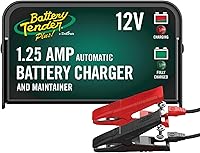
The Battery Tender Plus is a 12V charger and maintainer, while the NOCO GENIUS1 and GENIUS5 support 6V and 12V batteries with charging, maintenance and restoration features.
The practical difference shows up in how you plan to use the vehicle next. If the battery is already low, a maintainer alone may take too long to prepare it for use.
If the battery is near full but will sit unused, a high output charger may be more than the job requires. A motorcycle, ATV, lawn mower, car or boat that sits for weeks needs steady support, while a vehicle used every morning favors bringing charge back quickly.
Battery type matters as much as the vehicle itself. A 12V lead acid battery, a 6V battery and a lithium battery do not all need the same charging approach.
Matching voltage and chemistry first helps avoid using a unit outside its intended role. Output is the next check after voltage and chemistry.
A lower output can suit ongoing maintenance and smaller batteries, while a higher output can shorten recovery for a larger or more deeply discharged battery. Higher output does not remove the need for correct settings and a safe connection.
Smart features can make a combined unit easier to leave in place. Temperature sensing, float charging and automatic monitoring can reduce the need for constant attention during storage.
Even with those features, the battery area, cables and connection points still need regular checks. Keep the charger in a dry and ventilated spot, route cables so they are not pinched or pulled, and inspect terminals for damage or poor contact.
Disconnect in the order described in the product instructions and store accessories where they will not be lost. A combined charger and maintainer suits many households because it covers both recovery and storage.
Start with the battery label, then choose the output and features that match that plan. This order helps you avoid buying speed when you need steady support, or buying only support when you need a faster return to service.
Check how often the vehicle runs, how long it will sit and what the battery requires. If the battery will sit for weeks, plan for monitoring and low level support.
If it must be ready soon, plan for enough output to restore charge in time.

 Best for small battery variety
NOCO GENIUS1 1A 6/12V Smart Battery Charger
Battery maintainer vs battery charger: what is the difference?
A charger is for recovery, while a maintainer is for keeping charge stable over time. The line is not always sharp because many modern smart chargers include a maintenance mode.
Use a charger after a vehicle battery has been drained, or when a battery needs more current to return to service. The right output depends on battery size, chemistry and how quickly you need the battery ready.
Use a maintainer when a car, motorcycle, ATV, lawn mower, boat or other equipment will sit unused. For active boat use, compare trolling motor battery chargers that match your battery.
Seasonal vehicles often need a steady maintenance plan because a battery can lose charge while disconnected from regular use.
A maintainer is not a replacement for a failed battery. If a battery will not hold charge, charging it repeatedly may not solve the underlying problem.
When do you need a battery charger?
Choose a charger when the battery is low and you need to restore usable charge. A higher current rating generally gives a faster charging path than a low-output maintenance unit, though the battery and charger must still be compatible.
The NOCO GENIUS5 provides 5A and supports 6V and 12V batteries. See our best NOCO battery maintainers guide for more model details.
It can charge batteries as low as 1V and offers Force Mode for manually charging batteries down to 0V.
The NOCO GENIUS1 provides 1A and also supports 6V and 12V batteries. It can charge batteries as low as 1V, with Force Mode for a completely dead battery, but its lower output makes it a slower choice than the GENIUS5.
Charging speed is only one part of the choice. A 5A unit may be useful when a vehicle must return to service sooner, while a 1A unit may suit a small battery that stays connected between uses.
When do you need a battery maintainer?
Choose a maintainer when the battery will sit for weeks or months. Storage maintenance helps keep a compatible battery ready without treating it like a battery that needs constant full-output charging.
The Battery Tender Plus provides 12V output at 1.25A. Its 4-step charging program, float charge and two-color charge status support a storage routine for compatible automotive, motorcycle, lawn mower and ATV batteries.
Connect the unit with the included fused ring terminal or alligator clip accessory cable. The quick disconnect harness can make repeated seasonal connections easier.
A maintainer still needs a suitable location and correct connection. Keep the charger, cables and battery away from moisture, heat sources and damage, and follow the product instructions for placement.
For a car that sits often, our guide on how to use a battery maintainer on a car covers the connection process and storage habits that reduce avoidable mistakes.
Do smart chargers replace maintainers?
A smart charger can replace a separate maintainer when it includes a suitable maintenance mode. The key is whether it matches the battery's voltage and chemistry and can remain connected as instructed.
The NOCO GENIUS1 and GENIUS5 include temperature sensing that adjusts charging for ambient conditions. Both support lead-acid types such as AGM, gel, SLA, VRLA and flooded batteries, along with LiFePO4 batteries.
That range does not mean every battery is interchangeable. Check the battery label and charger instructions before selecting a mode, especially when moving between lead-acid and lithium batteries.
The GENIUS1 is rated for compatible lithium-ion batteries up to 30 amp-hours. The GENIUS5 is rated for compatible lithium-ion batteries up to 120 amp-hours.
If you are comparing a maintainer with a low-current trickle charger, read our battery maintainer vs trickle charger guide. A maintainer adjusts its support, while a basic trickle charger may continue supplying current without the same smart control.
Which product fits a 12V car or motorcycle?
The Battery Tender Plus fits a simple 12V storage plan, while the NOCO units add 6V support and broader charging features. Choose based on the batteries you own, not only the vehicle name.
The Battery Tender Plus is a 12V, 1.25A unit for compatible cars, motorcycles, lawn mowers and ATVs. It includes a fused ring terminal and alligator clip accessory cables, so you can choose a connection style that suits the installation.
The NOCO GENIUS1 is a 6V and 12V unit with a 1A output. It includes battery clamps and integrated eyelet terminals, and its temperature sensor adjusts the charge for changing conditions.
The NOCO GENIUS5 keeps the same 6V and 12V range but raises output to 5A. It includes battery clamps, integrated eyelet terminals, a mounting bracket, Velcro strap and screws.
For AGM batteries, compare the chemistry support and connection method before choosing. Our guide to the best AGM battery maintainer explains what to check for that battery type.
What about deep-cycle batteries?
Deep-cycle batteries need a charger or maintainer that matches their voltage, chemistry and intended use. A deep-cycle battery is built around repeated discharge and recharge, but that does not remove the need for correct charging.
Read our deep-cycle battery guide if you need to confirm how this battery type differs from a standard starting battery.
The NOCO GENIUS1 and GENIUS5 are designed for compatible deep-cycle lead-acid and LiFePO4 batteries. The GENIUS1 supports compatible lithium-ion batteries up to 30 amp-hours, while the GENIUS5 supports up to 120 amp-hours.
The Battery Tender Plus is a 12V maintainer for automotive and powersport uses. Its lower 1.25A output can suit maintenance, but larger battery banks may take longer to recover.
Do not connect a 6V or 12V vehicle charger to a battery that requires a different voltage. Battery chemistry matters too, so confirm the required charging profile before leaving any unit connected.
Is the POWEROWL charger a battery maintainer?
The POWEROWL 8 Bay is a dedicated AA and AAA rechargeable battery charger, not a vehicle battery maintainer. It is designed for NiMH or NiCD AA and AAA batteries.
The charger uses USB input and provides 250mA per cell. It includes a USB charging cable and user manual, but no adapter.
Its 8 independent slots let you charge any number of AA or AAA cells rather than waiting for a full group. The charger automatically stops charging when a compatible battery is full.
This is useful for flashlights, remotes and other devices that use rechargeable AA or AAA cells. It is not a substitute for a 6V or 12V charger, and vehicle maintainers are not suitable for these smaller cells.
For other portable charging tasks, see how to connect a drone charger to a solar generator and how to power an electric wheelchair charger while traveling.
What should you check before choosing?
Start with battery voltage and chemistry, then compare output, connectors and storage needs. These checks prevent a charger from being used outside its intended role.
Match the battery voltage
A 12V battery needs a compatible 12V charging mode. The NOCO GENIUS1 and GENIUS5 also support 6V batteries, while the Battery Tender Plus is a 12V unit.
Do not assume a charger works across voltages because the connector fits. Confirm the selected mode before starting a charging cycle.
Match the battery chemistry
Lead-acid, AGM, gel, VRLA, flooded and LiFePO4 batteries can require different charging behavior. The NOCO GENIUS1 and GENIUS5 support the battery types named in their product data, while the POWEROWL is limited to NiMH or NiCD AA and AAA cells.
If the battery label is missing or unclear, identify it before connecting the charger. A correct connector cannot make an incorrect charging profile safe.
Choose output for the job
A 1A or 1.25A unit can suit maintenance and slower charging. A 5A unit gives the GENIUS5 a faster recovery role for compatible batteries.
Output does not tell you the full charging time. Battery capacity, starting charge, temperature and battery condition also affect how long charging takes.
Plan the cable route
A charger only helps if the cable reaches the battery without strain or damage. The NOCO GENIUS1 includes a 110-inch DC cable, while the GENIUS5 includes an 80-inch DC cable and mounting hardware.
For a storage setup that needs more reach, compare battery maintainer extension cables with the charger connection and installation area.
Is a maintainer better than a charger for storage?
A maintainer is better for storage, while a charger is better for restoring charge. If you need both jobs, choose a smart charger with a maintenance mode and the correct battery support.
Pick the Battery Tender Plus for a straightforward 12V storage plan with 1.25A output and float charging. Pick the NOCO GENIUS1 for a smaller 6V or 12V setup that may include compatible lithium batteries.
Pick the NOCO GENIUS5 when faster recovery matters and the battery fits its 6V or 12V support range. Pick the POWEROWL when the batteries are rechargeable NiMH or NiCD AA and AAA cells.
The best choice matches the battery before it matches the device. Confirm voltage, chemistry, output and connector type, then use the maintenance mode for storage.
That order matters because the vehicle name alone does not describe the battery. Two vehicles can use different voltages, different chemistries and different battery sizes.
A device that fits the vehicle in name may still be wrong for the battery installed in it. For long storage, a maintainer has the advantage of restraint.
It is built to support a battery that is already charged and to respond as the battery needs help over time. That approach suits seasonal cars, motorcycles, ATVs, lawn mowers and other equipment that may sit between uses.
For recovery, a charger has the advantage of pace. A higher output can return a compatible battery to service sooner than a low output maintainer would.
The Battery Tender Plus suits owners who want a focused 12V routine. Its 1.25A output and float charge design support maintenance, but recovery of a larger, deeply discharged battery will be slower.
The NOCO GENIUS1 suits a wider mix of smaller batteries. It supports 6V and 12V lead acid and compatible lithium types, and its 1A output favors maintenance over fast turnaround.
The NOCO GENIUS5 offers the same broad battery support with more recovery speed. Its 5A output helps when charge must be restored before a trip or workday, though it is larger than the GENIUS1.
The POWEROWL belongs in a separate category. It charges rechargeable NiMH or NiCD AA and AAA cells and does not maintain vehicle batteries.
Check connections before a long period away, keep cables clear of heat and moving parts, and follow the instructions for the selected battery type. A maintainer or smart charger works best when the setup is checked and the battery remains compatible with the chosen mode.
Frequently asked questions
What is the difference between a battery charger and a maintainer?
A battery charger is mainly used to restore charge after a battery has been used or discharged. A maintainer is designed to keep a battery near full during storage by monitoring its condition and adjusting charging.
Many smart units combine both roles, so check the voltage, battery chemistry and output.
Can a battery maintainer charge a dead battery?
Some maintainers can recover a low battery, but the result depends on the unit and the battery condition. The NOCO GENIUS1 and GENIUS5 can charge batteries as low as 1V and offer Force Mode for batteries down to 0V.
A 1.25A maintainer may recover a large battery slowly.
Is a battery maintainer safe to leave connected?
A smart maintainer can be left connected when its instructions allow long-term maintenance and the battery is compatible. Smart monitoring, temperature adjustment and a proper connection matter.
Inspect the cables, keep the battery area suitable for charging and follow the exact unit instructions.
Do deep-cycle batteries need a charger or maintainer?
Deep-cycle batteries need a charger that matches their voltage and chemistry, while a maintainer helps keep them ready during storage. A unit such as the NOCO GENIUS1 or GENIUS5 supports selected deep-cycle lead-acid and LiFePO4 batteries.
Confirm the battery type before connecting it.
Can I use a car battery maintainer for AA batteries?
No. A car battery maintainer is designed for vehicle batteries, while AA and AAA rechargeable cells need a dedicated charger.
The POWEROWL 8 Bay charger is for NiMH or NiCD AA and AAA batteries and uses 8 independent charging bays.