
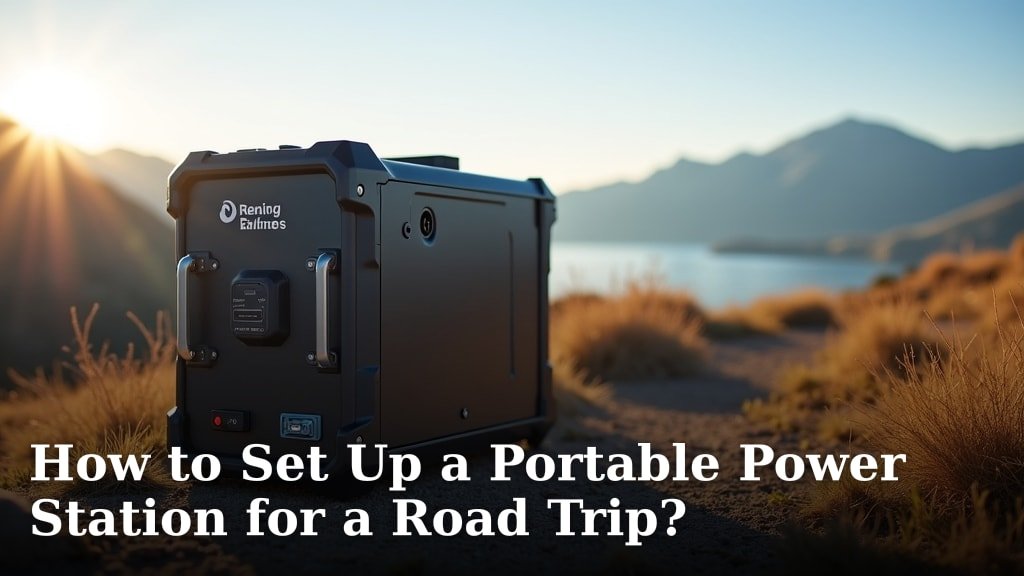
To set up a portable power station for a road trip, you should fully charge it before leaving, pack the right charging cables, and plan for recharging on the go. This ensures you have reliable power for all your devices.
Having power on the road makes your trip much more comfortable and convenient. You can keep your phone charged, run a mini-fridge, or even power small appliances like a coffee maker. A well-prepared power setup means you won’t be left searching for outlets.
- Charge your power station completely before you leave home.
- Pack all necessary cables and adapters.
- Consider how you’ll recharge the station during your trip.
- Choose a power station with enough capacity for your needs.
- Secure the power station safely in your vehicle.
Let’s walk through exactly how to get your portable power station ready for your next adventure, step by step.
Setting Up Your Portable Power Station for the Road
Getting your portable power station ready for a road trip is easier than you might think. It involves a few key steps to ensure you have power whenever and wherever you need it. Think of it as preparing your mobile energy hub.
The main goal is to have a reliable power source that fits your travel style. You want to avoid any surprises, like a dead phone or a melted cooler. Let’s make sure your setup is perfect for your journey.
Choosing the Right Power Station for Your Trip
Before you even think about charging, you need the right power station. This is like choosing the right car for a road trip; capacity matters. You wouldn’t take a compact car on a cross-country move, right?
Consider what devices you’ll need to power. Are you just charging phones, or do you have a portable fridge and a laptop? Your power needs dictate the size and capacity of your station. Bigger needs mean a bigger power station.
Understanding Watt-Hours (Wh) and Wattage (W)
When looking at power stations, you’ll see two main numbers: watt-hours (Wh) and wattage (W). Watt-hours tell you the total energy storage. It’s like the size of your gas tank. The more Wh, the longer it can power your devices.
Wattage, on the other hand, is the maximum power it can deliver at one time. This is like your engine’s horsepower. If your device needs 100W, your power station needs to be able to output at least 100W. Always check the wattage requirements of your most power-hungry devices.
Assessing Your Power Needs
To figure out your ideal power station size, list every device you plan to use. Look for the wattage (W) or current (A) and voltage (V) on each device’s power adapter. If it only lists amps and volts, multiply them to get watts (W = A x V).
Then, estimate how long you’ll use each device per day. A common calculation suggests multiplying your device’s wattage by the hours of use. For example, a 60W laptop used for 3 hours needs 180Wh. Add up all your daily Wh needs and then add a buffer of about 20-30% for safety and efficiency loss. This gives you a good estimate for your power station’s Wh capacity.
Pre-Trip Power Preparation
With your power station chosen, the real setup begins. This stage is all about getting everything charged, organized, and ready to roll. Think of it as the “packing your suitcase” phase for your electronics.
A little preparation here saves a lot of headaches on the road. You want to hit the highway with a full battery and a clear mind.
Fully Charging Your Power Station
This is perhaps the most critical step. You wouldn’t start a road trip on an empty gas tank, right? The same goes for your power station. Always charge it to 100% before you leave home.
Most portable power stations charge fastest from a wall outlet (AC). Depending on its size, this can take anywhere from a few hours to a full day. Plan this charging time accordingly. Many manufacturers recommend doing a full charge cycle every few months even if not in use, just to maintain battery health (Battery University).
Gathering the Right Charging Cables and Adapters
Imagine being on the road, needing to charge your phone, and realizing you left its cable at home. Frustrating, right? Make a dedicated charging kit. Include all the cables for your devices: USB-A, USB-C, laptop chargers, and anything else unique.
Don’t forget the power station’s own charging cables. Most come with an AC wall charger and often a DC car charger. If you plan to use solar, make sure you have the correct solar input cables. Labeling your cables can also be a huge time-saver.
On-the-Road Recharging Strategies
Your portable power station won’t last forever without a top-up. Thinking about how you’ll recharge it during your trip is just as important as the initial charge. This is your “gas station” plan for your power.
Having a plan ensures you can keep your devices running throughout your journey, no matter how long. You have a few main options for recharging while traveling.
Using Your Car’s 12V Outlet (Cigarette Lighter)
Many power stations come with a DC car charger. This plugs into your vehicle’s 12V “cigarette lighter” outlet. It’s a convenient way to add some juice while you’re driving. However, it’s often the slowest charging method.
Keep in mind that some car outlets only work when the ignition is on. Using it while the engine is off can drain your car’s starter battery, which is a big no-no. We found that this method is best for maintaining a charge or for topping off smaller power stations (Consumer Reports).
Solar Panel Charging
For longer trips or off-grid adventures, solar panels are a fantastic option. They allow you to harness the sun’s energy to recharge your power station. This is where you can truly feel self-sufficient.
You’ll need compatible solar panels and the correct adapter cable to connect them to your power station. Position the panels in direct sunlight, ideally angled towards the sun, for the best charging efficiency. The charging speed will vary greatly depending on panel size, sunlight intensity, and the weather. Many portable power stations have a Understanding how solar panel wattage affects charging time can help you choose the right setup for your road trip.built-in MPPT controller for efficient solar charging.
Shore Power or Generator Charging
If you’re staying at campgrounds with electrical hookups or have access to a generator, you can use the power station’s AC wall charger. This is usually the fastest recharging method after your home outlet. It’s like finding a quick charge station on your journey.
This option is great for getting a full charge overnight or during a longer stop. Just plug it in like you would at home. Always ensure the campground’s electrical hookup is properly grounded and safe to use.
Safety and Placement During Travel
You’ve got your power station charged and a plan for recharging. Now, how do you safely transport it? Just like securing your luggage, your power station needs a safe spot.
Proper placement ensures both your safety and the longevity of the device. You don’t want it bouncing around or overheating.
Securing Your Power Station in the Vehicle
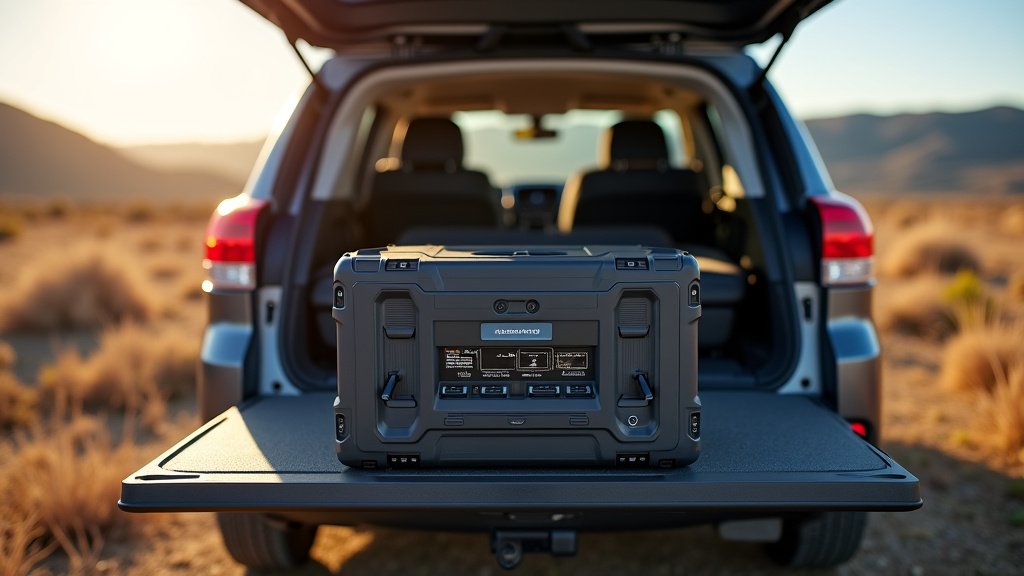
Portable power stations can be heavy. In a sudden stop or accident, an unsecured power station could become a dangerous projectile. Always secure it firmly in your vehicle.
You can use cargo straps, place it snugly between other gear, or put it in a dedicated storage compartment. The goal is to prevent it from moving during transit. Think of it like securing a heavy cooler; it needs to stay put.
Ventilation and Temperature Considerations
Power stations generate a little heat when charging or discharging. They also contain sensitive electronics. Avoid placing your power station in direct sunlight or in a confined space without airflow.
Ensure there’s adequate ventilation around the unit to prevent overheating. High temperatures can reduce battery life and efficiency (National Renewable Energy Laboratory). Keeping it cool will help it perform better and last longer.
Essential Power Station Checklist for Road Trips
Before you officially hit the road, do a quick run-through of this checklist. It’s like a pilot’s pre-flight routine—small steps that ensure a smooth journey.
This checklist ensures you haven’t forgotten any crucial components and are fully prepared for reliable power.
Power station is 100% charged.
All necessary device charging cables are packed.
Power station’s AC wall charger and DC car charger are included.
Solar panels (if using) and their connecting cables are ready.
Emergency charging plan (e.g., car charger, solar, campground) is confirmed.
Power station has a designated, secure, and ventilated spot in the vehicle.
| Charging Method | Pros | Cons |
|---|---|---|
| Wall Outlet (AC) | Fastest charge; most efficient. | Requires AC power source (home, campground). |
| Car Charger (DC) | Convenient while driving; uses vehicle’s power. | Slower charge; can drain car battery if engine is off. |
| Solar Panels | Eco-friendly; great for off-grid; silent. | Dependent on sunlight; can be slow; weather-dependent. |
| Generator | Fast charge; reliable power source. | Noisy; requires fuel; not always permitted. |
By following these steps, you’ll ensure your portable power station is not just set up, but perfectly integrated into your road trip plans. You’ll have the freedom and flexibility to power your adventures, keeping everything from your phone to your mini-fridge humming along. Happy travels!
Conclusion
Setting up your portable power station for a road trip is about smart preparation. By choosing the right capacity, fully charging it at home, and planning your recharging strategy, you ensure uninterrupted power. This readiness provides peace of mind and keeps your essential devices running.
Remember to secure your station and allow for good ventilation. A little planning goes a long way in making your journey comfortable and convenient. Now, go enjoy your adventure with reliable power by your side!
Frequently Asked Questions
How long does a portable power station typically last on a single charge?
The duration depends on its watt-hour (Wh) capacity and the power draw of your devices. A higher Wh rating means more run time. For example, a 500Wh station could power a 60W laptop for roughly 8 hours, but a mini-fridge might drain it faster.
Can I leave my portable power station plugged into my car’s 12V outlet constantly while driving?
While generally safe, it’s best to check your power station’s manual. Some models are designed for continuous charging, while others might recommend only charging when needed to protect your car battery and the station itself. Always ensure your car’s engine is running.
Is it safe to use a portable power station in direct sunlight or extreme heat?
No, it’s not recommended. Extreme heat can significantly reduce battery life and efficiency, and may even pose a safety risk. Always store and operate your power station in a cool, shaded, and well-ventilated area to maximize its lifespan and performance.
Do portable power stations need maintenance?
Yes, some basic maintenance helps. Most manufacturers recommend fully discharging and then fully recharging the unit every 3-6 months, even when not in use. This helps calibrate the battery management system and extends battery health over time.
What’s the difference between a portable power station and a car jump starter?
A portable power station is designed to power and charge multiple devices over an extended period, offering various output ports. A car jump starter, while sometimes having a small power bank function, is primarily designed for one task: providing a quick burst of power to start a dead car battery.
