What Is the Best Portable Power Station for Medical Devices?
On this page (3 sections)
The best portable power station for medical devices is one that offers a reliable power supply, has multiple outlet types, and provides sufficient battery capacity for your specific needs. We found that the top choices often feature pure sine wave inverters, which are crucial for sensitive electronics, and come from reputable brands known for their safety and durability.
Choosing the right portable power station means considering your device’s power requirements and how long you need it to run. You want something easy to use, quiet, and capable of handling emergencies or travel with peace of mind. Many options exist, but focusing on safety features and compatibility is key.
- A pure sine wave inverter is best for sensitive medical equipment.
- Match the power station’s capacity to your device’s wattage and run time.
- Look for multiple output ports for versatility.
- Consider weight and size for portability.
- Safety certifications are a must-have.
Let’s dive into the details and help you find the perfect portable power station to keep your medical devices running smoothly, no matter where life takes you.
Finding the Ideal Portable Power Source for Your Medical Devices
The best portable power station for your medical devices will safely deliver consistent power and match your specific medical equipment’s needs, whether at home or on the go.
Picture this: you’re away from home, maybe camping or visiting family, and you need to power an essential medical device. What happens if there’s a power outage? This is where a reliable portable power station becomes your best friend. It’s more than just a battery; it’s peace of mind.
We’ve all been there, wondering if our critical equipment will stay on. That’s why choosing the right power station is so important. You’re looking for something that just works, every time.
Understanding Your Medical Device’s Power Needs
Before you even start looking at power stations, you need to know what your medical device requires. This is the first and most critical step. Think of it like buying shoes; you wouldn’t just grab any size, right? You need the right fit.
Checking Wattage and Voltage Requirements
First, grab your device or its user manual. Look for terms like “watts” (W) or “voltage” (V) and “amperes” (A). These numbers tell you how much power your device needs to operate. Most medical devices will have a label on the back or bottom that lists these specifications.
If you see voltage and amperage, you can easily calculate watts: Watts = Volts x Amps. For example, if your device is 12V and 5A, it needs 60 watts. Some devices list “watt-hours” (Wh), which tells you how much energy it consumes over time. This is really helpful for estimating run time.
Determining Continuous vs. Peak Power
Some devices, especially those with motors like certain CPAP machines, have both a continuous wattage and a peak (or surge) wattage. Continuous wattage is what the device uses all the time it’s running. Peak wattage is a brief spike in power needed when the device first turns on.
Your power station needs to handle both. If your device briefly surges to 200W but only runs continuously at 60W, your power station must be capable of delivering at least 200W for that brief moment. We found that ignoring peak power can lead to your power station shutting down unexpectedly.
Key Features to Look for in a Portable Power Station
Once you know your device’s power requirements, you can start evaluating power stations. It’s not just about raw power; it’s about smart features that keep you safe and your devices running.
Pure Sine Wave Inverter: A Non-Negotiable for Sensitive Electronics
This is arguably the most important feature for medical devices. Portable power stations convert stored battery power (DC) into usable household power (AC). There are two main types of inverters: modified sine wave and pure sine wave.
Pure sine wave inverters produce a very clean, smooth electrical current, just like the electricity from your wall outlets at home. This is essential for sensitive electronics like CPAP machines, oxygen concentrators, and other medical equipment. Using a modified sine wave inverter can damage your device, reduce its lifespan, or cause it to malfunction. For those specifically using a CPAP, our guide to the best portable power station for CPAP machines offers tailored recommendations.
We always recommend a pure sine wave inverter for any medical application. It’s truly worth the investment for peace of mind and device longevity.
Battery Capacity and Run Time: How Long Will It Last?
Battery capacity is measured in watt-hours (Wh) or kilowatt-hours (kWh). This tells you how much energy the power station can store. To estimate run time, divide the power station’s capacity by your device’s wattage.
For example, if you have a 500Wh power station and your device uses 50W, it theoretically could run for 10 hours (500Wh / 50W = 10 hours). However, you should factor in some efficiency loss (around 10-20%), so assume it might run closer to 8-9 hours.
Always consider how long you realistically need your device to run. One night? A full weekend? This will guide you toward the right capacity.
Output Ports and Versatility
You’ll want a power station with a variety of output ports. Look for:
- AC Outlets: Standard household plugs for most medical devices. Make sure there are enough for everything you need to plug in.
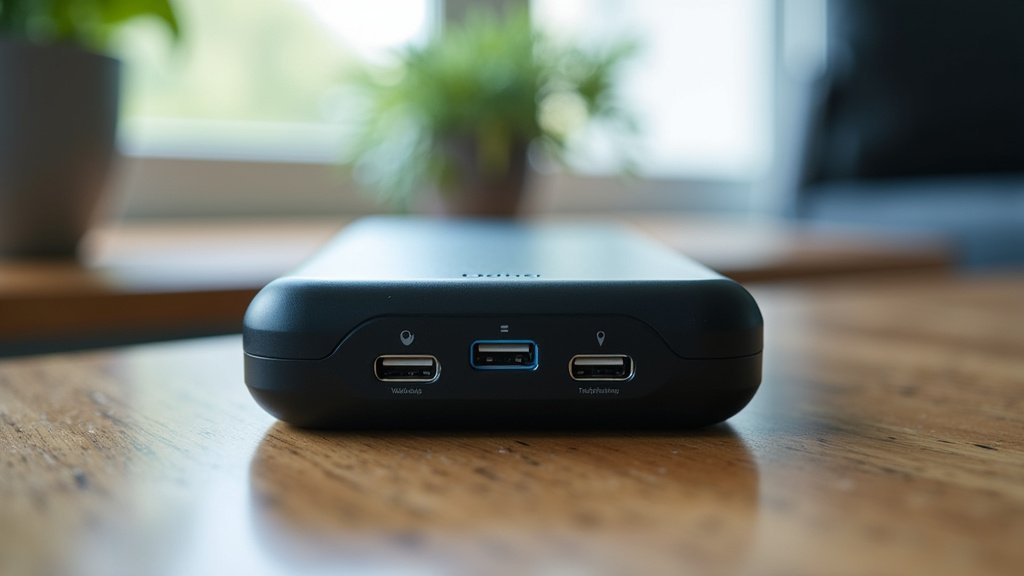
- USB-A and USB-C Ports: Great for charging phones, tablets, or smaller medical accessories.
- DC Car Ports (12V): Useful for some medical devices or car accessories.
We found that having multiple types of ports makes a power station much more adaptable. You don’t want to carry a separate charger for every little thing.
Safety and Reliability: Protecting You and Your Devices
When dealing with medical equipment, safety isn’t just a feature; it’s a requirement. You need a power station that you can trust.
Built-in Safety Protections
A good portable power station will have multiple safety features. Look for protection against:
- Over-voltage
- Under-voltage
- Over-current
- Over-temperature
- Short-circuiting
These protections prevent damage to both the power station and your connected medical devices. Many experts say that reputable brands prioritize these built-in safeguards (NIH).
Battery Chemistry: LiFePO4 vs. Lithium-ion
Most modern portable power stations use either Lithium-ion (Li-ion) or Lithium Iron Phosphate (LiFePO4) batteries. While both are good, LiFePO4 batteries offer some distinct advantages:
- Longer Lifespan: They typically last for thousands of charge cycles, much longer than traditional Li-ion.
- Enhanced Safety: They are less prone to overheating and thermal runaway, making them a safer choice.
- Stability: They are more stable at high temperatures.
If budget allows, we recommend a power station with LiFePO4 batteries for medical device use due to their superior safety and longevity.
Portability and Convenience Factors
After all, it’s called a portable power station for a reason! Its size and ease of use matter a lot, especially if you plan to travel with it.
Weight and Size Considerations
Consider where you’ll be using the power station. Will you be carrying it long distances? Will it fit in your car or luggage? Smaller capacity stations are lighter, while larger ones can be quite heavy.
Think about how you’ll transport it. Many come with sturdy handles, but some larger units might even have wheels. There’s a balance between capacity and portability that you’ll need to find for your specific lifestyle.
Noise Level and Display Features
Some power stations can be noisy, especially when their cooling fans kick in under heavy load. If you’re using it in a quiet environment, like a bedroom, a quiet operation is key. Check reviews for user feedback on noise levels.
A clear, easy-to-read display is also helpful. You’ll want to quickly see the remaining battery life, input/output wattage, and any error indicators. Backlit displays are a bonus for use in the dark.
Checklist for Choosing Your Portable Power Station
To summarize, here’s a quick checklist to guide your decision-making process:
- Does it have a pure sine wave inverter? (Essential!)
- Is the wattage capacity sufficient for your device’s continuous and peak needs?
- Is the battery capacity (Wh) large enough for your required run time?
- Does it have the output ports you need (AC, USB, 12V)?
- Does it include multiple safety protections?
- Is it a reasonable weight and size for your portability needs?
By carefully considering these factors, you’ll be well on your way to selecting a portable power station that keeps you powered up and worry-free. It’s an investment in your health and independence.
Conclusion
Choosing the right portable power station for your medical devices doesn’t have to be overwhelming. You’ve seen how important it is to match capacity and wattage to your equipment’s needs. We found that prioritizing a pure sine wave inverter and robust safety features is non-negotiable for sensitive electronics.
Think about your daily usage and portability needs. Consider if LiFePO4 batteries are right for you. By using this guide, you can confidently select a power station that provides reliable power and gives you true peace of mind. Your health and independence depend on it.
Frequently Asked Questions
Can I use a portable power station to charge my medical device while it’s in use?
Yes, many portable power stations support “pass-through charging.” This means you can charge the power station itself while it simultaneously powers your medical device. Always check the manufacturer’s specifications to confirm this feature.
How do I know if my medical device requires a pure sine wave inverter?
Most sensitive electronics, especially those with motors or microprocessors like CPAP machines or oxygen concentrators, perform best with a pure sine wave. If your device is critical for health, assume it needs pure sine wave to avoid damage and ensure proper function.
Are portable power stations safe to use indoors, like in a bedroom?
Yes, portable power stations are generally safe for indoor use, unlike gas generators, because they don’t produce toxic fumes. Ensure proper ventilation, especially during charging, to prevent overheating. Always follow the manufacturer’s safety guidelines.
What’s the difference between Watt-hours (Wh) and Watts (W)?
Watts (W) measure the instantaneous power your device uses at any given moment. Watt-hours (Wh) measure the total energy stored in a battery, indicating how long it can deliver a certain wattage. Think of watts as speed and watt-hours as distance.
How often should I test my portable power station to ensure it’s ready for an emergency?
It’s a good practice to test your portable power station every 1-3 months. Fully charge it, then connect your medical device and run it for a while to confirm everything works correctly. This helps ensure it’s ready when you truly need it.