How to Charge an RV Battery
Charge an RV battery with a converter, alternator, solar charger, generator, or standalone battery charger. Use the charging source that matches your battery type, voltage, and available power.
On this page (11 sections)
- What charges the batteries in an RV?
- How do you charge an RV battery from shore power?
- Can you charge an RV battery while driving?
- How does solar charge an RV battery?
- Can a generator charge an RV battery?
- Can a standalone charger charge an RV battery?
- How do you connect a charger to an RV battery?
- How should you protect an RV battery during charging?
- How do you know when an RV battery is charged?
- What should you avoid while charging an RV battery?
- Which way should you charge an RV battery?
To charge an RV battery, use the RV converter on shore power, the engine alternator while driving, a solar charger, a generator, or a compatible standalone battery charger. The correct choice depends on the battery chemistry, voltage, state of charge, and power source available to you.
Most RV house batteries are deep-cycle batteries designed to supply power over longer periods. If you need a basic explanation first, read what is a deep cycle battery before choosing a charger.
What charges the batteries in an RV?
The RV converter is the usual shore-power charging source. When the RV is connected to campground power, the converter changes incoming AC power into DC power for the RV's 12-volt system and house battery.
Other charging sources include:
- The engine alternator, which can charge the house battery through the RV's charging system.
- Solar panels and a solar charge controller.
- A generator supplying AC power to the RV converter or a separate charger.
- A standalone charger connected to a suitable outlet.
A converter may charge the battery while also powering lights, water pumps, and other 12-volt loads. Charging performance depends on the converter's design, the battery's condition, and the wiring between them.
How do you charge an RV battery from shore power?
Connect the RV to shore power and let the converter follow its charging process. Turn off unnecessary loads if you want more of the available current to reach the battery.
Before connecting, inspect the battery terminals and cables. Stop if you see loose hardware, damaged insulation, corrosion that prevents a solid connection, or signs of a leaking battery.
Your RV manual should identify the converter and its charging mode. If you have a lithium battery, check the battery and converter instructions first.
Read will an RV converter charge lithium batteries for the compatibility questions that matter.
A converter that suits lead-acid batteries may not provide the charging profile required by lithium batteries. The battery maker and converter maker's instructions take priority over a general charging method.
Can you charge an RV battery while driving?
The alternator can charge an RV house battery while the engine runs when the RV's charging system connects them. This setup may use a relay, isolator, or another control device to manage the starting and house batteries.
Driving does not guarantee a full charge. Long cable runs, voltage drop, battery condition, and the vehicle's charging controls affect how much current reaches the house battery.
Turn off large 12-volt loads when practical and check the RV manual for the intended charging arrangement. Don't bypass a fuse, relay, isolator, or battery monitor to force a connection.
How does solar charge an RV battery?
Solar panels charge an RV battery through a solar charge controller. The controller manages the panel output before it reaches the battery.
Sunlight, panel size, shading, wiring, controller settings, and battery condition all affect the result. A solar system may maintain a battery during storage, but cloudy weather and high loads reduce the energy available.
Use equipment designed for the battery's voltage and chemistry. Our guide to the best RV solar battery charger can help you compare the parts of a solar charging setup.
Keep the panel wiring secure and protect connections from water. Follow the controller's connection order because some systems require the battery to be connected before the solar panel.
Can a generator charge an RV battery?
A generator can charge an RV battery by powering the RV converter or a separate compatible charger. The generator must supply the type of AC power that the converter or charger accepts.
Run the generator outdoors and away from doors, windows, and vents. Carbon monoxide is odorless and can collect in enclosed or partly enclosed spaces.
Check the battery charge through the RV monitor or another suitable method. A generator may run other appliances at the same time, so the available power is shared among the connected loads.
Can a standalone charger charge an RV battery?
A standalone charger can charge a 12-volt RV battery when its output and charging mode match the battery. It is useful when the RV is stored, the converter needs service, or you want a direct connection to the battery.
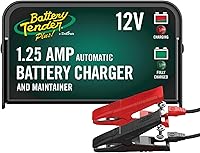
The Battery Tender Plus 12V 1.25 AMP Car and Motorcycle Battery Charger and Maintainer uses a 4-step charging program and includes fused ring terminal and alligator clip accessory cables.
Its title identifies it for automotive and motorcycle batteries, along with lawn mowers and ATVs in the product information. That makes it a better fit for a compatible 12-volt battery than for an unverified multi-battery RV bank.
The charger has a quick disconnect harness and a two-color charge status light. Its 1.25-amp output can be useful for storage or slow charging, but a larger battery bank may need more time than a charger with higher output.
For more options, compare the best battery charger for RV house batteries and check the battery maker's charging instructions before connecting.
How do you connect a charger to an RV battery?
Turn off the charger before making connections, match positive to positive and negative to negative, then place the charger on a stable surface. Use the connection method specified by the charger, such as ring terminals or alligator clips.
Keep the charger and connections dry. Avoid routing cables across walkways, sharp edges, hot surfaces, or areas where a compartment door can pinch them.
A 12-foot lead can help when the outlet is farther from the battery. The Battery Tender 12 Foot Extension SAE Cable is designed for Battery Tender chargers with compatible quick-disconnect plugs.
This cable is intended for Battery Tender units such as Junior, Plus, 2-Bank, 4-Bank, 5-Bank, and 10-Bank models. It is not for Battery Tender products with hard-wired clips, 6-volt Battery Tender Plus units, or units with white quick-disconnect plugs.
Check both connectors before use. An extension does not make an incompatible charger safe, and the cable's 12-volt design does not replace the need to match the charger to the battery.
How should you protect an RV battery during charging?
Keep a lead-acid battery secure, ventilated, and protected from accidental contact. Charging can produce gas, so don't block required ventilation or place ignition sources near the battery.
The Attwood 9067-1 Vented Battery Box with Mounting Strap fits Group 27 series batteries and has an interior size of 13.06 x 6.9 x 10.5 inches. It is made from acid-resistant polypropylene and includes a 40-inch mounting strap and hardware.
The box has ventilation openings and a cover intended to reduce water intrusion. Its strap is rated for 350 lb of force, and the box is designed for boat and RV use.
Measure your battery and compartment before choosing a box. A Group 27 fit does not mean the box fits every RV battery, and the product information identifies it for lead-acid batteries.
How do you know when an RV battery is charged?
Use the RV monitor, charger status, or a suitable battery measurement method to check charging progress. A battery can show a temporary surface charge soon after charging, so one quick reading may not describe its resting condition.
Turn off charging and loads when the battery instructions call for a resting measurement. Compare readings over time rather than relying on a single number.
If the battery never reaches the expected charge state, inspect the charger settings, fuses, cable connections, and battery condition. A failing battery or high parasitic load can look like a charger problem.
For lithium systems, use the battery management system and charging guidance supplied for that battery. The best RV converter chargers for lithium batteries guide covers converter selection for that chemistry.
What should you avoid while charging an RV battery?
Avoid reversed polarity, damaged cables, blocked vents, wet charger connections, and charging equipment that does not match the battery. Never smoke or create sparks near a lead-acid battery.
Don't place a portable power station where it can get wet or overheat. If you are considering one as an AC source, read how to charge a portable power station and can you use a portable power station to charge a car battery before connecting a charger.
Do not assume an adapter changes the charger's voltage or charging profile. Check the battery label, charger output, connector type, and RV manual together.
Which way should you charge an RV battery?
Use the RV converter for routine shore-power charging, the alternator for charging while driving, solar for sun-based charging, and a generator or standalone charger when those sources fit your setup. Match every source to the battery's voltage and chemistry.
Choose the Battery Tender charger when a compatible 12-volt battery needs gradual charging or maintenance. Add the matching extension when distance is the problem, and use the Attwood box when a Group 27 lead-acid battery needs a vented, secured enclosure.
The best method is the one that matches your battery and your RV's wiring. For a lithium battery, confirm compatibility before connecting a converter or charger, then use the best lithium battery charger for RV guide for the next comparison.
Frequently asked questions
What charges the batteries in an RV?
An RV house battery can charge from the converter when the RV is connected to shore power, the alternator while the engine runs, a solar charging system, or a generator that supplies AC power to the converter or a separate charger. The exact method depends on the RV wiring and battery type.
Can I charge an RV battery without shore power?
Yes. You can use the engine alternator, a solar charging system, a generator, or a compatible standalone battery charger connected to another AC source.
Solar and alternator charging depend on the RV's installed equipment, while a standalone charger needs a safe power outlet.
How long does it take to charge an RV battery?
Charging time depends on battery capacity, how deeply it is discharged, the charger's output, wiring losses, and the charging method. A low-output maintainer is suited to gradual charging and maintenance, while larger RV battery banks need equipment designed for their voltage and charging current.
Should I disconnect an RV battery before charging it?
Follow the RV and battery instructions before disconnecting anything. Turn off loads, confirm polarity, keep sparks and flames away from lead-acid batteries, and make sure the charger is intended for the battery's voltage and chemistry before connecting it.