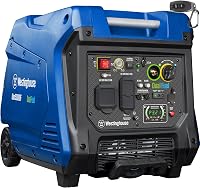
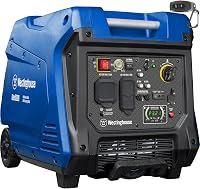
9 Best Inverter Generators for Camping (November 2026)
The best inverter generators for camping include the WEN 6800-Watt Dual Fuel RV-Ready Electric Start for high-power RV and vehicle charging, the WEN Super Quiet 2350-Watt Portable Inverter Generator for lightweight tent camping, and the Oxseryn Power Equipment 4400 Watts Inverter Generator for RV camping on a budget.
On this page (9 sections)
- Best inverter generator for camping: our top 9 picks
- Best inverter generator for camping: side-by-side comparison
- How we compared these inverter generators for camping
- How much power do you need for camping?
- Is a quiet gas generator for camping loud enough to break rules?
- Gasoline or propane: which fuel is better for a gas generator camping trip?
- Can you run sensitive electronics on an inverter generator for camping?
- How should you set up and care for a campsite generator?
- Verdict: which is the best inverter generator for camping?
The best inverter generator for camping for most buyers is the Champion 4000-Watt Dual Fuel RV Ready Portable, because it balances 3000 running watts on gasoline, 2700 on propane, 64 dBA from 23 ft and a TT-30R RV outlet. Choose the WEN 6800-Watt for the highest loads or electric vehicle charging, and choose the WEN Super Quiet 2350-Watt for the lightest tent setup.
Our score weighs specs, features and buyer feedback against what you are shopping for. Noise, rated watts, weight and run time matter most for campsite use.
A quiet inverter generator for camping helps you run lights, a fridge, fans and chargers without the harsh power of a standard unit. Inverter power is cleaner, so it is safer for phones, laptops and other sensitive electronics.
If you are still deciding between fuel types, start with our gas generator buying guide. It explains how fuel generators differ from battery power stations and what to check before you buy.
Our picks at a glance
-
1
 Best for high-power RV and vehicle charging
WEN 6800-Watt Dual Fuel RV-Ready Electric Start
9.7/10 our score
See it on Amazon -
2
 Best for lightweight tent camping
WEN Super Quiet 2350-Watt Portable Inverter Generator
9.6/10 our score
See it on Amazon -
3
 Best for RV camping on a budget
Oxseryn Power Equipment 4400 Watts Inverter Generator
9.5/10 our score
See it on Amazon
- 4
 Check it
Champion 4000-Watt Dual Fuel RV Ready Portable
Best for dual fuel RV camping - 5
 Check it
PowerSmart 4000 Watt Portable Inverter Generator
Best for quiet campsite power - 6
 Check it
PowerSmart 3800 Watt Dual Fuel Inverter Generator
Best for long propane runs - 7
 Check it
Oxseryn 2800-Watts Portable Inverter Generator
Best for compact quiet backup - 8
 Check it
AIVOLT 1750W Inverter Generator Portable Gas Generator
Best for one-hand carry - 9
 Check it
AIVOLT 1600W Super Quiet Inverter Generator 28lbs
Best for ultralight small loads
Best inverter generator for camping: our top 9 picks
We compared 9 inverter generators by rated watts, noise at light load, weight, fuel choice and outlets. The picks below range from a 99.2 lb high-power dual fuel unit to a 26.5 lb one-hand carry model.
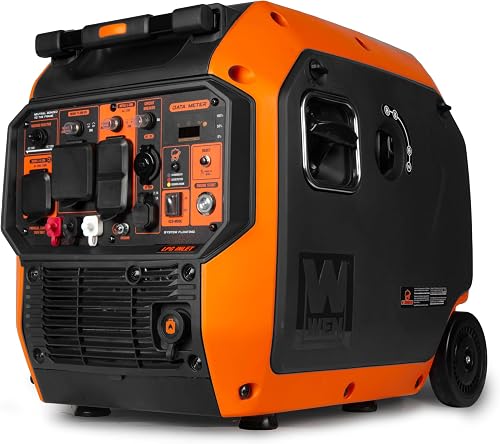
WEN 6800-Watt Dual Fuel RV-Ready Electric Start: Best for high-power RV and vehicle charging
- 6800 surge watts and 5100 rated watts on gasoline
- 6000 surge watts and 4500 rated watts on propane
- 64 decibels at quarter load
- 99.2 lb with onboard wheels
The largest pick here runs RV loads and low-power Level 2 electric vehicle charging in a bonded-neutral 240V setup. Dual fuel choice and a CO watchdog add range and safety.
Pros
- Highest power in this group
- Dual fuel with electric start
- CO watchdog and fuel shutoff
Cons
- Heaviest pick at 99.2 lb
- Propane output drops to 4500 rated watts
This WEN suits RV campers who need serious power at camp. It gives 5100 rated watts on gasoline and 4500 on propane, plus a bonded-neutral 240V setup for low-power Level 2 charging for battery and hybrid electric vehicles.
The 224cc engine runs at 64 decibels at quarter load. That is quieter than many large generators, but at 99.2 lb this is a wheeled unit, not a carry-in tent pick.
Onboard wheels and a telescoping pull handle help you move it on flat ground.
Clean power matters here. WEN says total harmonic distortion stays under 0.3 percent at no load and under 1.2 percent at full load.
That suits laptops, phones and monitors at camp.
Fuel shutoff lets the carburetor use remaining fuel before shutdown, which helps limit maintenance. The CO Watchdog sensor shuts the unit down if dangerous carbon monoxide is detected.
WEN backs it with a three-year warranty.
The trade-off is size and propane output. If you mainly charge RV batteries and run campground loads, the power makes sense.
If you hike in, choose a lighter pick below.
WEN Super Quiet 2350-Watt Portable Inverter Generator: Best for lightweight tent camping
- 2350 surge watts and 1900 rated watts
- 51 decibels at quarter load
- 39 lb ultralight body
- Over 5.7 hours at half load
At 39 lb and 51 decibels at quarter load, this is the easiest quiet generator to carry to a tent site. Clean inverter power suits phones, tablets and laptops.
Pros
- Lightest full-size style pick here
- Very quiet at quarter load
- Fuel shutoff helps lifespan
Cons
- Gasoline only
- 1900 rated watts limits larger loads
This WEN suits tent campers and solo travelers who need quiet power without a heavy lift. At 39 lb, it is the second lightest full pick here, and it runs at 51 decibels at quarter load.
It gives 2350 surge watts and 1900 rated watts. That covers lights, fans, phones, tablets and a laptop, plus small camera gear.
It will not run a large RV air conditioner or a big electric heater at the same time.
WEN says distortion stays under 0.3 percent at no load and under 1.2 percent at full load. The panel has two three-prong 120V receptacles, one 12V DC receptacle and two 5V USB ports.
Eco mode helps stretch fuel at light loads.
The one-gallon tank gives over 5.7 hours at half load. Fuel shutoff helps the carburetor clear remaining fuel before shutdown.
WEN gives a two-year warranty.
Choose this for a quiet tent basecamp. Choose a 4000 watt class model if you need RV outlets or higher running watts.
Oxseryn Power Equipment 4400 Watts Inverter Generator: Best for RV camping on a budget
- 4400 peak watts and 3400 running watts
- Under 72 dBA from 23 ft
- Up to 14 hours at 25 percent load
- 56 lb with 2 gallon tank
This open frame Oxseryn gives 3400 running watts and an RV port at 56 lb, with ECO mode for long light-load runs. It is louder than the quietest picks, so distance matters.
Pros
- Strong running watts for the weight
- Long 14 hour run at 25 percent load
- RV port included
Cons
- Under 72 dBA is louder than picks under 60 dBA
- Gasoline only
This Oxseryn suits RV camping and home backup on a tighter budget. For models focused on household outages, compare inverter generators for home backup.
It gives 4400 peak watts and 3400 running watts at only 56 lb, with a 2 gallon tank and fuel gauge.
ECO mode helps it run up to 14 hours at 25 percent load. That is useful for overnight fridge and fan use, though run time drops as load rises.
The panel includes two 120V AC ports, one 12V DC port and one RV port.
Noise is the main trade-off. At under 72 dBA from 23 ft, it is louder than the picks rated at 51 to 64 dBA.
You will want more distance from tents and picnic areas.
Oxseryn lists cold start technology, low oil shutdown and overload protection. The open frame design helps with airflow and service access, but it does not muffle sound like a closed quiet model.
If you camp in a spaced-out RV site and want strong watts for the weight, this is a practical pick. If you camp close to neighbors, a quieter model fits better.
Champion 4000-Watt Dual Fuel RV Ready Portable: Best for dual fuel RV camping
- 4000 starting watts and 3000 running watts on gasoline
- 2700 running watts on propane
- 64 dBA from 23 ft
- Up to 25 hours on propane at 25 percent load
Champion pairs dual fuel choice with CO Shield auto shutoff and a TT-30R RV outlet. Propane run time stretches to 25 hours at 25 percent load.
Pros
- Dual fuel with CO Shield
- Long propane run time
- TT-30R RV outlet
Cons
- Recoil start only
- Propane running watts drop to 2700
This Champion suits RV campers who want dual fuel choice and safety features. It gives 4000 starting watts and 3000 running watts on gasoline, and 2700 running watts on propane.
On a 20-pound propane tank, Champion says it runs up to 25 hours at 25 percent load. On gasoline, it runs up to 10 hours at 25 percent load from a 1.54-gallon tank.
That propane range is a big plus for long weekends.
At 64 dBA from 23 ft, it is quiet enough for many campsite rules. CO Shield provides carbon monoxide auto shutoff.
Champion includes a three-year limited warranty with free lifetime technical support.
The panel has a 120V 25A TT-30R outlet, a 120V 20A household duplex outlet, a 12V automotive-style outlet and parallel outlets. Clean electricity stays under 3 percent THD.
It uses recoil start with cold start technology. If you want electric start, the WEN 6800-Watt has it.
For RV-ready dual fuel power at 51.8 lb, this Champion is a balanced choice.
PowerSmart 4000 Watt Portable Inverter Generator: Best for quiet campsite power
- 4000 starting watts and 3200 running watts
- 59 dBA from 23 ft
- THD under 3 percent
- 50.7 lb with Eco Mode
PowerSmart delivers 3200 running watts at 59 dBA from 23 ft, with clean power under 3 percent THD. It is a strong quiet pick for campsite noise limits.
Pros
- Quiet at 59 dBA
- Clean power for sensitive devices
- Parallel ready
Cons
- Gasoline only
- Parallel kit sold separately
This PowerSmart suits campers who put quiet operation first. It gives 4000 starting watts and 3200 running watts at 59 dBA from 23 ft.
Clean power under 3 percent THD helps you charge laptops, phones and tablets safely. The panel includes a 120V 20A 5-20R duplex, a 120V 30A L5-30R twist-lock, a 12V 8A DC port and dual 5V 2.1A USB ports.
Eco Mode lowers engine speed at light loads. That helps with both noise and fuel use during evening hours.
At 50.7 lb, it is easier to load into a truck or RV bay than the heaviest pick here.
PowerSmart says two 4000 watt units can connect in parallel to double output, with the kit sold separately. That is useful if your loads grow later.
It runs on gasoline only, so you will need to store fuel safely. For a quiet gasoline inverter generator for camping, this is one of the best fits in this group.
PowerSmart 3800 Watt Dual Fuel Inverter Generator: Best for long propane runs
- 3800 starting watts and 3300 running watts on gasoline
- 3500 starting watts and 3100 running watts on propane
- 59 dBA at 25 percent load in Eco Mode
- Up to 24 hours on a 20 lb propane tank
This dual fuel PowerSmart gives 3300 running watts on gasoline and 3100 on propane, with CO sensor protection. Propane run time reaches 24 hours at 25 percent load.
Pros
- Quiet 59 dBA in Eco Mode
- Long propane run time
- CO sensor and low oil shutdown
Cons
- 8 hours on its 1.3 gallon gas tank at 25 percent load
- Heavier than the smallest picks
This PowerSmart dual fuel model suits campers who want long run time on propane. It gives 3300 running watts on gasoline and 3100 on propane at 59 dBA at 25 percent load in Eco Mode.
On a standard 20-pound propane tank, it runs up to 24 hours at 25 percent load. On its 1.3-gallon gas tank, it runs 8 hours at 25 percent load.
Propane is the clear choice for multi-day trips.
Safety features include overload, short circuit, carbon monoxide sensor and low oil shutdown protection. PowerSmart lists certifications for ANSI/PGMA G300, ANSI/UL2201 and EPA standards.
The control panel has a 120V 30A L5-30R twist-lock outlet, a 120V 20A 5-20R duplex, a 12V 8A DC port and dual 5V 2.1A USB ports. At 50.7 lb, it has a built-in handle.
It is parallel ready, so two units can double power with a separate kit. It also includes a two-year limited warranty with free lifetime technical support.
Choose this for propane range and quiet campsite use. Choose the gasoline-only PowerSmart 4000 Watt if you prefer simpler fueling and slightly higher gasoline output.
Oxseryn 2800-Watts Portable Inverter Generator: Best for compact quiet backup
- 2800 peak watts and 2000 running watts
- Under 58 dBA from 23 ft
- Up to 9 hours at 25 percent load
- 40 lb with parallel function
At 40 lb and under 58 dBA from 23 ft, this Oxseryn suits tent and RV night use with clean power under 3 percent THD. Parallel function helps as loads grow.
Pros
- Quiet under 58 dBA
- Light at 40 lb
- USB and Type-C ports
Cons
- 2000 running watts limits larger appliances
- Gasoline only
This Oxseryn suits RV nights and tent camping where quiet matters. It gives 2800 peak watts and 2000 running watts at under 58 dBA from 23 ft.
At 40 lb, it is easy to carry to a picnic table or a home backup spot. The 1.1 gallon tank runs up to 9 hours at 25 percent load, with ECO mode to stretch fuel.
Clean power under 3 percent THD suits phones, laptops, drones and cameras. Oxseryn says it can even support charging a power station.
The panel has two 120V AC ports, one 12V DC port, one USB port and one Type-C port.
Parallel function lets you connect two units for more power. That helps if you start with small loads and add a fridge or air conditioner later.
The trade-off is output. At 2000 running watts, it will not cover large motor loads.
It is best for lights, charging, fans and small appliances.
For a compact quiet inverter generator for camping, this is a strong middle ground between the ultralight AIVOLT models and the 4000 watt class.
AIVOLT 1750W Inverter Generator Portable Gas Generator: Best for one-hand carry
- 1750 peak watts and 1350 running watts
- 52 dBA super quiet
- 26.5 lb with top handle
- Up to 7 hours at 25 percent load
This is the lightest pick here at 26.5 lb, built for one-hand carry from truck to campsite. At 1350 running watts, it suits lights, phones and small devices.
Pros
- Lightest at 26.5 lb
- Very quiet at 52 dBA
- CO detection with auto shutoff
Cons
- 1350 running watts is limited
- 0.66 gallon tank
This AIVOLT suits campers who carry power by hand. At 26.5 lb with a top handle, it is the lightest pick here, and it runs at 52 dBA.
It gives 1750 peak watts and 1350 running watts with THD under 3 percent. That suits laptops, phones, CPAP machines and TVs at light loads.
AIVOLT says it can run a small space heater in the 750 to 1000 watt range, but most RV or window AC units need more starting power.
The 0.66-gallon tank gives up to 7 hours at 25 percent load in ECO mode. ECO mode adjusts engine speed to match power needs, which helps save fuel and lower noise.
CO detection with auto shutoff, low-oil shutdown and overload protection add safety. AIVOLT includes an oil funnel, tool kit, spark plug wrench, DC charging cable and user manual.
It gives a two-year warranty and free lifetime technical support.
Engine oil is not included, so add it before first use. This is a true portable pick for tailgates and tent sites.
For RV air conditioning or larger loads, step up to a 2800 watt or higher model.
AIVOLT 1600W Super Quiet Inverter Generator 28lbs: Best for ultralight small loads
- 1600 starting watts and 1260 running watts
- 57 dBA at 23 ft
- 28 lb lightweight body
- 8 hours at 25 percent load
At 28 lb and 57 dBA at 23 ft, this AIVOLT is made for small loads and easy carry. Clean power under 3 percent THD suits phones and laptops.
Pros
- Ultralight at 28 lb
- Quiet at 57 dBA
- CO auto shutoff
Cons
- 1260 running watts is the lowest here
- About 2 hours at full load
This AIVOLT suits ultralight camping and small backup needs. At 28 lb, it is easy to carry, and it runs at 57 dBA at 23 ft.
It gives 1600 starting watts and 1260 running watts from a 60cc 4-stroke OHV engine. Clean power under 3 percent THD suits phones, laptops and small tools.
Runtime is 8 hours at 25 percent load and about 2 hours at full load. Eco mode adjusts fuel use at light loads, which helps for overnight charging of phones and small devices.
The panel has two 120V outlets and two USB ports, Type-A and Type-C. Indicator lights and an hour meter help you monitor status.
A parallel kit, sold separately, can connect two units to double output.
CO Alert tech shuts the unit down when unsafe carbon monoxide is detected. Low oil auto-shutdown and overload protection add safety.
AIVOLT gives a two-year warranty plus free lifetime technical support.
This is the lowest output pick here, so it is not for large appliances. For a small quiet gas generator for camping, it is a practical choice.
Best inverter generator for camping: side-by-side comparison
These picks cover three clear size groups. The 4000 watt class gives the best RV power, the 2000 to 2800 watt class gives quiet compact power, and the 1600 watt class gives the lightest carry.
| Product | Best for | Starting watts | Running watts | Weight | Our score |
|---|---|---|---|---|---|
| WEN 6800-Watt Dual Fuel RV-Ready Electric Start | high-power RV and vehicle charging | 6800 on gasoline | 5100 on gasoline | 99.2 lb | 9.7 |
| WEN Super Quiet 2350-Watt Portable Inverter Generator | lightweight tent camping | 2350 | 1900 | 39 lb | 9.6 |
| Oxseryn Power Equipment 4400 Watts Inverter Generator | RV camping on a budget | 4400 | 3400 | 56 lb | 9.5 |
| Champion 4000-Watt Dual Fuel RV Ready Portable | dual fuel RV camping | 4000 | 3000 on gasoline | 51.8 lb | 9.4 |
| PowerSmart 4000 Watt Portable Inverter Generator | quiet campsite power | 4000 | 3200 | 50.7 lb | 9.4 |
| PowerSmart 3800 Watt Dual Fuel Inverter Generator | long propane runs | 3800 on gasoline | 3300 on gasoline | 50.7 lb | 9.3 |
| Oxseryn 2800-Watts Portable Inverter Generator | compact quiet backup | 2800 | 2000 | 40 lb | 9.3 |
| AIVOLT 1750W Inverter Generator Portable Gas Generator | one-hand carry | 1750 | 1350 | 26.5 lb | 8.6 |
| AIVOLT 1600W Super Quiet Inverter Generator 28lbs | ultralight small loads | 1600 | 1260 | 28 lb | 8.3 |
How we compared these inverter generators for camping
We checked specs for rated watts, starting watts, noise, weight, run time, fuel type and outlets. We also checked safety features such as CO auto shutoff, low oil shutdown and overload protection.
We ranked picks by how well they fit campsite noise limits and electronics charging. A model with 3200 running watts at 59 dBA scored higher than a louder model with similar watts.
We also looked at real buying patterns. RV campers often need a TT-30R outlet and dual fuel choice.
Tent campers often need low weight and low noise first.
Our score weighs specs, features and buyer feedback against what you're shopping for. That is why the smallest models score lower, even though they are quiet and light.
They simply have less power for common camping loads.
How much power do you need for camping?
Most tent campers need 1000 to 2000 running watts. That covers lights, fans, phones and a laptop.
Most RV campers need 3000 to 4000 running watts. That covers a fridge, battery charger, lights and sometimes an air conditioner, but you must check starting watts for motor loads.
Add up running watts for items you will run at the same time. Then add starting watts for items with motors, such as an air conditioner.
Choose a generator with rated watts higher than your total.
Tent camping and small loads
For lights, fans and device charging, the AIVOLT 1750W and AIVOLT 1600W fit well. Both are under 30 lb and run at 52 to 57 dBA.
The Oxseryn 2800-Watts gives more headroom at 2000 running watts. It still stays under 58 dBA from 23 ft.
RV and larger campsite loads
For RV use, look at the Champion 4000-Watt, the PowerSmart 4000 Watt and the PowerSmart 3800 Watt. All give 3000 or more running watts on gasoline.
The WEN 6800-Watt is the only pick here for 240V use and electric vehicle charging. It is also the heaviest at 99.2 lb.
Is a quiet gas generator for camping loud enough to break rules?
Quiet inverter generators run at 51 to 72 dBA at light load in this group. The quietest picks run at 51 to 59 dBA, which is close to normal conversation.
Campground rules still apply. Some sites limit generator hours, even for quiet models.
Always check quiet hours before you start the unit.
Distance helps a lot. At 23 ft, several picks are rated at 58 to 64 dBA.
Moving the generator farther from tents can lower the sound at your site.
For a deeper look at quiet options, our best propane generator for camping guide covers models that run on propane tanks. Propane can also help with long light-load runs.
Gasoline or propane: which fuel is better for a gas generator camping trip?
Gasoline often gives higher watts. The Champion 4000-Watt gives 3000 running watts on gasoline and 2700 on propane.
The PowerSmart 3800 Watt gives 3300 on gasoline and 3100 on propane.
Propane often gives longer run time at light load. Champion runs up to 25 hours on propane at 25 percent load.
PowerSmart runs up to 24 hours on a 20-pound propane tank.
Dual fuel models let you choose by trip. Use gasoline for higher loads and propane for long overnight runs.
If you want more dual fuel RV options, see our best dual fuel generator for RV guide.
RV campers should also check our best RV ready generator guide. It covers TT-30R outlets and parallel options in more detail.
Can you run sensitive electronics on an inverter generator for camping?
Yes, if the generator provides clean inverter power. Look for THD under 3 percent or a pure sine wave design.
The WEN models here limit distortion to under 0.3 percent at no load and under 1.2 percent at full load. The PowerSmart and Oxseryn models list THD under 3 percent.
That clean power suits laptops, phones, tablets and monitors. USB ports help you charge small devices without a household outlet.
Still, do not overload the unit. Keep total running watts below the rated watts.
Use Eco Mode at light loads to keep voltage stable and noise low.
If you are comparing battery options too, our guide to whether a portable power station is better than a gas generator for camping explains the trade-offs. Battery stations are silent, but fuel generators run longer for heavy loads.
How should you set up and care for a campsite generator?
Place the generator outdoors, away from tents and RV windows. Never use it indoors or in an enclosed space.
CO auto shutoff helps, but it does not replace outdoor placement and distance.
Check oil before first use on models that do not include oil. Add fuel with the unit cool and grounded, and store fuel in approved containers.
Use fuel shutoff when the model has it. That lets the carburetor use remaining fuel before shutdown, which helps limit build-up.
For a broader fuel comparison, our solar vs gas generator guide explains when solar charging makes sense at camp. Many campers pair quiet solar charging for daytime with a fuel generator for overnight use.
Champion fans should also look at our best Champion RV ready inverter generators guide. It covers parallel kits and RV outlet options for Champion models.
Verdict: which is the best inverter generator for camping?
Pick the Champion 4000-Watt Dual Fuel RV Ready Portable for the best overall balance of power, noise, dual fuel range and RV outlets. Pick the WEN 6800-Watt Dual Fuel RV-Ready Electric Start for the highest loads and electric vehicle charging.
Pick the WEN Super Quiet 2350-Watt for light tent camping and quiet electronics charging.
If you need the quietest 4000 watt class power, choose the PowerSmart 4000 Watt Portable Inverter Generator at 59 dBA. If you need long propane runs, choose the PowerSmart 3800 Watt Dual Fuel Inverter Generator.
If weight matters most, choose the AIVOLT 1750W at 26.5 lb for one-hand carry. Start with the load list for your trip, then match watts, noise and fuel type to that list.
Our top 3 picks at a glance
-
1
Best for high-power RV and vehicle charging
WEN 6800-Watt Dual Fuel RV-Ready Electric Start
9.7/10 our score
See it on Amazon -
2
Best for lightweight tent camping
WEN Super Quiet 2350-Watt Portable Inverter Generator
9.6/10 our score
See it on Amazon -
3
Best for RV camping on a budget
Oxseryn Power Equipment 4400 Watts Inverter Generator
9.5/10 our score
See it on Amazon
Frequently asked questions
How quiet should an inverter generator for camping be?
Look for models at or below 60 dBA from 23 ft for shared campsites. Several picks here run at 51 to 59 dBA at quarter or 25 percent load.
Always check your campground rules, since noise limits vary by site and time of day.
Can an inverter generator for camping charge phones and laptops?
Yes, if it provides clean inverter power with low THD. Models here with THD under 3 percent or under 1.2 percent at full load are suited to sensitive electronics.
Use the USB ports for small devices and keep loads within rated watts.
Is a gas generator for camping safe for electronics?
A conventional gas generator can produce voltage spikes, but an inverter generator produces cleaner power. The picks here are designed to mirror a pure sine wave or keep THD under 3 percent.
That makes them safer for laptops, phones and tablets than a standard open frame unit.
What size inverter generator for camping with an RV?
Add up running watts for the items you plan to run together, then add starting watts for motor loads. Many RV campers need 3000 to 4000 running watts for air conditioning, fridge and charging.
The 4000 watt class picks here cover that range on gasoline.
Should I choose gasoline or propane for a gas generator camping trip?
Gasoline often gives higher watts, while propane often gives longer run time at light load. Champion and PowerSmart dual fuel models let you switch based on the trip.
Propane also avoids storing liquid gasoline at camp, but you must carry tanks.