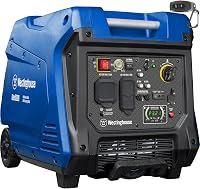
9 Best Portable Inverter Generators (November 2026)
The best portable inverter generators include the WEN Super Quiet 2350-Watt Portable Inverter Generator for quiet camping power, the Oxseryn Power Equipment 4400 Watts Inverter Generator for RV power on a lighter budget, and the WEN Quiet and Lightweight 3600-Watt Dual Fuel for gasoline or propane flexibility.
On this page (6 sections)
- Which portable inverter generator is best for each use?
- How much power should a portable inverter generator provide?
- Are inverter generators better for sensitive electronics?
- What fuel should you use?
- How do you use a portable inverter generator safely?
- Which portable inverter generator should you choose?
The best portable inverter generator for most outdoor users is the WEN Super Quiet 2350-Watt model. It combines 1900 rated watts, clean power for sensitive electronics, a 39 lb body and a quiet operating design.
That mix suits campers and tailgaters who need phones, tablets, lights and a television without a loud open frame machine. It also suits light backup when the goal is essentials rather than every appliance in the house.
Choose the AIVOLT if one-person carrying matters most. Pick the WEN dual-fuel model when propane flexibility is useful, or move to the Westinghouse if your priority is high-output home backup.
For another fuel option, compare diesel inverter generators.
A portable inverter generator is different from a conventional open-frame generator because it creates cleaner, more controlled electricity and can slow its engine when demand falls. Our guide explains what a portable inverter generator is and how the design affects daily use.
In daily use, that slower engine speed helps at night and saves fuel when only a few devices are connected. It also means the machine feels calmer at a campsite than a fixed speed unit.
Our picks at a glance
-
1
 Best for quiet camping power
WEN Super Quiet 2350-Watt Portable Inverter Generator
9.6/10 our score
See it on Amazon -
2
 Best for RV power on a lighter budget
Oxseryn Power Equipment 4400 Watts Inverter Generator
9.5/10 our score
See it on Amazon -
3
 Best for gasoline or propane flexibility
WEN Quiet and Lightweight 3600-Watt Dual Fuel
9.5/10 our score
See it on Amazon
- 4
 Check it
PowerSmart 4000 Watt Portable Inverter Generator
Best for quiet home backup - 5
 Check it
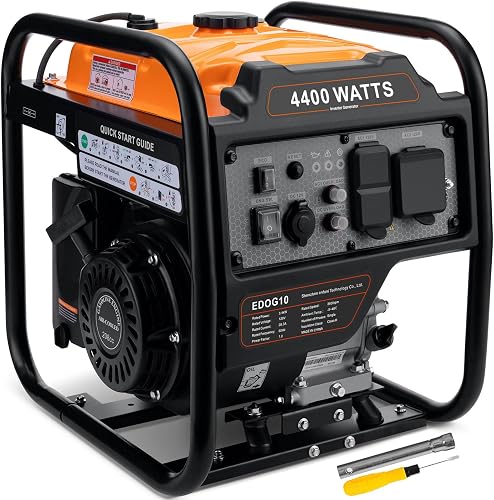
Oxseryn 4400-Watts Inverter Generator
Best for long runtime with RV output - 6
 Check it
Westinghouse 8200 Peak Watt Tri-Fuel Portable Inverter
Best for whole-home backup loads - 7
 Check it
AIVOLT 1750W Inverter Generator Portable Gas Generator
Best for one-hand carrying - 8
 Best for refrigerator and RV loadsCheck it
- 9
 Check it
Oxseryn 2800W Portable Inverter Generator
Best for simple all-day camping power
Which portable inverter generator is best for each use?
The best portable inverter generator depends on your load, fuel plan, noise limit and carrying needs. The WEN 2350-Watt model is the strongest general pick, while the larger models suit RVs, tools and home backup.
Our score weighs stated specs, features and buyer feedback against the needs of this search. We checked power ratings, outlet types, fuel options, runtime claims, safety features, portability and the types of loads each unit is designed to support.
| Product | Best for | Power | Weight | Fuel | Our score |
|---|---|---|---|---|---|
| WEN Super Quiet 2350-Watt Portable Inverter Generator | quiet camping power | 2350 surge watts, 1900 rated watts | 39 lb | Gasoline | 9.6 |
| Oxseryn Power Equipment 4400 Watts Inverter Generator | RV power on a lighter budget | 4400 peak watts, 3400 running watts | 56 lb | Gasoline | 9.5 |
| WEN Quiet and Lightweight 3600-Watt Dual Fuel | gasoline or propane flexibility | 3600 surge watts on gasoline | 49 lb | Gasoline and propane | 9.5 |
| PowerSmart 4000 Watt Portable Inverter Generator | quiet home backup | 4000 starting watts, 3200 running watts | 50.7 lb | Gasoline | 9.4 |
| Oxseryn 4400-Watts Inverter Generator | long runtime with RV output | 4400 peak watts, 3400 running watts | 57 lb | 9.3 | |
| Westinghouse 8200 Peak Watt Tri-Fuel Portable Inverter | whole-home backup loads | 8200 peak watts, 6600 gasoline running watts | 134.5 lb | Gasoline, propane and natural gas | 9.3 |
| AIVOLT 1750W Inverter Generator Portable Gas Generator | one-hand carrying | 1750 peak watts, 1350 running watts | 26.5 lb stated carry weight | Gasoline | 8.6 |
| Generac | refrigerator and RV loads | 3300 starting watts, 2500 running watts | 59.5 lb | Gasoline | 8.5 |
| Oxseryn 2800W Portable Inverter Generator | simple all-day camping power | 2800 peak watts, 2000 running watts | 40 lb | 8.0 |
WEN Super Quiet 2350-Watt Portable Inverter Generator: Best for quiet camping power
- 2350 surge watts and 1900 rated watts
- 39 lb weight
- 51 dB at quarter load
- Two USB ports and 12V DC outlet
This compact WEN model combines clean power, low noise and a 39 lb body. Fuel shutoff and several outlet types make it a practical choice for camping and light backup.
Pros
- Lightest mid-range pick
- Clean power for sensitive electronics
- Fuel shutoff
Cons
- Less rated power than the larger models
- Gasoline only
The WEN Super Quiet 2350-Watt Portable Inverter Generator is the best fit for camping, tailgating and light emergency use where quiet operation and easy transport matter. Its 39 lb weight is lower than the other mid-range models here, so moving it from storage to a campsite takes less effort.
It produces 2350 surge watts and 1900 rated watts of gasoline power. That gives you room for phones, tablets, televisions, computers and other sensitive electronics, while the inverter design keeps the output clean.
The control panel has two 120V receptacles, one 12V DC receptacle and two 5V USB ports. Fuel shutoff uses the remaining fuel in the carburetor before shutdown, which can help reduce stale-fuel buildup during storage.
The unit is rated at a stated 51 dB at quarter load, comparable to a normal conversation. Its trade-off is capacity: it cannot match the running wattage of the 3200- or 3400-watt models.
Oxseryn Power Equipment 4400 Watts Inverter Generator: Best for RV power on a lighter budget
- 4400 peak watts and 3400 running watts
- 56 lb weight
- 2 gallon tank
- Up to 14 hours at 25% load
The Oxseryn offers a high output rating, RV outlet and long stated runtime in a 56 lb frame. It fits camping, residential backup and outdoor work where more power matters.
Pros
- High running wattage
- RV port
- Fuel gauge and ECO mode
Cons
- Open-frame design
- Gasoline only
The Oxseryn Power Equipment 4400 Watts Inverter Generator is best when an RV or home backup setup needs more running power without moving to the heaviest model. It provides 4400 peak watts and 3400 running watts in a 56 lb body.
Its two 120V AC ports, 12V DC port and RV port cover common outdoor and backup connections. The 2 gallon tank is rated for up to 14 hours at 25% load when ECO mode is used, and the fuel gauge helps you see the remaining level.
Oxseryn states noise under 72 dBA from 23 ft away. That is a different measurement from the quieter enclosed units, so compare operating location and expected load before choosing it for a quiet campsite.
This gasoline model suits RV camping, residential backup and commercial use. The open-frame design and higher output make it more useful for larger loads, but it is less compact than the WEN 2350-Watt model.
WEN Quiet and Lightweight 3600-Watt Dual Fuel: Best for gasoline or propane flexibility
- 3600 gasoline surge watts
- 2900 gasoline rated watts
- Dual-fuel operation
- CO Watchdog shutdown sensor
This WEN gives you two fuel choices, clean power and a built-in CO shutdown sensor. Its RV receptacle and 49 lb weight suit travel and home use.
Pros
- Dual-fuel operation
- RV receptacle
- CO Watchdog
Cons
- Lower output on propane
- More weight than compact models
The WEN Quiet and Lightweight 3600-Watt Dual Fuel model is the best choice when you want both gasoline and propane. If remote starting matters, compare dual-fuel generators with remote start.
On gasoline it produces 3600 surge watts and 2900 rated watts; on propane it produces 3500 surge watts and 2600 rated watts.
Its 49 lb body stays manageable for travel, and the RV-ready panel includes two 120V receptacles, a TT-30R RV receptacle, a 12V DC receptacle and two 5V USB ports. The tool-free LPG quick-connector makes changing to propane simpler.
The CO Watchdog sensor automatically shuts the generator down if dangerous carbon monoxide levels are detected. Fuel shutoff also helps limit fuel left in the carburetor during shutdown.
The stated 65 dB rating at quarter load is quieter than many open-frame generators, but not as low as the WEN 2350-Watt model's 51 dB claim. Choose it when fuel flexibility and RV use matter more than the lowest possible noise.
PowerSmart 4000 Watt Portable Inverter Generator: Best for quiet home backup
- 4000 starting watts and 3200 running watts
- 59 dBA at 23 ft
- Parallel connection support
- 120V 30A twist-lock outlet
PowerSmart balances useful home-backup output with a 59 dBA noise rating and parallel support. Its outlet mix works for electronics, tools and selected larger loads.
Pros
- Parallel ready
- Low noise rating
- Clean power under 3% THD
Cons
- Parallel kit sold separately
- Gasoline only
The PowerSmart 4000 Watt Portable Inverter Generator suits home users who want 3200 running watts, low noise and the option to connect two units in parallel. It produces 4000 starting watts and 3200 running watts with THD under 3%.
Clean power under 3% THD is intended for laptops, mobile phones and tablets. That makes this model a practical fit for a home office during an outage, as well as for camping where electronics need stable output.
Its panel includes a 120V 20A duplex outlet, a 120V 30A twist-lock outlet, a 12V 8A DC outlet and two 5V USB ports. ECO mode adjusts operation for lighter loads, while the stated noise level is 59 dBA from 23 ft away.
That outlet mix covers household cords, direct DC charging and USB devices without extra adapters. The twist lock outlet is especially useful when a cable is meant to stay connected during a long backup run.
Parallel connection can double power output, but the parallel kit is sold separately. The generator weighs 50.7 lb and includes an oil funnel and spark plug wrench.
Those included tools help with first setup and basic care, but the separate kit is an extra cost to plan for. One person can move the unit, yet it still needs a clear spot in a vehicle or garage.
This gasoline model is a good middle choice for home backup, camping and selected RV loads. Check starting watts for refrigerators, pumps and other motor-driven equipment before relying on the unit.
Oxseryn 4400-Watts Inverter Generator: Best for long runtime with RV output
- 4400 peak watts and 3400 running watts
- 2 gallon tank
- Up to 14 hours at 25% load
- 30A RV port
This Oxseryn has the same broad power class as the other 4400-watt pick, with a 2 gallon tank and 30A RV port. It suits longer outdoor sessions and backup use.
Pros
- Long stated runtime
- RV ready
- ECO mode
Cons
- 57 lb body
- Gasoline only
The Oxseryn 4400-Watts Inverter Generator is a strong fit for buyers who want 3400 running watts and a long stated runtime in a portable package. Its 2 gallon fuel tank is rated for up to 14 hours at 25% load.
That long runtime at light load suits overnight camping and extended outages. A larger tank also means fewer refills, though refueling still requires a cool engine and a safe outdoor spot.
The generator has two 120V AC ports, a 30A RV port and a 12V DC port. ECO mode, overload protection, low-oil shutdown and cold-start technology support common camping and backup uses.
The RV port makes a direct connection simpler for travel trailers. The DC port adds a way to charge batteries or run compatible 12V gear without using an AC adapter.
At 57 lb, it is close in weight to the other 4400-watt Oxseryn model. The two picks share a similar power class, so compare the exact outlet layout and included items before choosing between them.
Small differences in outlets and included accessories can matter more than the shared wattage. For storage, measure your vehicle space and check how the frame fits with fuel and cables.
This gasoline generator is better suited to longer outdoor sessions than a small 1350- or 1900-watt unit. Its higher output also means you should plan a stable outdoor location and safe cable routing before starting.
Westinghouse 8200 Peak Watt Tri-Fuel Portable Inverter: Best for whole-home backup loads
- 8200 peak watts and 6600 gasoline running watts
- Gasoline, propane and natural gas
- 50A transfer-switch-ready outlet
- Remote electric start
The Westinghouse is the high-output choice for major appliances and home backup. Tri-fuel operation, a 50A outlet and remote start add flexibility, but its 134.5 lb weight limits casual portability.
Pros
- Highest output here
- Tri-fuel flexibility
- 50A home-backup outlet
Cons
- Heavy
- More setup planning for transfer equipment
The Westinghouse 8200 Peak Watt Tri-Fuel Portable Inverter is the best portable inverter generator here for major home backup loads. It produces 6600 running watts and 8200 peak watts on gasoline, with lower stated output on propane and natural gas.
Its 120/240V 14-50R 50A outlet is transfer-switch or interlock-kit ready. For meter-side connection planning, review generator transfer switches at the meter.
The unit also has a 30A RV outlet and a standard 20A duplex outlet, so it can serve home, RV and jobsite needs.
Tri-fuel operation gives you more fuel choices during a long outage. Remote electric start, a digital display, CO sensor, fuel gauge and automatic low-oil shutdown add useful control features.
The trade-off is size. At 134.5 lb, this is portable in the broad generator sense, but it is not a casual one-person carry like the AIVOLT or WEN 2350-Watt model.
Home connection should follow electrical-code requirements and qualified installation guidance.
AIVOLT 1750W Inverter Generator Portable Gas Generator: Best for one-hand carrying
- 1750 peak watts and 1350 running watts
- 26.5 lb stated carry weight
- 52 dBA
- Up to 7 hours at 25% load
AIVOLT is the easiest pick to carry, with 1350 running watts and a compact body. It fits phones, laptops, TVs, CPAP machines and lighter camping loads.
Pros
- Very light
- CO detection and auto shutoff
- Quiet 52 dBA rating
Cons
- Limited running wattage
- Engine oil is not included
The AIVOLT 1750W Inverter Generator is the easiest pick to carry, with a stated 26.5 lb one-hand carry weight and a compact 16.9 x 9.9 x 15.7 in size. It produces 1350 running watts and 1750 peak watts.
That weight suits campers who walk gear from a car to a tent or picnic site. It also suits apartment storage and small vehicles where a heavier generator would be hard to move.
The unit is rated at 52 dBA and up to 7 hours at 25% load with its 0.66 gallon tank and ECO mode. Its clean power is rated under 3% THD, making it suitable for laptops, phones, CPAP machines and TVs within its wattage limits.
ECO mode lowers engine speed when demand is light, which helps with both noise and fuel use. The small tank is easy to fill, but it also means a mid trip refill may be needed on a long night.
CO detection, low-oil shutdown and overload protection add safety features. The box includes an oil funnel, screwdriver, spark plug wrench, quick-start guide and manual, but engine oil is not included.
Adding oil before first use is a simple setup step, yet it should not be skipped. Store the funnel and manual with the unit so the first start and later checks stay easy.
Choose AIVOLT for light camping, tailgates and electronics. It may not provide enough starting capacity for most RV air conditioners or larger motor loads, so add up your equipment needs first.
Generac: Best for refrigerator and RV loads
- 3300 starting watts and 2500 running watts
- Less than 3% THD
- COsense technology
- Up to 7 hours at 25% load
Generac's GP3300i targets home backup, RV use and camping with 2500 running watts, clean power and CO monitoring. It also supports parallel connection with a separate kit.
Pros
- Useful starting capacity
- COsense technology
- 30A twist-lock outlet
Cons
- 59.5 lb weight
- Gasoline only
The Generac GP3300i fits buyers who need more starting capacity for a refrigerator, lights, TV and phone charging. It produces 2500 running watts and 3300 starting watts, with less than 3% THD clean power.
That starting capacity matters for motor loads that need a brief surge. A refrigerator can draw far more at startup than while running, so the gap between starting and running watts is worth checking.
Its two 120V 20A outlets, 120V 30A twist-lock outlet and two USB-A ports cover common home, RV and camping connections. COsense monitors carbon monoxide and shuts the unit down if dangerous concentrations are detected.
The twist lock outlet gives a secure RV or backup connection. The household outlets and USB ports handle everyday cords and phone charging without a power strip for each device.
The 1.06 gallon tank is rated for up to 7 hours at 25% load or 4.5 hours at 50% load. Economy Mode adjusts engine speed as demand changes, and a second GP3300i can be connected with a separate parallel kit.
Runtime drops as load rises, so heavy use will need earlier refills than the light load figure suggests. Parallel use can add capacity, but the kit is sold separately and the combined weight is much higher.
At 59.5 lb, it is heavier than the WEN 2350-Watt model and AIVOLT. Choose Generac when refrigerator starting capacity and established outlet options matter more than minimum carry weight.
Oxseryn 2800W Portable Inverter Generator: Best for simple all-day camping power
- 2800 peak watts and 2000 running watts
- 40 lb weight
- Up to 10 hours at 25% load
- USB and Type-C ports
This Oxseryn offers a middle ground between compact carry weight and useful output. Its USB, Type-C and 120V ports suit camping, outdoor activities and lighter backup needs.
Pros
- 10-hour stated runtime
- USB and Type-C ports
- 40 lb body
Cons
- Less output than 4400-watt picks
- Gasoline only
The Oxseryn 2800W Portable Inverter Generator is a useful middle ground for camping, RV trips and lighter emergency backup. It produces 2800 peak watts and 2000 running watts and weighs 40 lb.
That middle output fits campsite lighting, fans, phones, laptops and a small television. It gives more headroom than a compact 1350-watt unit without moving up to a large home backup machine.
Its two 120V AC ports, 12V DC port, USB port and Type-C port make it convenient for charging mixed electronics. The 2.8 gallon-class output is paired with a stated runtime of up to 10 hours at 25% load.
USB and Type-C ports reduce the need for wall adapters at a tent or picnic table. The DC port can also support compatible battery charging or 12V equipment during a longer stay.
Oxseryn states a noise level of 58 dB from 23 ft away. The generator is gasoline powered, EPA compliant and designed for outdoor activities and commercial use.
A stated distance rating helps when comparing campsite noise, but placement still matters. Keep the unit downwind and away from sleeping areas for the best effect.
Choose this model when the WEN 2350-Watt unit feels too limited but a 3400-watt generator feels unnecessary. Its 2000 running watts still require careful load planning for heaters, air conditioners and other high-draw equipment.
How much power should a portable inverter generator provide?
Choose a generator by rated or running watts, then check surge capacity for motor loads. Starting watts cover the brief demand when a refrigerator, pump, air conditioner or tool begins.
Running watts are the steady power a device needs once it is on. Starting watts cover the extra draw from a motor, so a unit can look strong yet struggle with a fridge if that margin is thin.
A 1350-watt running output fits lighter electronics and selected small appliances. Models from 1900 to 2500 running watts give more room for camping loads, refrigerators and charging.
Models from 2900 to 3400 running watts better suit RV and home backup needs. At camping scale, 1900 to 2500 watts can handle lights, fans, phones and a television with room left over.
At home scale, 2900 to 3400 watts gives more choice for a refrigerator, sump pump, tools or an RV air conditioner. Each motor load still needs its own check.
The Westinghouse reaches 6600 running watts on gasoline for larger home loads. That capacity also brings more weight, fuel planning and electrical setup work.
A larger generator may need a transfer switch or interlock kit for home circuits. It will also need more storage space, a firmer surface and a plan for moving it safely.
Before you buy, list each device with its running watts and any starting demand. Add the running loads together, then confirm the total stays within the rating.
Do not add every device at once if the total is close to the limit. Start motor loads one at a time, keep cords dry and watch for overload signs.
Fuel choice can also change output, as dual fuel and tri fuel models list lower watts on propane or natural gas. Match the rating to the fuel you will actually use most often.
Are inverter generators better for sensitive electronics?
Inverter generators are often a better match for sensitive electronics because they produce controlled power with low total harmonic distortion. Still, the exact rating matters, so check the stated THD and your device requirements.
THD describes how clean the waveform is, and lower numbers are generally better for chargers and computers. A low THD rating does not remove the need to follow device instructions or use suitable cords.
The WEN 2350-Watt model states under 0.3% THD at no load and under 1.2% at full load. AIVOLT and several larger models state under 3% THD, also intended for phones, laptops and televisions.
The WEN figures show a tighter claim at both light and full load. Other models use a single under 3% figure, so compare test conditions as well as the headline number.
Clean power matters most when a device has a sensitive charger or power supply. Phones, tablets, laptops and televisions are common examples in this roundup.
Even with clean output, avoid overloading the generator with too many devices at once. A stable waveform helps, but excess demand can still trip protection or cause a shutdown.
Our inverter generator vs regular generator comparison explains the difference in power design, noise, fuel use and portability.
That guide is useful if you are moving from an older open frame unit. It helps explain why inverter models can be quieter and more fuel efficient at light loads.
For storage, keep outlet covers clean and dry and inspect cords before use. Damaged insulation can create risk even when the generator output is clean.
What fuel should you use?
Gasoline is the common choice across this roundup because it is available for every gasoline model and supports the listed output ratings. Propane can be useful for storage and fuel flexibility, while natural gas can support a fixed home-backup setup.
Gasoline is easy to find and simple to plan for on a road trip. It also gives the highest stated output on several dual fuel and tri fuel models in this roundup.
Propane can be handy because sealed tanks store well and refueling can be cleaner. It may require a separate tank, a connector check and a lower wattage plan.
The WEN DF360iX uses gasoline or propane. The Westinghouse iGen8200TFc accepts gasoline, propane or natural gas, with different output ratings for each fuel.
On the WEN dual fuel model, gasoline gives 3600 surge watts and 2900 rated watts, while propane gives 3500 surge watts and 2600 rated watts. On the Westinghouse, gasoline gives 6600 running watts and 8200 peak watts, with lower figures on propane and natural gas.
Those lower ratings matter when you size a fridge, air conditioner or pump. A load that fits on gasoline may not fit on propane or natural gas.
Use only the fuel types approved for your generator. Let the engine cool before refueling, keep fuel containers away from ignition sources and follow the manual.
Never refuel a hot engine, and keep fuel away from tents, living spaces and ignition sources. Store gasoline in approved containers and check local rules for quantity and location.
For a broader fuel comparison, see our guide to the best gas power inverter generator options.
That guide can help if you prefer a single fuel for simplicity. It also shows how gasoline models compare on output, runtime and outlet choices.
How do you use a portable inverter generator safely?
Operate every fuel generator outdoors, well away from doors, windows and vents. Never use one inside a home, garage, tent or enclosed vehicle, even when the unit has a carbon monoxide sensor.
Carbon monoxide is colorless and odorless, so a sensor is a backup rather than a permit to run indoors. Outdoor placement with exhaust moving away from people is the safe starting point.
Place it on a stable, dry surface and keep cords in good condition. Connect loads within the generator's rated capacity, and use a properly installed transfer switch or interlock when connecting to home circuits.
A level surface helps with oil and fuel checks and keeps the frame from tipping. Dry ground also reduces the risk of water reaching outlets or cords.
Keep cords out of walkways and away from sharp edges where insulation can be cut. Do not run cords through windows or doors in a way that traps them or blocks escape routes.
Before storage, follow the model's fuel-shutoff or fuel-draining instructions. The WEN models here include fuel shutoff features, while other models may require a different storage routine.
Fuel shutoff helps use fuel left in the carburetor before shutdown and can reduce stale fuel buildup. Other models may need draining, stabilizer or a run until the tank is empty, so follow the manual for your unit.
Check oil level before use and keep the area around the exhaust clear. Good ventilation, clean cords and a calm setup make daily use safer.
Which portable inverter generator should you choose?
Choose the WEN 2350-Watt model if you want the best balance of low noise, clean power and manageable weight. Pick the AIVOLT for the lightest carry, the WEN DF360iX for gasoline and propane, or the PowerSmart for quiet 3200-watt home backup.
Choose the Westinghouse when your priority is high-output home backup with tri-fuel operation and a 50A outlet. For camping power without a large generator, the Oxseryn 2800W gives you 2000 running watts, 40 lb portability and a stated 10-hour runtime.
A solar setup may fit better when you want no fuel storage or engine noise. Compare the trade-offs in which is better, a solar generator or gas generator and whether a portable power station is better than a gas generator for camping.
Our top 3 picks at a glance
-
1
Best for quiet camping power
WEN Super Quiet 2350-Watt Portable Inverter Generator
9.6/10 our score
See it on Amazon -
2
Best for RV power on a lighter budget
Oxseryn Power Equipment 4400 Watts Inverter Generator
9.5/10 our score
See it on Amazon -
3
Best for gasoline or propane flexibility
WEN Quiet and Lightweight 3600-Watt Dual Fuel
9.5/10 our score
See it on Amazon
Frequently asked questions
What is the best portable inverter generator for camping?
The WEN 2350-Watt model is the best portable inverter generator for many camping trips because it weighs 39 lb, runs at a stated 51 dB at quarter load and provides 1900 rated watts. AIVOLT is easier to carry, while the WEN dual-fuel model gives you a propane option.
Match the rated watts to the devices you plan to run.
How many watts do I need from a portable inverter generator?
Add the running watts of the devices you want to use, then allow extra capacity for starting loads from motors, refrigerators and pumps. A 1350 running-watt unit fits light electronics, while 2500 to 3400 running watts gives more room for RV and home loads.
Check each device's label before connecting it.
Are inverter generators safe for sensitive electronics?
Yes, inverter generators are designed to produce stable power, but check the product's total harmonic distortion rating. The WEN 2350-Watt model states under 0.3% THD at no load and under 1.2% at full load, while several picks here state less than 3% THD.
Use surge protection and follow the device instructions.
Do portable inverter generators use gasoline?
Many portable inverter generators use gasoline, including the WEN 2350-Watt, AIVOLT and Generac picks here. Dual-fuel models can also use propane, while the Westinghouse tri-fuel model accepts gasoline, propane and natural gas.
Read our guide on whether inverter generators use gas for fuel comparisons.
Can I run an inverter generator indoors?
No. Never run a fuel generator inside a home, garage, tent or other enclosed space because exhaust can contain carbon monoxide.
CO sensors and automatic shutdown features add protection, but they don't make indoor operation safe.
Place the generator outdoors, away from doors, windows and vents, and follow local safety guidance.